
Introduction: From Crisis Solution to Core Infrastructure
The COVID-19 pandemic irrevocably exposed the fragility of traditional healthcare delivery. Amidst overwhelmed facilities and infection risks, telehealth carts emerged as critical lifelines. These mobile units enabled remote consultations, patient monitoring, and virtual family connections – ensuring care continuity while minimizing transmission. As we transition beyond the acute crisis, telehealth carts have evolved from emergency tools into indispensable infrastructure for modern healthcare systems facing persistent infectious threats and rising patient expectations.
Why Telehealth Carts Became Essential: The Pandemic Catalyst
- Immediate Safety: Enabled social distancing in clinical settings, protecting patients and staff.
- Operational Continuity: Maintained care delivery during lockdowns and facility overloads.
- Resource Optimization: Forward triaging conserved scarce PPE and reduced exposure risks.
- Human Connection: Provided isolated patients access to families and support networks via video.
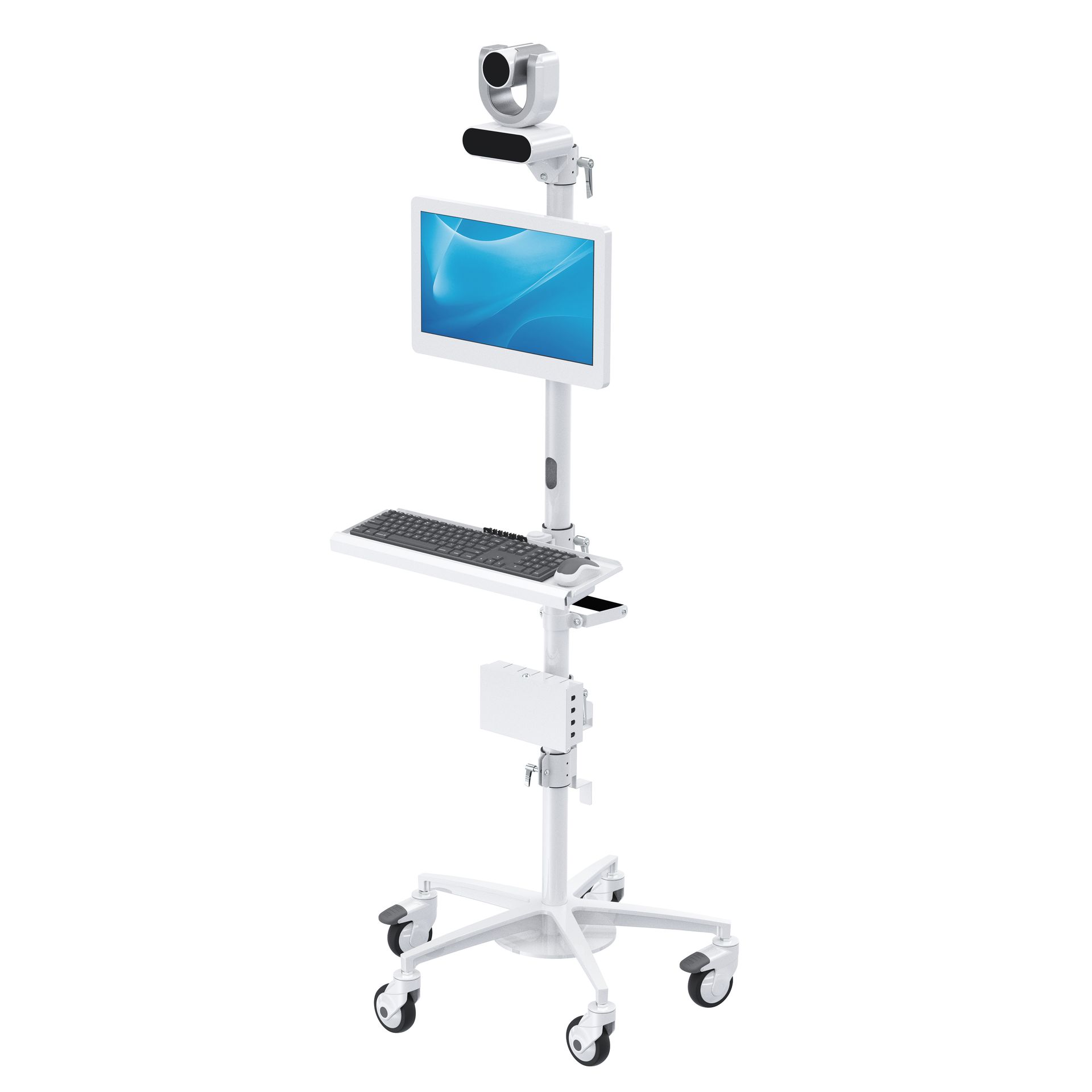
Core Advantages in Post-Pandemic Healthcare
A. Unmatched Flexibility & Mobility
- Deploy Anywhere: Wheels, batteries, and wireless connectivity allow use in hospitals (ERs, ICUs, wards), clinics, nursing homes, or remote/rural sites.
- On-Demand Care: Brings specialists virtually to the patient’s bedside or community setting.
B. Enhanced Efficiency & Cost-Effectiveness
- Streamlined Workflow: Reduces wait times, optimizes staff time, and improves patient flow (e.g., virtual triage).
- Lower System Costs: Minimizes unnecessary admissions/readmissions and reduces travel burdens for patients.
- Resource Leverage: Maximizes specialist reach without physical travel.
C. Expanded Accessibility & Equity
- Bridges Geographic Gaps: Connects rural/underserved populations to urban specialists.
- Overcomes Mobility Barriers: Serves homebound or transport-limited patients.
D. Improved Safety & Infection Control
- Reduces Exposure: Limits close-contact interactions in high-risk environments (e.g., infectious disease units).
- Protects Vulnerable Groups: Safeguards immunocompromised patients.
E. Empowered Clinical Teams
- Seamless Data Integration: HIPAA-compliant carts sync with EHRs, ensuring real-time, accurate patient data access.
- Enhanced Collaboration: Facilitates multi-disciplinary virtual consultations.
Critical Success Factors for Implementation
Deploying telehealth carts effectively requires addressing key operational pillars:
| Pillar | Requirement | Purpose |
|---|---|---|
| Reliability | Uninterrupted connectivity & battery backup | Ensure critical consultations aren’t disrupted |
| Usability | Intuitive interfaces & minimal training needs | Drive rapid staff adoption & workflow integration |
| Security | Robust encryption & HIPAA compliance | Protect sensitive patient health information |
| Support | Responsive technical maintenance & troubleshooting | Maintain operational readiness & uptime |
The Evolving Future: Beyond the Basics
Telehealth carts are rapidly advancing to support specialized applications:
- Virtual Rounding: Remote participation in patient rounds by specialists or trainees.
- Remote Patient Monitoring (RPM): Integration with vital sign monitors for chronic disease management.
- Tele-Stroke & Rapid Response: Enabling immediate specialist consults in emergencies.
- Video Remote Interpreting (VRI): Overcoming language and hearing barriers in real-time.
- AI Integration: Potential for AI-assisted diagnostics during remote exams.
Policy & Investment Momentum: Growing government funding and supportive regulations will accelerate adoption and innovation.
Conclusion: Building a More Adaptive Healthcare System
Telehealth carts are no longer simply pandemic artifacts; they are foundational components of a resilient, patient-centered healthcare future. Their unique ability to deliver high-quality, accessible, and safe care—regardless of location or contagion risk—makes them transformative. Healthcare institutions prioritizing the strategic integration of telehealth carts, while addressing reliability, usability, security, and support, will be best positioned to meet evolving challenges and deliver sustainable, equitable care. The journey towards truly integrated digital health is powered by these versatile mobile platforms.