
Bubble tea, also known as boba tea, has rapidly evolved from an Asian specialty drink into a mainstream beverage category across the U.S. and European markets. In 2025, the growth trajectory of bubble tea in the foodservice sector continues to accelerate, fueled by shifting consumer preferences, cultural crossover, and innovation in product supply.
This article explores the key growth trends, drivers, and industry players shaping the future of bubble tea in Western markets.
Bubble Tea Market Growth Overview
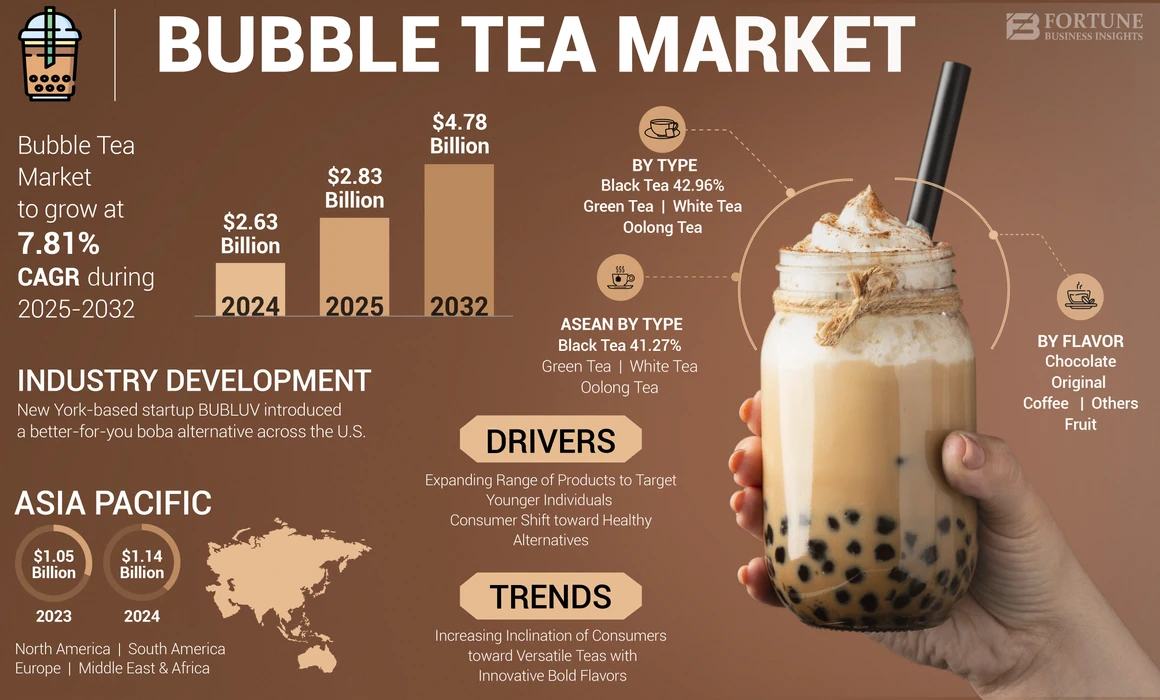
According to Fortune Business Insights, the global bubble tea market is expected to surpass USD 4 billion by 2032, with significant momentum coming from North America and Europe.
(Fortune Business Insight)
The U.S. market has seen steady growth as bubble tea expands beyond ethnic enclaves into mainstream cafés and restaurants. Meanwhile, in Europe, countries like the U.K., Germany, and France are experiencing strong adoption driven by younger demographics seeking novel beverage experiences.
Key Growth Drivers in 2025
- Gen Z and Millennial Influence: Younger consumers remain the largest demographic group driving bubble tea consumption. They value customization, fun textures, and social media-friendly drinks.
- Diversification in Foodservice: Restaurants and cafés are increasingly integrating bubble tea to differentiate their menus.
- Health-Conscious Options: Innovations in low-sugar bases, dairy alternatives, and fruit-based options are broadening the customer base.
- Digital Ordering & Delivery: Online ordering platforms and delivery services make it easier for customers to access bubble tea conveniently.
Industry Players: Global Bubble Tea Suppliers
The growth of bubble tea in the West has also been supported by a strong ecosystem of global bubble tea suppliers. Below is an overview of five notable companies:
| Supplier | Contribution |
|---|---|
| Boba Empire | Offers end-to-end bubble tea solutions including ingredient sourcing, customized shop consultation, and operational support. |
| Boba CHIC | Known for premium popping boba and flavor bases, widely exported to global markets. |
| Chatime International | Operates retail outlets and supplies ingredients, emphasizing branding and franchising. |
| Kung Fu Tea | Provides franchise solutions and ready-to-drink concepts. |
Each of these players contributes to making bubble tea more accessible for operators, ensuring consistent quality and driving adoption in diverse markets.
Challenges Facing the Market
Despite rapid growth, bubble tea integration in Western foodservice is not without hurdles:
- Supply Chain Reliability: Consistent delivery of tapioca pearls and syrups is critical, especially in cross-border logistics.
- Operational Complexity: Preparing bubble tea requires training and equipment that some operators may find challenging.
- Health Perceptions: Concerns about sugar content may hinder adoption if not balanced with healthier alternatives.
Addressing the Challenges
Suppliers are increasingly offering ready-to-use ingredients and frozen storage options to reduce operational burdens. Meanwhile, product innovation in low-calorie sweeteners and plant-based alternatives helps address consumer health concerns.
Future Outlook
Looking ahead, bubble tea is expected to:
- Expand into more mainstream menus at casual dining restaurants.
- Evolve into healthier formats with plant-based, functional, and sugar-reduced options.
- Embrace digital-first strategies to strengthen brand visibility through social media and influencer marketing.
Conclusion
The bubble tea market in 2025 is defined by rapid growth, diversified adoption, and global collaboration. With strong demand from younger demographics, operational support from suppliers, and evolving consumer health trends, bubble tea is well-positioned to remain a staple in U.S. and European foodservice for years to come.