
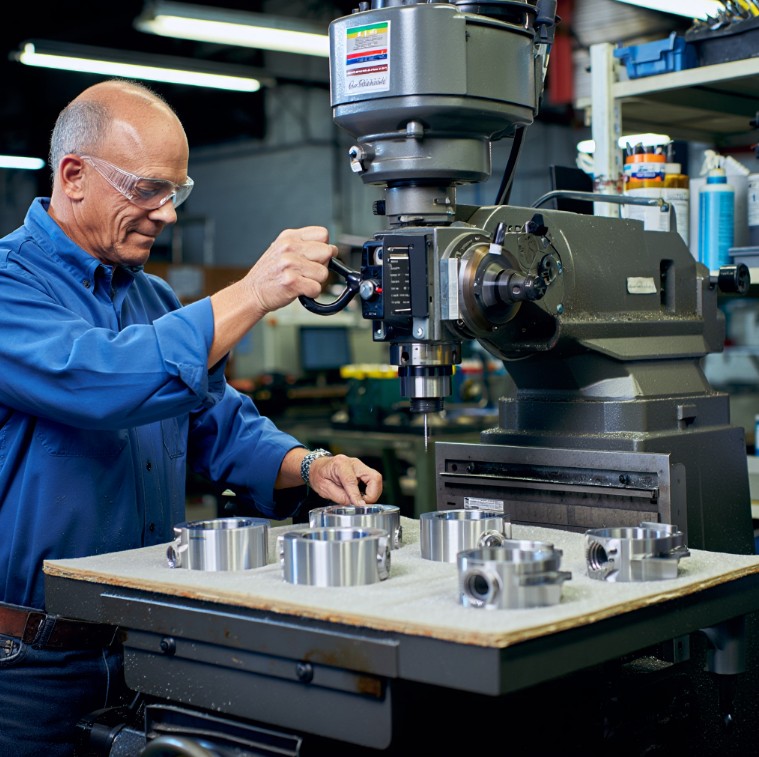
In many precision engineering industries—automotive, aerospace, mold-making, semiconductor, and high-end metal fabrication—production teams face consistent challenges: tighter tolerances, shorter lead times, and increasing part complexity. As a result, choosing the right machining equipment has become a strategic decision that directly affects output quality, cost control, and long-term competitiveness.
This article provides a fresh, in-depth look at how modern CNC vertical milling machines, conventional knee mills, and knee milling machines support various production processes. It is designed for procurement managers, workshop leaders, and OEM buyers seeking actionable insights before making a machine tool investment.
Understanding the Role of Vertical Milling Machines in Modern Production Lines
Vertical milling machines are widely relied upon for their ability to perform precise cutting operations with exceptional flexibility. For production engineers evaluating equipment, these machines help address three persistent pain points:
- High-mix product variation that requires rapid changeovers
- Increasing accuracy requirements driven by miniaturization of components
- Demand for multi-material capability, including tougher alloys and composites
Unlike horizontal machining centers that specialize in high-volume automation, vertical mills provide the versatility needed for today’s diversified manufacturing workflows.
Production Processes That Benefit Most from Vertical Milling Technology
Below is a deeper exploration of how milling machines improve specific manufacturing workflows—not just general applications.
1. Rough Cutting and Material Preparation
Before precision finishing occurs, manufacturers must remove large volumes of material efficiently.
CNC vertical mills with higher horsepower spindles (5–10 HP) help buyers achieve:
- Faster stock removal
- Reduced cycle time
- Lower tool wear through stable cutting angles
This is especially valuable in industries machining stainless steel, alloy steel, and mid-hardness aluminum.
2. Precision Surfacing and Flatness Control
Industries such as semiconductor equipment, automation systems, and precision fixture manufacturers rely on tight flatness tolerances. Vertical mills allow operators to easily adjust feed patterns and achieve:
- Mirror finishing on aluminum plates
- Flatness tolerances under 0.01 mm
- High repeatability from batch to batch
For smaller shops, a knee mill or knee milling machine remains indispensable for fine adjustments and manual surface tuning.
3. Multistep Machining for Complex Components
Components with pockets, contours, slots, channels, and 3D surface profiles benefit greatly from vertical machining due to:
- Clear visibility for the operator
- Convenient fixture positioning
- CAM-friendly toolpaths
- Fast adjustment during prototype runs
This is one reason mold makers and tooling manufacturers consistently invest in vertical milling solutions.
4. Transitioning from Prototype to Small-Batch Production
Many workshops struggle with the “prototype to production” gap. Vertical milling machines help bridge this gap by offering:
- Quick setup changes between parts
- Compatibility with manual fixture systems
- Smooth transition into CNC-controlled scaling
A knee mill is often used during the prototype stage, while a CNC vertical mill handles the repeated production run.
Workflow Optimization Advantages: What Procurement Teams Should Know
To support purchasing decisions, the table below highlights the workflow-level advantages of each machine type.
Machine Workflow Capability Comparison
| Workflow Requirement | CNC Vertical Milling Machines | Knee Mill / Knee Milling Machine |
|---|---|---|
| Prototype Speed | Medium | Very High |
| Small-Batch Flexibility | High | High |
| Accuracy for Complex Parts | Very High | Medium |
| Operator Skill Dependence | Low | High |
| Automation / CNC Control | Yes (full) | Limited |
| Ideal Use Case | Professional production lines | Repair, prototyping, custom parts |
Why this matters:
Even advanced factories continue integrating both machine types because each serves a different—and highly valuable—role in the production cycle.
Industry Trends Impacting Vertical Milling Adoption in 2025
Modern manufacturing is evolving at a fast pace. Below are the most relevant trends procurement leaders should be aware of.
Trend 1: Growth of Medium-Complexity Components Requiring Custom Fixtures
As more industries adopt modular design, components are produced in shorter cycles. Vertical mills, which easily adapt to fixture changes, provide the required agility.
Reference:
https://www.bcg.com/publications/2024/manufacturing-future-industrial-equipment
Trend 2: Increased Use of Lightweight Alloys
Aerospace, EV, and precision automation sectors increasingly use materials such as:
- Aluminum 7075
- Magnesium alloys
- Titanium grades
These require high spindle speed and stable cutting conditions—an area where CNC vertical milling machines excel.
Trend 3: Demand for Smarter Manual Machines
Even though automation is growing, modern knee mills are evolving too:
- Digital readout (DRO) adoption
- Enhanced bearings
- Higher column rigidity
- Improved manual feed precision
This ensures manual machines remain relevant for toolrooms, repair centers, and R&D labs.
Reference:
https://www.mmsonline.com/articles/manual-machining-in-the-digital-age
Trend 4: Precision Inspection Integration
More workshops now integrate on-machine probing and measurement systems, reducing defect rates and shortening production loops. Vertical mills offer ideal compatibility for such systems.
How to Select the Right Machine for Your Production Requirements
When choosing between CNC vertical milling machines and knee milling machines, procurement teams should evaluate the following:
1. Nature of Components Being Machined
- Complex aerospace parts → Choose CNC vertical
- One-off repair or custom tooling → Choose knee mill
2. Required Accuracy Range
Vertical CNC machines provide superior consistency in tolerance-critical jobs.
3. Production Volume
- Prototype / ultra-low volume → Knee mill works best
- Medium volume with repeatability → CNC vertical mill is ideal
4. Budget vs Productivity Balance
CNC machines have higher upfront cost but lower long-term labor dependency.
Knee mills offer low-cost entry and manual versatility.
5. Service and Machine Longevity
A machine’s true ROI includes:
- Service accessibility
- Replacement parts availability
- Training and support
- Machine rigidity over 10–15 years
This is often overlooked yet crucial for procurement teams.
Why Vertical Milling Machines Deliver Strong ROI for Precision Manufacturers
The combination of accuracy, adaptability, and cost efficiency makes vertical milling machines one of the most strategic equipment investments. Their ability to support both routine and advanced machining tasks ensures they remain relevant even as manufacturing technologies evolve.
By integrating both CNC vertical mills and knee mills, workshops gain:
- Operational flexibility
- Lower risk during product diversification
- Better response to urgent orders
- Ability to serve multiple industries simultaneously
This dual-machine strategy is becoming increasingly common among competitive manufacturers worldwide.
Need a Reliable Supplier for CNC Vertical Knee Milling Machines? (TOP-ONE MACHINERY Introduction)
For workshops planning to expand machining capabilities, TOP-ONE MACHINERY CO., LTD. offers a wide selection of high-accuracy CNC vertical knee milling machines engineered for long-term stability.
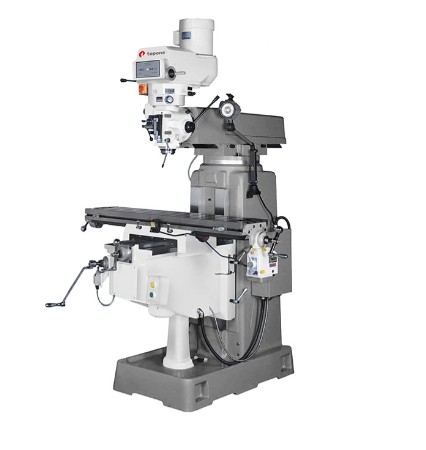
They are known for:
- Heavy-duty machine structures optimized for vibration control
- Smooth spindle performance suitable for precision engineering
- Support for DRO, CNC, and semi-custom configurations
- Reliable part supply and excellent technical assistance
- Experience serving mold, aerospace, automotive, and general machining industries
TOP-ONE provides reliable solutions that help manufacturers improve precision, productivity, and cost-effectiveness in their machining operations.
Ready to Explore the Right Milling Machine for Your Facility?
If your team is evaluating equipment upgrades or comparing specifications, you can speak directly with the manufacturer for tailored recommendations.
👉 Contact TOP-ONE MACHINERY:
https://www.topone-m.com/contactus
They can help identify the most suitable machine model for your production requirements.