

The global woodworking industry stands at a critical juncture as we approach 2025. While demand for furniture and construction materials continues to rise, manufacturers face unprecedented challenges: a shrinking skilled workforce, rising raw material costs, and an increasingly urgent mandate for sustainability. In this complex landscape, the Wood CNC Machining Center has evolved from a mere production tool into the strategic backbone of competitive manufacturing.
According to recent market analysis, the global woodworking machinery market is projected to reach over $6.5 billion by 2030, growing at a CAGR (Compound Annual Growth Rate) of approximately 4.4% to 4.5%. However, this growth is not evenly distributed. The lion’s share of this expansion will belong to manufacturers who pivot early toward advanced automation and digital integration.
For factory owners and procurement managers, the question is no longer if they should invest in a new Wood CNC Machining Center, but which technology will secure their ROI over the next decade. This article analyzes the data-driven trends shaping the market from 2025 to 2030 to help you make informed capital equipment decisions.
1. The Numbers: Market Size & Growth Projections (2025-2030)
To understand the urgency of upgrading production capabilities, we must first look at the macroeconomic data. The steady rise in the global housing market, particularly in the Asia-Pacific and North American regions, is the primary engine driving the demand for wood products.
The Surge in CNC Segment Dominance
While the general woodworking machinery market is growing, the segment for Wood CNC Machining Centers is outperforming traditional manual and semi-automatic tools. Market reports from agencies like Research and Markets and Mordor Intelligence highlight a specific trend: the shift toward Computer Numerical Control (CNC) is accelerating.
By 2025, CNC technologies are expected to account for the largest market share by revenue. This is not merely due to production volume, but due to the value of the goods produced. High-end furniture, intricate joinery, and precision cabinetry require tolerances that manual labor simply cannot consistently achieve at scale.
Regional Hotspots
- Asia-Pacific: Rapid urbanization in countries like Vietnam, India, and China is fueling a construction boom, creating massive demand for high-throughput Wood CNC Machining Centers capable of handling mass production.
- Europe & North America: The focus here is different. The demand is driving a need for flexible, high-precision machines capable of “Batch Size One” production—custom manufacturing without the downtime of manual re-tooling.
For decision-makers, this data signals a clear warning: reliance on legacy equipment will likely result in a loss of market share to competitors utilizing faster, more precise Wood CNC Machining Center technology.
2. Driver #1: The “Labor Crisis” Accelerates Automation
If you ask any factory owner what their biggest headache is in 2025, the answer is almost unanimously “labor.” The shortage of skilled woodworkers and machine operators is a global phenomenon, effectively capping the production capacity of traditional workshops.
Solving the Skill Gap with Technology
The modern Wood CNC Machining Center is designed specifically to mitigate this reliance on specialized human labor.
- Automated Loading/Unloading: New generation nesting cells come equipped with automatic loading arms and off-loading conveyor tables. This allows a single operator to manage two or even three Wood CNC Machining Centers simultaneously, effectively tripling per-capita productivity.
- Intuitive Interfaces: The barrier to entry for operating these machines is lowering. Advanced HMI (Human-Machine Interfaces) and visual software allow operators with minimal coding knowledge to run complex cuts, shifting the skill requirement from “craftsman” to “technician.”
Industry 4.0 and Lights-Out Manufacturing
We are seeing a distinct trend toward “Lights-Out Manufacturing” in the wood sector—production runs that continue with minimal human supervision. An advanced Wood CNC Machining Center integrated with IoT (Internet of Things) sensors can now self-diagnose.
For example, predictive maintenance algorithms can alert the production manager before a spindle fails or when tool wear affects cut quality. This connectivity ensures that the Wood CNC Machining Center maximizes uptime (OEE), directly addressing the labor shortage by making every machine hour count.
3. Driver #2: The Shift from Mass Production to Mass Customization
Consumer behavior has shifted dramatically. The days of selling identical furniture sets by the thousands are waning. Today’s B2B and B2C clients demand “Mass Customization”—unique designs, custom dimensions, and personalized finishes, all delivered with the speed of mass production.
The Rise of 5-Axis Technology
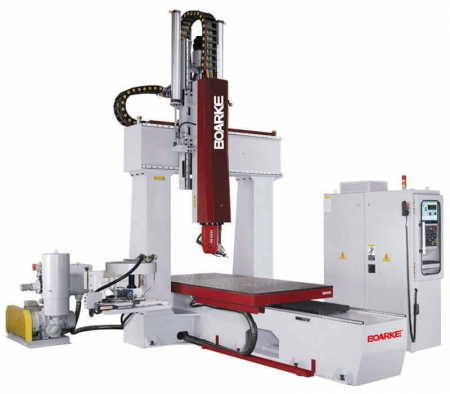
This market shift is the primary driver behind the double-digit growth in demand for 5-axis Wood CNC Machining Centers.
- Complex Geometries: A standard 3-axis machine is limited to cutting from above. To create the curved contours and organic shapes popular in modern high-end furniture, a 3-axis workflow requires the workpiece to be manually repositioned multiple times. This introduces error and kills efficiency.
- One-Setup Machining: A 5-axis Wood CNC Machining Center can approach the workpiece from virtually any angle. It can complete drilling, shaping, and trimming on five sides of a panel in a single setup.
Software-Driven Flexibility
The hardware is only half the story. The growth of the Wood CNC Machining Center market is deeply tied to CAD/CAM software advancements. Manufacturers are now looking for machines that integrate seamlessly with design software (like Cabinet Vision or various CAD platforms).
The ability to take a custom design file and push it directly to the Wood CNC Machining Center without hours of manual programming is what allows a factory to produce a custom kitchen cabinet as fast as a standard one. This “Design-to-Manufacturing” workflow is becoming a non-negotiable requirement for procurement in 2025.
4. Driver #3: Sustainability and Green Manufacturing Regulations
Sustainability is no longer just a PR buzzword; it is a regulatory minefield and a cost center. Stricter environmental regulations, particularly in the EU and for suppliers exporting to global brands (like IKEA), are forcing a re-evaluation of production equipment.
Energy Efficiency as a Cost Saver
Old machinery is often energy-inefficient. The latest Wood CNC Machining Centers utilize regenerative drive systems and smart standby modes that significantly reduce power consumption during non-cutting cycles. When you calculate the Total Cost of Ownership (TCO) over 5 to 10 years, the energy savings from a modern Wood CNC Machining Center can be substantial.
Material Optimization (Waste Reduction)
Perhaps the most critical “green” aspect of a modern Wood CNC Machining Center is its nesting capability.
- Smart Nesting Algorithms: Advanced software analyzes the parts needed and arranges them on the raw board to maximize yield.
- Reduction in Scrap: By optimizing the cutting path and arrangement, manufacturers can reduce raw material waste by 15% to 30%.
With the rising cost of timber and engineered wood, a high-performance Wood CNC Machining Center that saves even 10% of material pays for itself faster than ever before. This waste reduction is a key metric for manufacturers aiming to meet “Net Zero” targets or acquire green certifications.
5. Strategic Advice: Evaluating ROI on High-End Investments
For procurement managers, justifying the capital expenditure (CAPEX) of a premium Wood CNC Machining Center requires a clear ROI analysis. In the 2025-2030 market landscape, the calculation must go beyond simple “purchase price.”
The Cost of Inaction
When evaluating a new Wood CNC Machining Center, compare it against the “Cost of Inaction.”
- Lost Bids: Are you turning away orders because you cannot meet the geometric complexity or the tight turnaround times?
- Labor Overheads: How much overtime are you paying to meet quotas that a faster Wood CNC Machining Center could handle in a standard shift?
- Material Waste: Calculate the annual cost of scrap generated by current manual or inefficient nesting processes.
Future-Proofing Your Shop Floor
An investment in 2025 is an investment for 2030. When selecting a supplier, prioritize those who offer:
- Scalability: Can the Wood CNC Machining Center integrate with robotic arms or loading systems later?
- Software Updates: Is the proprietary control software regularly updated to handle new file formats?
- After-Sales Support: In an automated line, downtime is expensive. Ensure your Wood CNC Machining Center supplier has a robust local service network.
Conclusion
The forecast for the 2025-2030 woodworking market is positive, but it favors the bold. The manufacturers who will dominate the coming decade are those who recognize that a Wood CNC Machining Center is not just a saw—it is a data-driven, automated production hub.
By addressing the labor shortage through automation, unlocking new product possibilities with 5-axis technology, and reducing costs through sustainable practices, the modern Wood CNC Machining Center offers a clear path to profitability.
As the industry moves toward Industry 4.0, the gap between “traditional workshops” and “smart factories” will widen. To ensure your business falls into the latter category, the time to evaluate your CNC capabilities is now.
To support manufacturers transitioning toward smarter and more automated woodworking production, Boarke Machine offers reliable, precise, and user-friendly Wood CNC Machining Center solutions built for long-term productivity and lower operating costs. If you are evaluating new equipment or planning your next upgrade, we invite you to learn more or speak with a specialist today 👉 Contact Boarke Machine
References
1. Woodworking Machinery Market Size, Share & Forecast to 2030 Research and Markets (Market Research)
2. Woodworking Machinery Market Size, Share & 2030 Growth Trends Report Mordor Intelligence
3. CNC Machine Tools Market Size, Growth & Share [2025-2032] SNS Insider
4. The Role of Industry 4.0 and the Internet of Things in Woodworking Machinery Woodtech
5. Sustainable Woodworking: Eco-Friendly Trends for 2025 Wooduchoose
6. Automatic Woodworking Systems 2025-2033 Trends Market Insights Report
7. VietnamWood 2025 highlights automation and sustainability in wood industry Vietnam Investment Review (Industry News)