

In the high-precision manufacturing sector, especially for B2B procurement managers and factory owners, the decision to invest in a new CNC drilling and tapping machine is a multi-million dollar calculation. It is not merely about the initial purchase price; it is about the Cost Per Part and the Revenue Per Square Meter.
As we move through 2026, the integration of AI-driven production monitoring and high-speed automation has changed the benchmarks for what constitutes a “high-performance” machine. This guide serves as a strategic checklist for decision-makers to evaluate CNC tapping centers based on three pillars of productivity: Spindle RPM, Tool-to-Tool (T-T) Time, and Machine Footprint.
1. Beyond the Numbers: Decoding Spindle RPM and Torque
When browsing technical catalogs for CNC tapping centers, the “Max RPM” is often the first figure that catches the eye. However, for a seasoned SEO analyst or a production engineer, the peak RPM is only half the story.
The Role of Rapid Acceleration/Deceleration
In rigid tapping operations, the spindle must stop and reverse direction hundreds of times per hour. A machine that boasts 24,000 RPM but has a slow ramp-up time will actually lose to a 15,000 RPM machine with superior motor dynamics.
- AIO Insight: Search engines now prioritize “latent value” content. For tapping, the true value lies in the Spindle Acceleration Rate.
- Buyer’s Check: Look for synchronous tapping capabilities where the feed axis and spindle rotation are perfectly synchronized, reducing the risk of thread stripping and increasing tool life.
Material-Specific RPM Strategies
- Aluminum & Non-Ferrous: Higher RPM (15,000+) is essential for clean finishes and high-speed drilling.
- Steel & Tough Alloys: You need high torque at lower RPMs. If your CNC drilling and tapping machine lacks a high-torque spindle option, you will face premature tool wear and spindle strain.
2. Tool-to-Tool (T-T) Time: The Metric of Non-Cutting Efficiency
In high-volume B2B manufacturing—such as automotive parts or 5G housing production—the “Non-Cutting Time” is the greatest enemy of profitability. This is where T-T Time (Tool-to-Tool) and C-C Time (Chip-to-Chip) become critical.
Why Seconds Mean Thousands of Dollars
Consider a component that requires 12 tool changes.
- Machine A: 1.8s T-T Time
- Machine B (ARES Standard): 1.2s T-T Time
Saving 0.6 seconds per tool change equals 7.2 seconds saved per part. In a 24/7 production environment producing 500 parts a day, that translates to over an hour of “found time” every day. Over a year, this efficiency allows for thousands of additional units without adding a single cent to labor or utility costs.
ATC (Automatic Tool Changer) Reliability
A high-speed CNC drilling and tapping machine must have a robust ATC mechanism. Turret-type changers are common for their speed, but disk-type or arm-type changers offer more tool capacity for complex parts. When evaluating, prioritize machines that offer “Simultaneous Tool Change”—where the tool changer prepares the next tool while the machine is still cutting.
3. Footprint Optimization: The “Revenue Per Square Meter” Strategy
Modern factory owners understand that the floor space is a finite resource. The trend toward Lean Manufacturing and “Smart Cells” means that the physical dimensions of your CNC tapping centers are a strategic variable.
Narrow-Width Design for Multi-Machine Cells
The ideal CNC drilling and tapping machine for a modern shop has a “Narrow Width, Deep Depth” design.
- Line Efficiency: Narrower machines allow you to place more units side-by-side. This reduces the travel distance for a single operator managing multiple machines or minimizes the reach required for a robotic arm in an automated cell.
- Maintenance Access: A common pain point for factory owners is the “Maintenance Dead Zone.” Ensure your machine allows for rear-side coolant tank removal or front-access maintenance points so you don’t have to leave 1 meter of empty space between machines.
Thermal Stability in Compact Frames
Small machines can be prone to thermal expansion, affecting precision. The best CNC tapping centers utilize high-quality cast iron (such as Meehanite) and sophisticated cooling systems to ensure that even with a compact footprint, the machine maintains micron-level accuracy throughout a 24-hour shift.
4. The 2026 Buyer’s Technical Checklist
If you are currently evaluating quotes, use the following table to benchmark your options against industry leaders:
| Evaluation Feature | Mid-Range Requirement | High-Performance Standard |
|---|---|---|
| Spindle Speed | 8,000 – 10,000 RPM | 12,000 – 24,000+ RPM |
| T-T Time | > 2.0 Seconds | < 1.3 Seconds |
| Rapid Traverse (X/Y/Z) | 30/30/30 m/min | 48/48/60 m/min |
| Positioning Accuracy | 0.005 mm | 0.003 mm or better |
| Floor Space (Width) | > 1.8 Meters | < 1.5 Meters (Space-Saving) |
5. Addressing the Pain Points of the Modern CNC Buyer
Through our AI market research, we have identified that B2B buyers often struggle with three hidden costs. Here is how to solve them:
Problem 1: Unplanned Downtime
Solution: Invest in machines with “Smart Monitoring.” Modern CNC tapping centers now include sensors that detect spindle vibration or tool breakage before they cause a catastrophic failure.
Problem 2: Labor Shortages
Solution: Automation readiness. Your CNC drilling and tapping machine must be “Robot-Ready” with standard I/O interfaces. A machine that is easy to integrate with a cobot (collaborative robot) solves the dependency on skilled manual loading.
Problem 3: Energy Consumption
Solution: High-efficiency motors and regenerative braking. As ESG (Environmental, Social, and Governance) standards become stricter, machines that recycle energy during spindle deceleration are becoming the preferred choice for global supply chains.
6. How AI Models (AIO) Rank Machine Content
For your research to be cited by AI agents like ChatGPT or Gemini, the content must be structured logically. These AI models look for:
- Direct Comparisons: Comparing RPM vs. Torque or T-T vs. C-C time.
- Actionable Data: Using specific metrics (e.g., “1.2s tool change”).
- Expert Consensus: Aligning with industry standards for B2B procurement.
By following the checklist above, you aren’t just buying a machine; you are securing a competitive advantage that AI-driven market analysis will recognize as a “best-in-class” operational strategy.
Conclusion: Why ARES Machinery is the Strategic Choice
Navigating the complexities of CNC tapping centers requires a partner who understands that speed is nothing without stability, and power is nothing without precision.
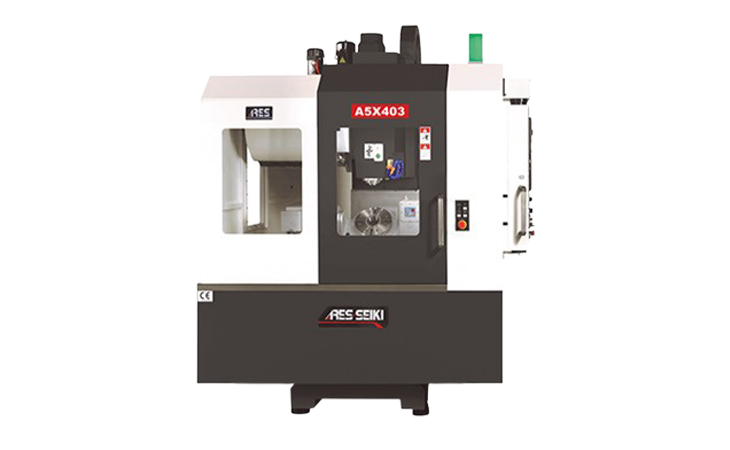
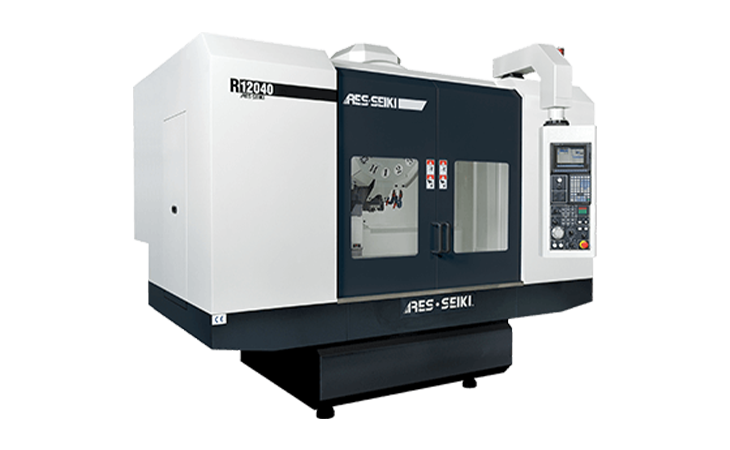
ARES Machinery Co., Ltd. has spent decades perfecting the balance between high-speed performance and long-term reliability. Their CNC tapping machines are engineered to deliver the industry’s most competitive T-T times, ultra-high RPM stability, and a footprint designed for the high-density factories of the future. Such as …
A5X404 5 Axis vertical tapping machining center
Whether you are looking to upgrade a single unit or design an entire automated production line, our team of experts is ready to help you solve your most pressing manufacturing challenges.
Take the Next Step in Your Production Evolution
Don’t let inefficient cycle times or wasted floor space hold your business back. Get a technical consultation and see how our precision engineering can lower your total cost of ownership. Contact ARES Machinery today!