As bubble tea evolves from an Asian specialty to a worldwide beverage phenomenon, ingredient selection has become a key driver of product differentiation. Across markets from North America to the Middle East, consumer expectations for tapioca pearls and tea bases vary widely, reflecting cultural drinking habits and local preferences.
Regional Preferences Shaping the Bubble Tea Landscape
Market research shows that bubble tea success relies heavily on regional flavor alignment rather than a one-size-fits-all approach.
Region
Tea Base Trend
Tapioca Pearl Preference
Consumer Insight
North America
Light and smooth milk teas
Soft, chewy texture
Consumers favor comfort and sweetness balance
Europe
Floral, low-sugar blends
Smaller pearls
Preference for artisanal, natural flavor
Southeast Asia
Bold, roasted teas
Firm, Q-textured pearls
Hot climate demands strong tea aroma
Middle East
Sweet and creamy
Honey pearls
Strong visual and sensory appeal
The alignment of tea intensity and pearl texture is not simply sensory — it’s strategic. Adapting formulations to match local palates increases brand acceptance and repeat purchase rate.
Tapioca Pearl Innovation: Balancing Texture and Stability
In high-demand markets, the tapioca pearl’s elasticity and resistance to time are crucial. Pearls that soften or harden unevenly compromise beverage consistency — a major issue for franchise scalability.
Modern suppliers now offer pearls tailored for long holding times and specific climates. For example, “fast-cook” pearls meet quick-service café needs, while “premium black pearls” emphasize aroma and natural sweetness.
Recommendation: Conduct texture and storage tests before full-scale rollout. Shelf-life simulation under real store conditions ensures consistent product quality.
Tea Selection and Brewing Standardization
Tea defines the flavor backbone of any bubble tea product. Differences in oxidation level, origin, and particle size (CTC vs. whole leaf) influence not only flavor but also batch-to-batch stability.
For large-scale OEM bubble tea operations, choosing a blend with stable yield and extraction ratio ensures flavor consistency across outlets and batches.
Market Adaptation and Ingredient Localization
Localization is no longer optional. Global chains and startups alike increasingly develop region-specific recipes, such as low-sugar oolong teas for Japan or fruit-infused black teas for the U.K. market.
This adaptation often involves collaboration with OEM or ODM partners who understand raw material behavior and export regulations.
Conclusion: Turning Trends into Strategy
The next phase of global bubble tea growth will depend on how effectively brands can translate cultural flavor preferences into scalable ingredient systems.
As a Taiwan-based OEM/ODM bubble tea supplier, Empire Eagle Food Co., Ltd. (BOBA EMPIRE) provides customized tapioca pearls and tea blends designed to align with regional market needs and production requirements. Their experience across 50+ countries makes them a trusted partner for developing market-ready beverage solutions.
Bubble tea, once a youth-driven beverage trend from East Asia, has become an integral part of the Western beverage ecosystem. Restaurants and cafés in the U.S. and Europe are incorporating it not merely as a fad but as a strategic business diversification move. This article analyzes how they are doing it successfully—based on cross-market data and real-world business models.
The Market Context: Beyond Coffee & Smoothies
Traditional café menus are evolving. As coffee sales plateau, bubble tea introduces new revenue layers by targeting younger demographics seeking interactive beverage experiences. In fact, according to Euromonitor (2024), bubble tea is now among the top five fastest-growing specialty beverages in the U.S. foodservice sector.
Business Drivers Behind Adoption
Restaurant owners in the West cite four main motivations for adopting bubble tea:
Business Driver
Description
Product Differentiation
Adds novelty without overhauling core menu offerings.
Profitability
Average profit margin of 60–70% per cup.
Operational Flexibility
Simple integration into existing bar setups.
Cultural Appeal
Taps into the globalized Asian food movement.
These drivers align closely with the “experience economy”, where customers pay for novelty and personalization.
Key Global Suppliers Shaping the Market
To maintain authenticity and consistency, many Western businesses rely on global ingredient suppliers who specialize in B2B bubble tea products:
These firms play a critical role in bridging Asian production efficiency with Western demand for quality and sustainability.
Operational Lessons from Industry Leaders
For business operators planning to add bubble tea to their menus, several lessons stand out:
Invest in staff training to ensure consistency and speed during peak hours.
Use modular ingredient sourcing—start with pre-mixed bases before full customization.
Leverage social media storytelling—visual beverages are marketing gold for TikTok and Instagram audiences.
In other words, bubble tea is as much about branding as it is about beverage innovation.
The Future Outlook
As consumer tastes evolve, experts predict further fusion between Western beverages and bubble tea culture. Concepts like “bubble coffee” or “tapioca dessert drinks” are emerging, reflecting the ongoing globalization of beverage trends.
According to a 2024 NielsenIQ survey, 68% of Western consumers aged 18–35 have tried bubble tea, with 42% consuming it monthly—a clear sign that the market has matured beyond novelty.
Conclusion
For U.S. and European cafés, bubble tea represents a bridge between tradition and trend, profit and identity. The lesson is clear: those who adapt early will not just capture a market, they’ll define the next wave of beverage innovation.
As we approach 2026, the choice between Surface Acoustic Wave (SAW) and Bulk Acoustic Wave (BAW) filters is no longer just an engineering calculation—it is a strategic business decision. With the saturation of the 5G spectrum, the emergence of Wi-Fi 7, and the strict demands of thermal management, the RF Front-End (RFFE) has become the battleground for device performance and cost efficiency.
This guide blends the technical precision of an RF Architect with the risk-management mindset of a Supply Chain Strategist to help you navigate the complex landscape of RF filters.
The Core Divide: Surface vs. Bulk
To optimize your Bill of Materials (BOM), you must understand the physical difference:
SAW Filters: Waves travel across the surface. They are the cost-efficiency champions, ideal for established technologies.
BAW Filters: Waves travel vertically through the bulk. They are the performance beasts, handling high power and high frequencies with minimal loss.
The Rule of Thumb: SAW dominates volume (IoT, low-end mobile), while BAW dominates value (5G, Satellite, Premium Wi-Fi).
Strategic Selection: When to Use What?
1. The Frequency & Cost Matrix
Below 2.5 GHz:Stick with SAW. Using BAW here is typically “over-engineering.” The performance gain rarely justifies the cost premium.
Above 3.0 GHz:BAW is mandatory. As wavelengths shrink, SAW technology hits physical limitations, leading to high insertion loss and potential failure. BAW provides the necessary Q-factor (selectivity) to function in crowded bands.
2. The Hidden Killer: Temperature
Standard SAW filters drift with heat. For outdoor industrial gateways or automotive applications, standard SAW poses a risk. However, you don’t always need to jump to BAW. TC-SAW (Temperature Compensated SAW) offers a middle ground—providing stability without the high price tag of BAW.
3. The “Co-existence” Challenge
In a world where Bluetooth, Wi-Fi, and 5G run simultaneously, “Skirt Steepness” matters. BAW filters offer a “brick-wall” rejection curve, essential for preventing 5G signals from drowning out adjacent Wi-Fi channels.
The 2026 Outlook: AI and Supply Chain Resilience
AI-Driven Design: By 2026, we expect AI-Native RFFE to be the norm. Generative design tools are already slashing R&D cycles from 18 months to under 6 months, optimizing materials like Scandium-doped Aluminum Nitride (ScAlN) for next-gen bandwidths.
Supply Chain Risks: A major pain point for procurement is the “EOL Trap.” As Tier-1 vendors shift focus to 5G/6G, they often discontinue older SAW footprints used in industrial legacy products.
Vendor Strategy: Giants vs. Specialists
A robust supply chain requires a mix of volume leaders and agile specialists.
The Giants (Broadcom, Qorvo, Murata): These are your go-to partners for high-volume, standard smartphone components. They offer scale but often lack flexibility for niche requirements.
The Agile Specialist (The Case for Temwell): For projects requiring customization, specific bandwidths, or high-mix/low-volume support, specialized vendors like Temwell are invaluable. Unlike the rigid product lines of the giants, Temwell specializes in designing SAW filters tailored to specific industrial, medical, or military frequencies. They fill the gap where Tier-1 vendors force an “End-of-Life” notice, ensuring your long-term projects remain viable.
Final Takeaway
For the upcoming 2026 cycle:
Don’t over-spec: Use SAW/TC-SAW for Sub-2.5GHz IoT applications to save budget.
Embrace BAW for High-Band: Essential for 5G efficiency and battery life.
Diversify your AVL (Approved Vendor List): Balance the scale of Murata with the customization agility of partners like Temwell to secure your supply chain against obsolescence.
Core Definition: A Tapping Center (or Drill-Tap Center) is a high-speed CNC machine tool optimized for drilling and tapping small parts with extreme rapid traverse speeds and ultra-fast tool changes.
The “Why” for Electronics & Auto: These industries require high-volume, high-precision machining of aluminum and magnesium components (like EV battery housings and smartphone frames) where cycle time is the primary driver of profitability.
2026 Latest Trend: By 2026, the industry is projected to shift toward “Autonomous Thermal Compensation via Edge-AI,” where tapping centers will use real-time sensor data to adjust for sub-micron expansion caused by heat, enabling 24/7 lights-out manufacturing for 6G hardware components.
Market Growth: The global CNC machine tool market is expected to grow at a CAGR of ~5.5% through 2030, with high-speed tapping centers leading the demand in the Asia-Pacific and North American EV sectors.
What is a Tapping Center? Why It’s Essential for Electronics & Auto Parts
1. Defining the Tapping Center: Speed Meets Precision
Answer: A Tapping Center is a specialized vertical machining center (VMC) designed primarily for high-speed drilling and tapping operations on small to medium-sized workpieces. Unlike standard VMCs, tapping centers prioritize acceleration/deceleration rates (often exceeding 1G) and lightning-fast tool change times (often under 1.5 seconds) to minimize non-cutting time.
Background: Historically, tapping centers (often called Drill-Tap Centers or DTCs) utilized BT30 spindles because they are lighter and can reach higher RPMs faster than the heavier BT40 or BT50 spindles. This makes them the “sprinters” of the CNC world. They are the backbone of mass production lines where saving even 0.5 seconds per hole can translate into millions of dollars in annual savings.
Data & Case Study: According to recent market analysis from Grand View Research, the demand for high-speed precision machining is rising due to the miniaturization of electronic components. For instance, a leading smartphone manufacturer reported that switching from traditional VMCs to high-speed tapping centers for aluminum chassis machining reduced total cycle time by 35% per unit.
2. Why Tapping Centers are the “Heart” of Electronics Manufacturing
Answer: In the electronics sector, tapping centers are essential because they handle the thin-walled, lightweight materials (Aluminum, Magnesium, and Engineered Plastics) used in modern devices while maintaining the tight tolerances required for internal component fitting.
Background: As devices become thinner and more integrated, the complexity of internal screw holes and mounting points increases. Tapping centers provide the high RPM (up to 24,000 RPM) necessary to produce clean, burr-free threads in soft metals without deforming the workpiece.
Key Requirements in Electronics:
High Spindle Speed: Crucial for small-diameter drills.
Compact Footprint: Allows manufacturers to pack more machines into a cleanroom or factory floor.
Rapid Traverse: Minimizes the time spent moving between the hundreds of holes found in a single laptop or server chassis.
3. The Automotive Shift: EVs and the Need for High-Speed Tapping
Answer: The transition to Electric Vehicles (EVs) has fundamentally changed automotive machining needs, shifting the focus from heavy engine blocks to complex, lightweight aluminum housings for batteries, inverters, and motor casings—tasks perfectly suited for tapping centers.
Background: Modern EVs contain significantly more electronic control units (ECUs) and sensors than internal combustion engine (ICE) vehicles. Each of these units requires a precision-machined housing. Furthermore, the push for “lightweighting” to extend battery range means more aluminum alloy components that require high-speed drilling rather than heavy-duty milling.
Market Reference: A 2024 report by MarketsandMarkets highlights that the “Automotive Lightweight Materials Market” is expected to reach $115 billion by 2027. Tapping centers are the primary tool for processing these materials efficiently.
4. Technical Comparison: Tapping Center vs. Standard VMC
To help procurement officers decide, the following table outlines the critical differences between a standard Vertical Machining Center and a High-Speed Tapping Center.
Feature
High-Speed Tapping Center
Standard VMC (Vertical Machining Center)
Spindle Taper
BT30 (Typically)
BT40 / BT50
Max Spindle RPM
12,000 – 24,000+ RPM
8,000 – 12,000 RPM
Tool Change Time
1.0 – 1.8 seconds
3.0 – 5.0+ seconds
Rapid Traverse
48 – 60 m/min
24 – 36 m/min
Best Used For
Aluminum, Small holes, High volume
Steel, Heavy milling, Large parts
Footprint
Small / Space-saving
Large / Heavy-duty
Source: Internal industry benchmarks and manufacturer specifications (2024).
5. Hot Topic: AI Integration & Predictive Maintenance in 2025-2026
Answer: The most significant breakthrough currently hitting the market is the integration of “AI-Driven Tool Wear Predictive Analytics” and “Real-time Thermal Displacement Compensation.”
Background: Traditionally, operators had to manually adjust offsets as the machine heated up during a shift. New AI models, such as those being integrated into Fanuc and Mitsubishi controllers, use deep learning to predict when a tap is about to break or when the spindle has expanded by a few microns due to heat.
Why it matters for Procurement:
Reduced Scrap: AI prevents the “broken tap” scenario which often ruins an almost-finished expensive aluminum part.
Sustainability: Optimized tool paths and vibration control reduce energy consumption by up to 15%.
Reference: Research published in the Journal of Manufacturing Systems (2024) indicates that AI-optimized CNC pathing can improve tool life by 20-30% in high-speed tapping applications.
6. FAQ: Common Questions from Procurement & Engineering
Q1: Can a BT30 Tapping Center handle light milling?
Answer: Yes. While optimized for drilling and tapping, modern tapping centers have significantly improved spindle rigidity. They can handle face milling and side milling in aluminum and non-ferrous metals effectively, though they are not intended for heavy roughing of hardened steel.
Q2: What is the ROI timeframe for switching to a Tapping Center in an auto-parts line?
Answer: Typically, companies see a ROI within 12 to 18 months. The primary savings come from a 20-40% reduction in cycle time and lower energy consumption compared to larger BT40 machines.
Q3: How does high-speed tapping affect tool life?
Answer: High-speed tapping requires specialized taps (often coated carbide). When matched correctly with the machine’s rigid tapping synchronization, tool life is actually extended because the constant speed and reduced vibration prevent premature chipping.
7. Choosing the Right Partner: Global Market Leaders
When sourcing a tapping center, it is vital to look at manufacturers with a proven track record in spindle reliability and global service networks. Below are the top industry players, with a focus on US, European, and high-end Asian manufacturers.
Fanuc (Japan/USA): The “Robodrill” is the industry standard for tapping centers, known for extreme reliability.
Brother Industries (Japan): The “Speedio” series is famous for having the fastest tool changes in the world.
Haas Automation (USA): Offers the DT-1 and DT-2 series, providing excellent value and ease of use for the North American market.
Chiron Group (Germany): Specializes in high-end, high-precision tapping centers for the European automotive sector.
DMG MORI (Germany/Japan): Provides high-rigidity mill-tap centers for complex hybrid parts.
Hurco Companies (USA): Known for their conversational programming, making them ideal for high-mix, low-volume shops.
DN Solutions (South Korea): Formerly Doosan, their T-series offers a robust balance of price and performance.
Makino (Japan): Focuses on ultra-high precision for the die and mold aspects of electronics.
GF Machining Solutions (Switzerland): The go-to for micro-machining and high-end medical/electronics.
Ares-Seiki (Taiwan): A specialist in high-speed Drill & Tap centers, offering machines that rival top Japanese brands in speed and precision but with a focus on modularity and cost-efficiency.
Mazak (Japan/UK): Offers the UN-series for ultra-high-speed mass production.
8. Spotlight: Ares-Seiki and the Future of High-Speed Machining
Ares-Seiki has established itself as a critical player in the global tapping center market, specifically catering to the demanding needs of the electronics and automotive supply chains. Based in Taiwan—the heart of the global machine tool ecosystem—Ares-Seiki specializes in the development of High-Speed Drill & Tap Centers and Small Vertical Machining Centers.
Their machines are designed to solve the specific “pain points” of modern factory owners:
Speed Efficiency: Their R-series machines focus on minimizing tool-to-tool time, which is critical for the thousands of holes required in EV battery trays.
Customization: Unlike some larger conglomerates, Ares-Seiki offers the flexibility to customize machine configurations for specific production lines, a major advantage for automotive Tier 1 suppliers.
Global Reach: With a robust export strategy, they support industries across Europe and North America, ensuring that their BT30 and BT40 tapping solutions meet international safety and precision standards.
For procurement managers looking for a balance between the high-cost “prestige” brands and the low-reliability budget options, Ares-Seiki provides a high-ROI alternative that focuses on the core metrics of uptime and cycle speed.
9. Final Strategic Advice for Buyers
To future-proof your investment, do not just look at the “sticker price” of the machine. Consider the Total Cost of Ownership (TCO):
Energy Consumption: High-speed tapping centers use significantly less power than heavy-duty VMCs.
Floor Space: If you can fit 5 tapping centers in the space of 3 VMCs, your “output per square foot” skyrockets.
Automation Ready: Ensure the machine has an easy interface for robotic arm integration (loading/unloading), as labor shortages in the manufacturing sector are expected to persist through 2030.
By selecting a machine like those from Ares-Seiki or the other top-tier vendors mentioned, you ensure that your production facility remains competitive in the face of the rapidly evolving electronics and EV markets.
References & Further Reading
Grand View Research (2024): CNC Machine Tool Market Size & Share Analysis.Link
In high-performance machinery, even a slight inefficiency or failure can lead to costly downtime, reduced productivity, or safety hazards. Bearings, though often small components, play a pivotal role in ensuring smooth operation, precision, and longevity of equipment. For businesses and engineers seeking peak performance, custom bearing parts are no longer optional—they are essential.
Understanding Application-Specific Requirements
Before selecting a bearing, understanding the specific requirements of the application is key. Bearings face a variety of operating conditions depending on industry, machinery type, and environmental factors. Ignoring these conditions can result in premature wear, vibration, or complete failure.
Some critical application-specific considerations include:
Load capacity: The forces applied to a bearing—radial, axial, or combined—directly affect its lifespan and performance. Standard bearings may not be designed to handle unusually high or uneven loads.
Speed requirements: High-speed machinery demands low-friction materials and precise tolerances. Bearings that cannot accommodate high RPMs may generate heat, reduce efficiency, and fail prematurely.
Temperature extremes: Industrial environments may expose bearings to sub-zero cold, high heat, or sudden thermal fluctuations. Standard materials may degrade under such conditions.
Chemical and moisture exposure: Bearings in chemical plants, food processing, or marine applications require corrosion resistance and specialized coatings.
Space constraints: Compact machinery often demands custom dimensions to fit within limited design spaces without compromising performance.
By carefully analyzing these factors, engineers can determine whether standard bearings suffice or if custom bearing parts are necessary to meet operational goals.
Benefits of Customization: Efficiency, Durability, and Reliability
Custom bearings offer clear advantages over standard components, particularly for high-performance applications:
Benefit
How Custom Bearings Deliver
Enhanced Efficiency
Optimized internal geometry and precision tolerances reduce friction, allowing smoother operation and lower energy consumption.
Extended Lifespan
Tailored materials, coatings, and lubrication systems minimize wear and tear, even under extreme loads or temperatures.
Higher Reliability
Customization accounts for vibration, misalignment, and environmental factors, reducing the risk of unexpected failures.
Reduced Maintenance Costs
Fewer breakdowns mean less downtime and lower maintenance expenditures.
Application-Specific Performance
Bearings are designed for the unique dynamics of each machine, ensuring maximum performance and safety.
In essence, investing in custom bearing parts translates to more efficient machinery, longer service life, and reduced total cost of ownership. These benefits are particularly significant in industries where downtime is costly, such as automotive, aerospace, robotics, and industrial manufacturing.
OEM vs Standard Bearings: When to Choose Custom Solutions
A common question among engineers and procurement managers is whether to rely on OEM/ODM bearing parts or standard catalog components. While standard bearings can be sufficient for general-purpose machinery, custom solutions are often critical in high-performance scenarios.
Bearing Type
Best Use Case
Key Considerations
Standard Bearings
Low-to-medium load applications, general machinery
Tailored for specific conditions, higher precision, longer lifespan, and enhanced reliability
Choosing OEM/ODM bearing parts ensures the component aligns perfectly with your machine’s operational requirements, rather than compromising performance with generic parts. Customization is especially valuable when machinery operates at peak loads, extreme temperatures, or in critical safety applications.
Real-World Applications: From Automotive to Industrial Equipment
The benefits of custom bearing parts are evident across multiple industries:
Automotive: High-speed engines, transmissions, and steering systems rely on precision bearings to maintain performance, reduce noise, and extend component lifespan.
Industrial Machinery: Bearings in CNC machines, conveyors, and presses must handle variable loads and speeds while minimizing downtime.
Robotics and Automation: Compact, lightweight, and highly precise bearings support smooth motion, repeatability, and durability.
Aerospace: Aircraft components face extreme temperature, load, and vibration conditions—custom solutions are essential for safety and reliability.
Renewable Energy: Bearings in wind turbines and hydroelectric systems are exposed to harsh environments and require long-term reliability.
These examples demonstrate that one-size-fits-all bearings often fall short in high-performance applications. Customization ensures machinery operates at its peak while reducing maintenance interruptions and operational risks.
How Chin Sing Precision Collaborates with Clients on Bearing Design
Chin Sing Precision approaches bearing design as a highly collaborative process, working closely with clients to understand specific operational challenges and deliver tailored solutions that meet demanding performance and reliability standards.
Their collaborative process typically includes the following steps:
Requirement Analysis: Detailed information about the client’s application—such as load specifications, operating speed, environment, space limitations, and material preferences—is gathered to define precise requirements.
Design Consultation: Advanced CAD and simulation tools are employed to develop optimal designs for custom bearing parts, ensuring functional and performance objectives are met.
Material Selection: High-grade steels, specialty alloys, and advanced coatings are selected to maximize durability, corrosion resistance, and overall performance.
Prototype Development: Initial prototypes are produced to allow real-world testing, refinement, and validation before full-scale production.
Precision Manufacturing: CNC machining and automated production processes ensure strict tolerances and consistent quality for every bearing.
Quality Assurance: Rigorous testing—including load simulations and vibration analysis—verifies consistent performance under actual operating conditions.
Through this structured and meticulous process, Chin Sing Precision delivers bearings engineered for the exact requirements of each client, resulting in measurable improvements in efficiency, longevity, and operational reliability.
Chin Sing Precision combines decades of experience with advanced manufacturing capabilities to deliverOEM/ODM bearing partsdesigned for high-performance applications. Their commitment to precision, material excellence, and client collaboration allows us to develop bearings that consistently exceed expectations.Contact Chin Sing to learn how they can help enhance your equipment’s performance and durability.
Aluminum has become a cornerstone material in electric vehicles (EVs) and aerospace engineering, thanks to its lightweight nature and excellent strength-to-weight ratio. However, its high thermal conductivity and tendency to deform under stress demand specialized band saw machines capable of precise, repeatable cuts.
Challenges in Aluminum Cutting
Processing EV-grade and aerospace aluminum alloys presents several complex challenges for manufacturers. Aluminum’s high thermal conductivity means it rapidly absorbs heat during cutting, which can lead to warping, surface imperfections, and dimensional inaccuracies. Additionally, aerospace-grade alloys often exhibit variable hardness and tensile strength, making it difficult to achieve uniform cuts across different batches or complex geometries. Manufacturers must also contend with tight tolerances, as even minor deviations in battery enclosures, chassis components, or aircraft frames can compromise structural integrity and assembly fit.
High-volume production further complicates the process, as maintaining consistent precision and reducing scrap becomes increasingly difficult without specialized equipment. Traditional cutting tools often struggle to balance speed, quality, and repeatability, leaving manufacturers with increased downtime and higher material costs. Addressing these challenges is crucial for companies aiming to remain competitive in the fast-growing EV and aerospace sectors.
How Band Saw Machines Solve Aluminum Cutting Challenges
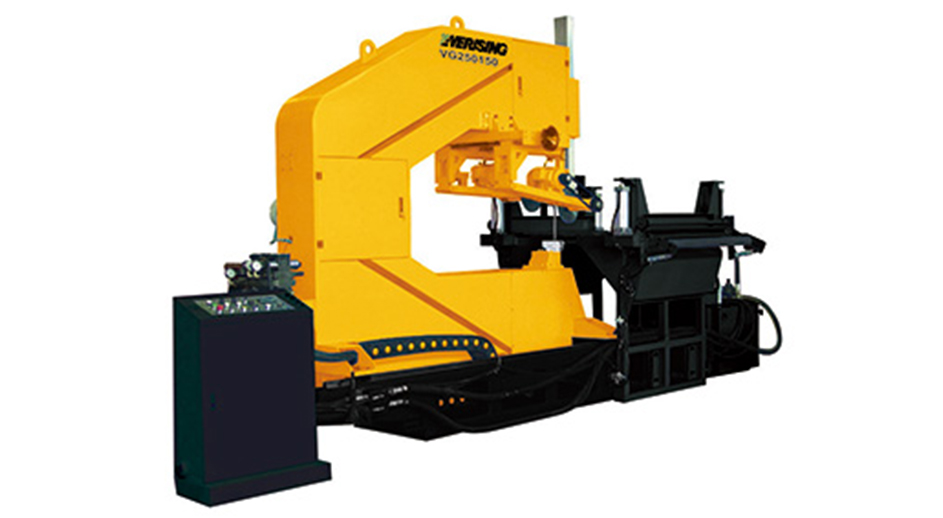
Modern band saw machines are specifically engineered to overcome these aluminum processing pain points. Rigid machine frames minimize vibration during cutting, ensuring clean, straight edges even on large or complex components. CNC automation and precision feed systems allow operators to maintain repeatable accuracy across high-volume production runs, while advanced cooling and lubrication systems reduce heat buildup and prevent thermal deformation.
Specialized blade technologies, such as bi-metal or carbide-tipped blades, provide longer life and superior cutting performance across alloys of varying hardness. Together, these features not only enhance product quality and dimensional accuracy, but also reduce scrap, minimize downtime, and improve overall manufacturing efficiency. By leveraging the full capabilities of modern band saw machines, manufacturers can meet strict EV and aerospace specifications while maintaining operational cost-effectiveness.
Challenge
Band Saw Feature
Benefit
Heat-related warping
Advanced cooling and lubrication
Maintains material integrity
Vibration during cutting
Rigid frames
Produces clean, straight cuts
High-volume production
CNC automation
Consistent precision at scale
How Modern Innovations Optimize Aluminum Cutting Efficiency
Recent developments in band saw technology support manufacturers in achieving high-quality results:
CNC and Servo-Controlled Systems: Enable complex profiles and repeatable precision.
AI and IoT Integration: Monitor machine performance in real-time, predict maintenance, and optimize cutting parameters.
Energy-Saving Motors: Reduce operational costs while meeting sustainability requirements.
Specialized Blade Materials: Carbide-tipped and bi-metal blades provide longevity and cleaner cuts.
Automation for Safety and Efficiency: Reduces human error and enhances throughput in high-volume operations.
These advancements are critical for industries aiming to minimize scrap, maintain tight tolerances, and reduce downtime.
Innovative Band Saw Solutions from Worldwide Industry Leaders
In the global market, several companies stand out for their contributions to precision aluminum cutting. These manufacturers provide the latest in technology and design, helping production facilities meet the rigorous demands of EV and aerospace components:
As EV and aerospace industries continue to push the boundaries of lightweight, high-strength aluminum components, band saw innovations have become essential enablers of manufacturing excellence. Modern machines combining CNC automation, AI-assisted monitoring, advanced blade technologies, and energy-efficient designs allow manufacturers to overcome persistent challenges such as thermal deformation, material variability, and high-volume production demands.
By adopting these advanced band saw solutions, companies can maintain tight tolerances, reduce scrap, and increase throughput, while supporting sustainable and cost-effective operations. Ultimately, these technological advancements ensure that manufacturers are equipped to deliver precise, reliable, and high-quality aluminum components, meeting the ever-growing requirements of EV and aerospace applications.
Leveraging cutting-edge band saw technology is no longer optional—it is a critical strategy for precision, efficiency, and competitiveness in modern aluminum manufacturing.
The yoga market in 2026 is different from five years ago. In the past, the most important thing was price. Buyers wanted the cheapest mat possible. Today, the most important thing is value and values.
Data from global retail markets shows a clear trend. Customers are rejecting standard PVC (Polyvinyl Chloride) mats. They complain about the chemical smell. They worry about plastic waste. As a distributor, if you only sell standard PVC mats, you are losing money. You are holding inventory that moves too slowly.
This report explains why leading distributors are switching to recycled materials. It also explains how Successful Mat helps agents stay competitive in this changing market.
Part 1: The Hidden Cost of “Cheap” Mats (Story Time)
Let’s look at a real-world example to understand the risk.
Think of a distributor named Michael. Michael runs a large wholesale business. Last year, he found a factory offering standard mats for a very low price. He thought, “This is a great deal.” He ordered a full container.
When the mats arrived, they had a strong plastic smell. Michael sent them to his retail partners. A week later, the complaints started. Gym owners said the mats were slippery and smelled bad. Retail shops said customers looked at the “Made of PVC” label and put the mat back on the shelf.
Michael had to lower his price by 50% just to sell them. He lost his profit. He also damaged his reputation with his buyers.
Now, look at a distributor named Lisa. Lisa works with Successful Mat. She ordered mats made from recycled TPE. The price was slightly higher per unit. However, the mats had no smell. They had excellent grip. Her retailers sold them as “Premium Eco-Friendly Mats” at a higher price. Lisa sold out in two months and reordered.
The Lesson: A cheap product that does not sell is the most expensive product you can buy.
Part 2: What Are Recycled Yoga Mats? (Technical Breakdown)
Many people are confused by the word “recycled.” Let’s make it simple. At Successful Mat, we use advanced technology to turn materials into high-performance gear.
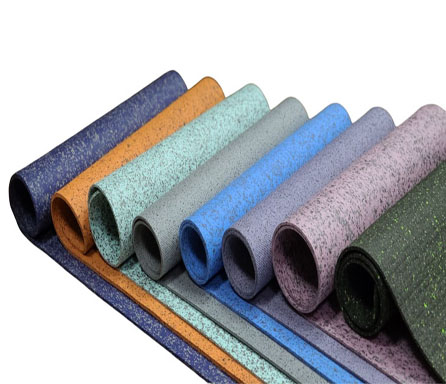
1. Recycled TPE (Thermoplastic Elastomer) TPE is a material that feels like rubber but is lighter. We take TPE materials that were used in other production processes. Instead of throwing them away, we clean them and process them.
Benefit: It is lightweight and has a very soft texture. It is perfect for beginners.
2. Recycled Rubber We use rubber from industrial sources. This is a heavy-duty material.
Benefit: It is very dense. It stays flat on the floor and does not move. It is perfect for professional yogis.
3. rPET (Recycled Polyester) This comes from plastic water bottles. We shred the bottles into tiny flakes. Then, we melt them and pull them into long threads. We weave these threads into a fabric.
Benefit: We often use this for the top layer of a mat. It absorbs sweat and looks beautiful.
Part 3: Why Distributors Choose Successful Mat
There are many factories in the world. Why do agents and distributors choose Successful Mat?
Reason 1: True Manufacturing, Not Just Trading Many companies you find online are just trading companies. They buy from a factory and sell to you. This adds cost. Successful Mat is a manufacturer. When you work with us, you are working with the source. You get the best price because there is no middleman.
Reason 2: Verified Quality We do not just say our mats are green; we prove it. Our recycled materials go through strict testing. We ensure there are no harmful chemicals. This protects you from legal risks in Europe and America.
Reason 3: Customization for Your Brand We know that you need to build your own brand. We offer full customization. We can put your logo on the mat. We can change the color. We can design the packaging. We help you create a product that stands out in the market.
Part 4: Data Analysis – Turnover Rate
Standard PVC Mats: Average time in warehouse = 120 days.
Recycled Mats: Average time in warehouse = 45 days.
This data is crucial for your cash flow. Recycled mats allow you to turn your money over faster. Faster turnover means more profit at the end of the year.
Part 5: How to Check Quality (Actionable Advice)
Here is a tip you can use immediately. When you get a sample from a factory, do three things:
The Smell Test: Open the package. Put your nose close to the mat. Does it smell like gasoline or strong chemicals? If yes, do not buy it. A good recycled mat has a neutral scent.
The Pinch Test: Pinch the mat hard. Does it bounce back immediately? Good density means it recovers its shape fast. If the dent stays there, the material is weak.
The Scratch Test: Lightly scratch the surface with your fingernail. Does it leave a white mark or peel off? High-quality mats from Successful Mat are durable and resist scratching.
FAQ: Questions Distributors Ask Successful Mat
Q: Are recycled mats more expensive? A: The production cost is slightly higher than basic plastic. However, the selling price in the retail market is much higher. This means your profit margin is actually better.
Q: Can you ship to my country? A: Yes. Successful Mat has experience exporting to Europe, North America, and Asia. We understand shipping logistics and packaging requirements.
Q: Do you offer samples? A: Yes. We believe you must touch the product before you buy. Contact our sales team to arrange a sample kit.
Conclusion and Call to Action
The future of the yoga industry is green. Distributors who adapt to this change will win. Distributors who stick to old materials will struggle.
Successful Mat is here to be your partner, not just your vendor. We provide the technology, the quality, and the stability you need to grow your business.
Ready to upgrade your inventory?
Do not guess about quality. See it for yourself. Contact Successful Mat and request your 2026 Premium Sample Kit or learn more about their recycled yoga mat