
Material selection often becomes difficult when an application needs more than strength alone. A part may need to keep its shape, but it may also need to bend repeatedly, absorb impact, improve grip, feel comfortable on contact, or recover after deformation. In these cases, the decision between engineering plastics and thermoplastic elastomers is not a simple comparison between hard and soft materials. It is a decision about which performance characteristics matter most in real use. When flexibility plays a larger role than rigidity, choosing the wrong material can lead to cracking, poor tactile quality, short service life, or unnecessary redesign.
The Real Difference Between Engineering Plastics and Thermoplastic Elastomers
Engineering plastics are typically chosen for stiffness, dimensional stability, and structural reliability. They are useful when a component must resist deformation, maintain precision, and perform under mechanical or thermal stress. In many applications, they provide the backbone of a design.
Thermoplastic elastomers, by contrast, are selected for elasticity, soft touch, resilience, and impact absorption. They are better suited to applications where repeated bending, cushioning, sealing, or grip matters more than rigid structural support. Their value lies in the ability to flex and recover while still being processed with the efficiency associated with thermoplastics.
The key point is that flexibility should not be treated as a secondary feature. In many end-use conditions, it is the property that determines whether a part continues performing over time.
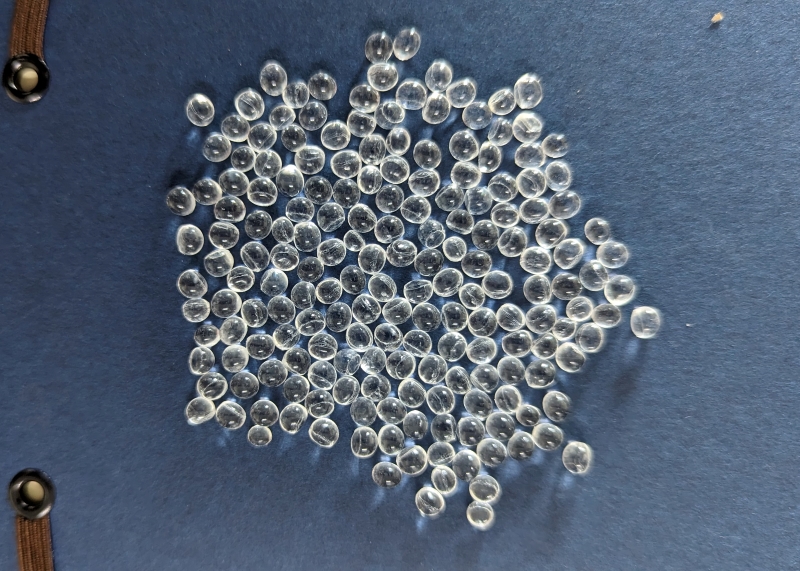
When Rigidity Creates Problems Instead of Solving Them
A rigid material can look safe during early evaluation because it feels strong and stable. However, rigidity becomes a weakness when a part is exposed to repeated movement, sudden impact, or frequent physical contact.
Several common problems appear when an engineering plastic is used in an application that actually demands flexibility:
- stress whitening around bend points
- cracking after repeated deflection
- discomfort or poor tactile response on touch surfaces
- inadequate energy absorption under impact
- failure in snap-fit or dynamic movement zones
These failures are not always caused by poor quality. More often, they come from a mismatch between the mechanical behavior of the material and the actual function of the part.
A Practical Comparison of Material Behavior
To make the selection process more useful, it helps to compare how these material families behave under real design priorities rather than abstract material categories.
Before reviewing the table below, one point is worth keeping in mind: stiffness is not always a performance advantage. In some designs, recovery, touch, and impact resistance have greater influence on long-term success.
| Design Factor | Engineering Plastics | Thermoplastic Elastomers |
| Stiffness | High | Low to medium |
| Elastic recovery | Limited | Strong |
| Surface feel | Hard and firm | Soft, flexible, grippy |
| Impact absorption | Moderate | Usually better |
| Dimensional stability | Excellent | Lower under continuous load |
| Repeated bending performance | Can be limited | Typically better suited |
| Structural support | Strong | Limited |
| Overmolding potential | Possible, depending on system | Often highly suitable |
This comparison does not mean one category is superior. It shows that the wrong emphasis in material selection can lead directly to performance problems.
How SEBS, TPU, TPEE, EVA, and POE Fit Different Design Needs
Within thermoplastic elastomers, material choice still requires careful judgment. SEBS, TPU, TPEE, EVA, and POE each solve different problems, and grouping them together without distinction often leads to oversimplified decisions.
SEBS for soft-touch and grip-focused surfaces
SEBS is often selected when softness, comfort, appearance, and grip are major priorities. It works well in applications where touch quality matters and where moderate flexibility is needed without moving into higher-cost performance territory.
TPU for flexible parts that also need toughness
TPU is widely used when elasticity must be combined with abrasion resistance and mechanical strength. It is often a stronger candidate for applications exposed to wear, repeated handling, or harsher mechanical stress.
TPEE for dynamic performance and stronger resilience
TPEE is often considered when flexibility alone is not enough. It offers elastic behavior together with better fatigue resistance and stronger mechanical performance, making it useful in parts that experience repeated motion or demanding service conditions.
EVA for cushioning and softness
EVA is commonly chosen for softness, shock absorption, and comfort-oriented performance. It is suitable where cushioning matters more than structural precision.
POE for impact modification and flexible performance
POE is often used when improved flexibility and impact resistance are needed, especially in formulations designed to enhance toughness or low-temperature behavior.
A supplier such as Prochase, with experience spanning compounded plastics, engineering plastics, thermoplastic elastomers, and multiple application environments, reflects the kind of broader material understanding that becomes useful when a project cannot be solved by rigid materials alone.
Failure Modes That Reveal a Poor Material Match
One of the clearest ways to improve selection decisions is to study how wrong choices fail. Material problems usually appear in patterns.
When a rigid material is pushed into a flexibility-driven role, the result may include brittleness, crack propagation, or stress marks. When a soft elastomer is used where structural support is critical, the result may be deformation, poor fit, creep, or loss of dimensional control.
In many cases, the failure does not show up immediately. A part may pass early evaluation and still fail after repeated use, environmental exposure, or extended mechanical stress. That is why the selection process must account for actual motion, contact, temperature, and load conditions rather than relying only on initial feel or isolated data points.
Matching Design Intent to Material Direction
A more reliable method is to begin with the part’s real functional demand. Is the material supposed to hold structure, absorb force, improve handling, or survive repeated flexing?
The following table offers a practical shortcut for early evaluation.
| Design Need | Material Direction |
| Shape retention and structural stability | Engineering plastics |
| Soft-touch surface and grip | SEBS |
| Flexible part with abrasion resistance | TPU |
| Repeated motion with stronger elastic mechanics | TPEE |
| Cushioning and soft compression | EVA |
| Improved toughness and flexibility | POE-based solution |
| Structure combined with flexible outer performance | Engineering plastic with elastomer overmolding |
This kind of framework helps narrow material direction before more detailed testing begins.
Material Decisions Improve When Performance Is Viewed as a System
The most effective choice is rarely based on hardness alone. A part succeeds when stiffness, rebound, touch, impact behavior, durability, and processing method are evaluated together. That is especially true in applications where flexibility is central to how the part performs over time.
Engineering plastics remain essential where precision and strength dominate. Thermoplastic elastomers become more valuable when recovery, comfort, movement, and impact resistance shape the real demands of use. The more accurately these priorities are identified at the start, the lower the risk of redesign, failure, or overengineering. In practice, better material selection comes from understanding what the part must continue doing after months of real use—not simply how rigid it feels on day one.