
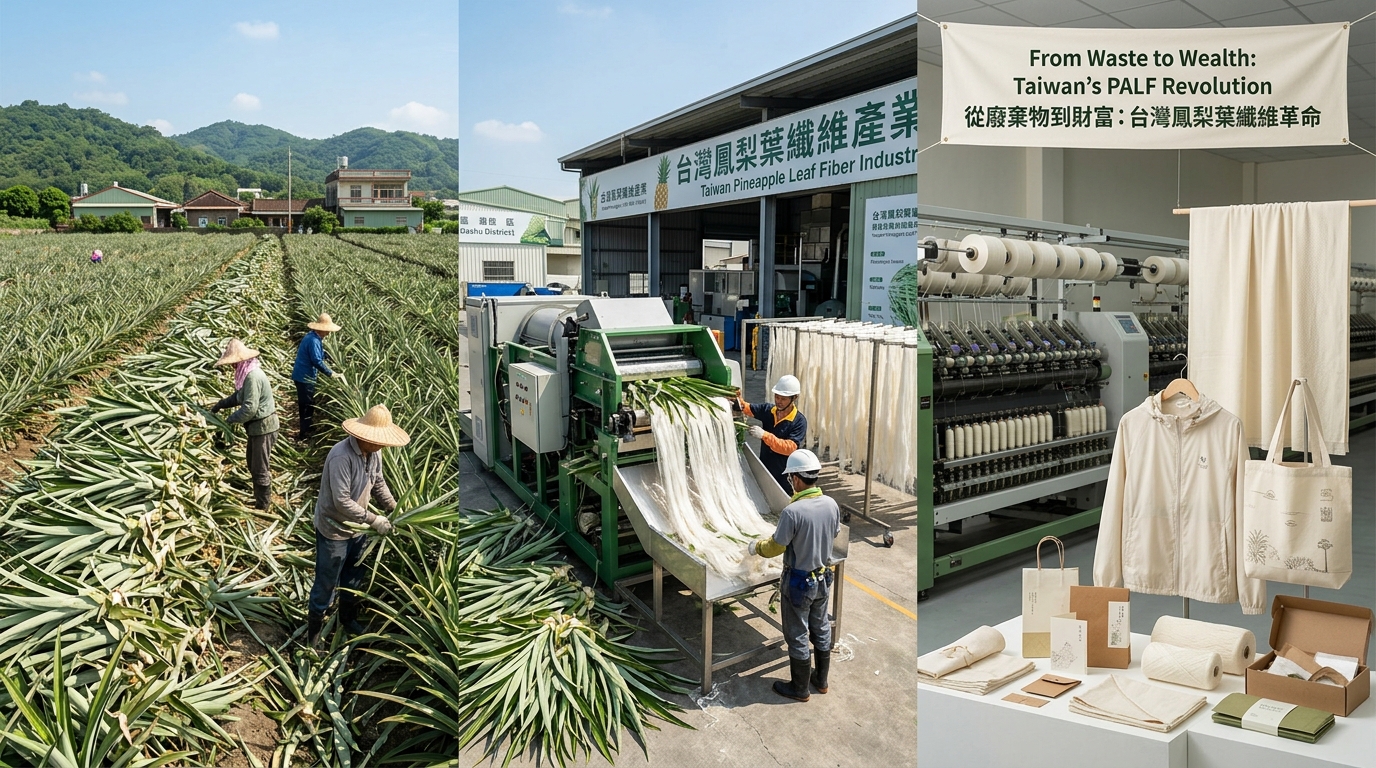
Taiwan’s pineapple industry churns out 480,000+ metric tons annually, leaving 700,000 tons of leaf waste as a costly disposal nightmare for farmers and supply chains. Enter Pineapple Leaf Fiber (PALF): ITRI, UKL, and Jiuru Farmers’ Association have engineered a game-changing solution—automated, traceable fibers that slash ESG risks, stabilize costs, and meet looming EU CBAM demands for apparel and textiles procurement pros.
Core Technology: Taiwan’s Extraction Edge
ITRI’s 2024 Pinacell system transforms Tainong No. 17 leaves into premium 60-count fibers—tough, breathable, naturally antibacterial, blending seamlessly up to 40% with cotton or lyocell. The 2025 milestone? 100 kg shipment yielding 7,500 garments for US, Japan, and Vietnam markets, plus NT$10k+ extra per fen for farmers. Full-plant utilization (stems to enzymes, peels to silage) delivers a mere 0.784 kg CO2e/kg footprint.
Real Applications: From Pilot to Production
UKL EVOPURE+ integrates PALF into T-shirts, sweaters, outerwear, and home goods like curtains—award-winners (Taiwan Excellence 2025). Jiuru crafts apparel and bags; Tongzheng’s knits cut water use by 97%. Test via ecopalf.com OEM for low-risk entry.
Procurement Wins at a Glance
| Key Spec | Taiwan PALF | Cotton | Synthetics |
|---|---|---|---|
| Water Reduction | 97% | – | High |
| Emissions (CO2e/kg) | 0.784 | 5-20 | 10+ |
| Natural Antibacterial | Yes | No | Treated |
| Origin Traceability | MOA Farm | Spotty | Petrochemical |
800k-ton waste reserves ensure supply security.
Taiwan PALF vs. Piñatex: Automation vs. Artisan
Piñatex (Philippines, 2012 by Ananas Anam) rules vegan leather for Hugo Boss and Nike (50K Martindale durability), but manual scraping yields coarser non-wovens. Taiwan’s full automation unlocks yarn-grade textiles Piñatex can’t match.
| Battleground | Piñatex | Taiwan PALF |
|---|---|---|
| Process | Manual | Automated Yarn |
| Best For | Coated Leather | Breathable Blends |
| Scale | Farm-Dependent | 700k Tons Waste |
| Clients | Nike/Hugo | US/Japan Exports |
Best strategy: Pair both for diversified portfolios.
Hurdles and Smart Solutions
Leaf costs at NT$10-20/kg? Automation trims 30% labor. 1% yield variance? Yunlin facilities lock consistency. Blending tweaks? UKL machines handle it.
| Risk | Procurement Hit | Countermeasure |
|---|---|---|
| Pricing | Early Premiums | 30% Labor Drop |
| Output | Delays | 8k Tons by 2028 |
Worldwide PALF Wave
Brazil advances auto composites, India exports yarns, Vietnam blends sportswear—global market hits $200M by 2030.
Growth Trajectory
Regulatory tailwinds (CBAM 2026) fuel: 8k tons near-term, 20-30% market share long-term with 15% green premiums.
| Phase | Output | Revenue Potential |
|---|
Sourcing Blueprint: From Strategy to Success
Kick off with UKL/Jiuru pilots (80% Taiwan allocation), secure ISO audits, and blend for 15% savings over lyocell. This positions you ahead of carbon tariffs while building resilient, verifiable chains.
Taiwan’s PALF isn’t a trend—it’s a supply chain revolution. By harnessing automated precision, local abundance, and zero-waste innovation, procurement teams can convert ag-waste challenges into competitive strengths. As CBAM enforces accountability and consumers reward authenticity, early adopters will reap margins, compliance ease, and brand loyalty in a $200M+ arena. Reach out to ecopalf.com now: sample fibers, run trials, and lead the shift from waste to wealth—securing your firm’s sustainable future one thread at a time.