
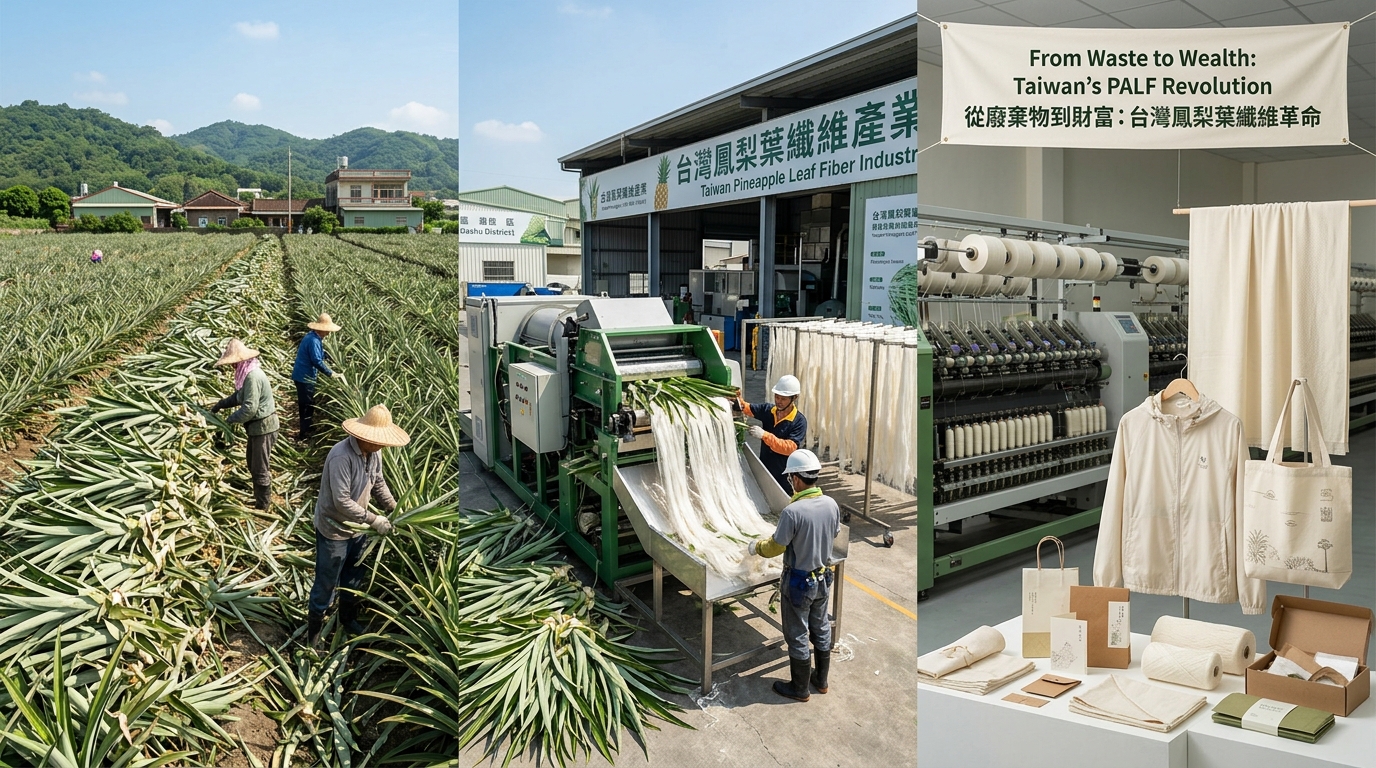
Unlocking Green Gold: How Taiwan’s PALF Powers Next-Gen Sustainable Sourcing

Taiwan’s pineapple industry churns out 480,000+ metric tons annually, leaving 700,000 tons of leaf waste as a costly disposal nightmare for farmers and supply chains. Enter Pineapple Leaf Fiber (PALF): ITRI, UKL, and Jiuru Farmers’ Association have engineered a game-changing solution—automated, traceable fibers that slash ESG risks, stabilize costs, and meet looming EU CBAM demands for apparel and textiles procurement pros.

Core Technology: Taiwan’s Extraction Edge

ITRI’s 2024 Pinacell system transforms Tainong No. 17 leaves into premium 60-count fibers—tough, breathable, naturally antibacterial, blending seamlessly up to 40% with cotton or lyocell. The 2025 milestone? 100 kg shipment yielding 7,500 garments for US, Japan, and Vietnam markets, plus NT$10k+ extra per fen for farmers. Full-plant utilization (stems to enzymes, peels to silage) delivers a mere 0.784 kg CO2e/kg footprint.

Real Applications: From Pilot to Production

UKL EVOPURE+ integrates PALF into T-shirts, sweaters, outerwear, and home goods like curtains—award-winners (Taiwan Excellence 2025). Jiuru crafts apparel and bags; Tongzheng’s knits cut water use by 97%. Test via ecopalf.com OEM for low-risk entry.

Procurement Wins at a Glance

Key SpecTaiwan PALFCottonSynthetics
Water Reduction97% High
Emissions (CO2e/kg)0.784 5-2010+
Natural AntibacterialYes NoTreated
Origin TraceabilityMOA Farm SpottyPetrochemical

800k-ton waste reserves ensure supply security.

Taiwan PALF vs. Piñatex: Automation vs. Artisan

Piñatex (Philippines, 2012 by Ananas Anam) rules vegan leather for Hugo Boss and Nike (50K Martindale durability), but manual scraping yields coarser non-wovens. Taiwan’s full automation unlocks yarn-grade textiles Piñatex can’t match.

BattlegroundPiñatex Taiwan PALF 
ProcessManual Automated Yarn
Best ForCoated LeatherBreathable Blends
ScaleFarm-Dependent700k Tons Waste
ClientsNike/Hugo US/Japan Exports 

Best strategy: Pair both for diversified portfolios.

Hurdles and Smart Solutions

Leaf costs at NT$10-20/kg? Automation trims 30% labor. 1% yield variance? Yunlin facilities lock consistency. Blending tweaks? UKL machines handle it.​

RiskProcurement HitCountermeasure
Pricing Early Premiums30% Labor Drop ​
Output Delays8k Tons by 2028 

Worldwide PALF Wave

Brazil advances auto composites, India exports yarns, Vietnam blends sportswear—global market hits $200M by 2030.

Growth Trajectory

Regulatory tailwinds (CBAM 2026) fuel: 8k tons near-term, 20-30% market share long-term with 15% green premiums.

PhaseOutputRevenue Potential
2026-288k Tons NT$1B+ 
2030+20-30% GlobalMulti-Billion 

Sourcing Blueprint: From Strategy to Success

Kick off with UKL/Jiuru pilots (80% Taiwan allocation), secure ISO audits, and blend for 15% savings over lyocell. This positions you ahead of carbon tariffs while building resilient, verifiable chains.

Taiwan’s PALF isn’t a trend—it’s a supply chain revolution. By harnessing automated precision, local abundance, and zero-waste innovation, procurement teams can convert ag-waste challenges into competitive strengths. As CBAM enforces accountability and consumers reward authenticity, early adopters will reap margins, compliance ease, and brand loyalty in a $200M+ arena. Reach out to ecopalf.com now: sample fibers, run trials, and lead the shift from waste to wealth—securing your firm’s sustainable future one thread at a time.

Sustainable Yarn: The Future of Eco-Friendly Textiles

The article discusses the rising popularity of eco-friendly yarns in the textile industry due to their sustainable production processes and use of environmentally friendly materials. It covers the types of eco-friendly yarns, such as organic cotton, bamboo, hemp, and recycled fibers, highlighting their benefits and sustainable production methods. Additionally, it outlines the diverse applications of sustainable yarns and emphasizes the environmental and ethical reasons for choosing eco-friendly yarns over traditional options.

An increasing number of eco-friendly yarns are gaining popularity as the textile industry moves towards sustainability. These yarns are made from environmentally friendly materials and produced using processes that offer a greener alternative to traditional textiles. Here’s an overview of eco-friendly yarns, their different types, and the reasons behind their growing popularity.

What Are Eco-Friendly Yarns?

Environmentally friendly yarns are made from sustainable materials such as organic cotton, bamboo, hemp, and recycled fibers. Unlike traditional yarns, which often contain synthetic fibers and toxic chemicals, eco-friendly options prioritize the well-being of the planet and its inhabitants. The production of these yarns usually involves less water, fewer chemicals, and generates lower carbon emissions, making them a more environmentally responsible choice.

How Eco-Friendly Yarns Are Made

Eco-friendly fibres are made using sustainable practices and materials, often incorporating recycled fibers, organic materials, or fibers derived from renewable sources.

Main Types of Sustainable Yarns

  1. Organic Cotton: Grown without synthetic pesticides or fertilizers, organic cotton helps reduce environmental impact while providing soft and breathable fabric.
  2. Bamboo Yarn: Bamboo is a fast-growing plant that requires minimal resources. The resulting yarn is soft, breathable, and has natural antibacterial properties.
  3. Hemp Yarn: Hemp is a highly sustainable crop that needs little water and no pesticides. Hemp yarn is durable and strong, making it ideal for various applications.
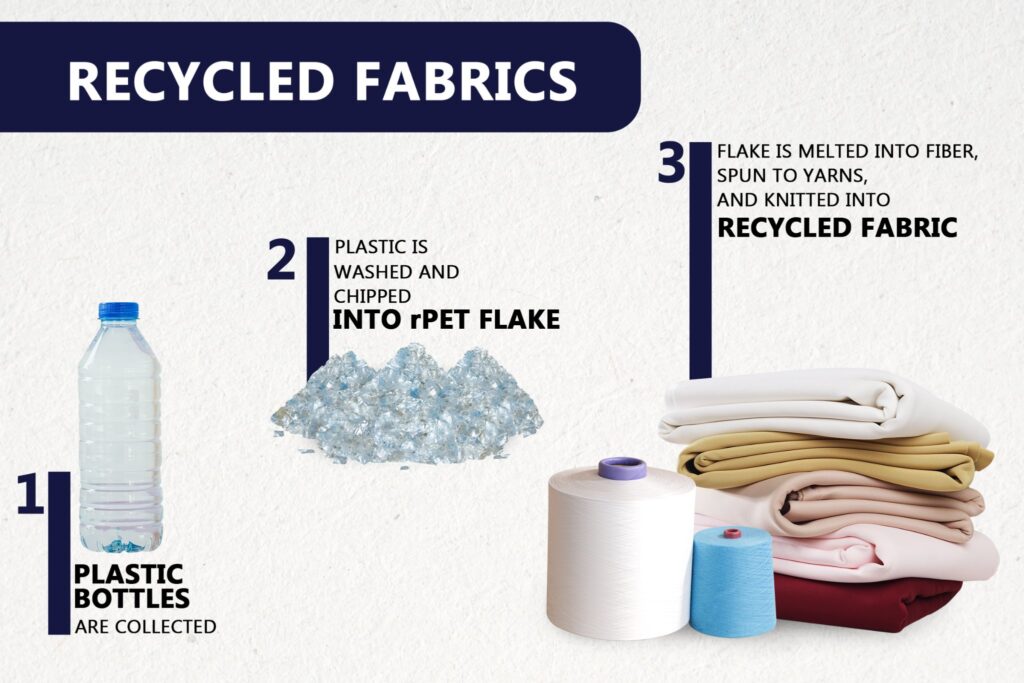
  4. Recycled Fibers: These yarns are made from post-consumer waste, such as plastic bottles or discarded textiles. Using recycled materials helps reduce landfill waste and lowers the demand for virgin resources.
  5. Tencel and Modal: These fibers are derived from sustainably sourced wood pulp and are produced in a closed-loop process that minimizes waste. They are soft, breathable, and biodegradable.
Image from JS Fabric

Applications of Sustainable Yarns

Eco-friendly yarns offer incredible versatility and can be utilized in numerous applications. Ranging from fashion to home textiles, these sustainable yarns deliver the durability and quality essential for everyday use. They are perfect for outdoor and indoor sportswear, military and industrial uses, healthcare textiles, and outdoor furniture. The potential applications are boundless, and the environmental advantages are significant.

Why Choose Eco-Friendly Yarns?

The textile industry is widely recognized as a significant contributor to environmental pollution. Opting for eco-friendly yarns can contribute to a more sustainable future by reducing carbon footprints, minimizing waste, and promoting the use of renewable resources. Sustainable yarns are often produced under fair labor conditions, ensuring ethical practices throughout the supply chain.


ECO Friendly Yarns from Acelon Chemicals & Fiber

Acelon Chemicals & Fiber Corporation: Leading the Way in Sustainable Yarn

Acelon Chemicals & Fiber Corporation is committed to offering various high-quality sustainable yarns to reduce harm to the earth. Their sustainable yarns focus on both wearing durability and environmental impact. Acelon’s product range includes bio-based nylon yarns, dope-dyed yarns, recycled polyester yarns, and more. Each product is designed to meet the highest standards of sustainability and performance.

Explore Acelon’s Environmental Friendly Yarn Collection

Acelon offers a diverse range of eco-friendly yarns tailored to meet different needs:

  • Bio-Based Nylon Yarn (AceEcobio PA410): Made from renewable resources, offering excellent durability and environmental benefits.
  • Dope Dyed Yarn (AceColor®): Reduces water pollution and energy consumption during the dyeing process.
  • Recycled Dope Dyed Color Yarn (AceColor®ECO): Combines the benefits of recycled materials and efficient dyeing processes.
  • Recycled Polyester Yarn (AceEco™ rPET): Made from post-consumer plastic bottles, providing a sustainable alternative to virgin polyester.
  • Recycled Nylon Yarn (AceEco™ rNY): Offers the same strength and durability as traditional nylon but with a lower environmental impact.

Conclusion

Choosing eco-friendly yarns is a step towards a more sustainable and ethical textile industry. By opting for materials that reduce environmental impact, we can make a significant difference. Acelon Chemicals & Fiber Corporation is dedicated to providing high-quality, sustainable yarns that meet the needs of various industries while promoting environmental stewardship.

For more information on sustainable yarns and to explore Acelon’s product offerings, visit their eco-friendly yarn collection page.