đź§‹Global Bubble Tea Ingredient Trends: How Tapioca Pearls and Tea Define Market Success

As bubble tea evolves from an Asian specialty to a worldwide beverage phenomenon, ingredient selection has become a key driver of product differentiation. Across markets from North America to the Middle East, consumer expectations for tapioca pearls and tea bases vary widely, reflecting cultural drinking habits and local preferences.

Regional Preferences Shaping the Bubble Tea Landscape

Market research shows that bubble tea success relies heavily on regional flavor alignment rather than a one-size-fits-all approach.

RegionTea Base TrendTapioca Pearl PreferenceConsumer Insight
North AmericaLight and smooth milk teasSoft, chewy textureConsumers favor comfort and sweetness balance
EuropeFloral, low-sugar blendsSmaller pearlsPreference for artisanal, natural flavor
Southeast AsiaBold, roasted teasFirm, Q-textured pearlsHot climate demands strong tea aroma
Middle EastSweet and creamyHoney pearlsStrong visual and sensory appeal

The alignment of tea intensity and pearl texture is not simply sensory — it’s strategic. Adapting formulations to match local palates increases brand acceptance and repeat purchase rate.

Tapioca Pearl Innovation: Balancing Texture and Stability

In high-demand markets, the tapioca pearl’s elasticity and resistance to time are crucial. Pearls that soften or harden unevenly compromise beverage consistency — a major issue for franchise scalability.

Modern suppliers now offer pearls tailored for long holding times and specific climates. For example, “fast-cook” pearls meet quick-service café needs, while “premium black pearls” emphasize aroma and natural sweetness.

Recommendation: Conduct texture and storage tests before full-scale rollout. Shelf-life simulation under real store conditions ensures consistent product quality.

Tea Selection and Brewing Standardization

Tea defines the flavor backbone of any bubble tea product. Differences in oxidation level, origin, and particle size (CTC vs. whole leaf) influence not only flavor but also batch-to-batch stability.

For large-scale OEM bubble tea operations, choosing a blend with stable yield and extraction ratio ensures flavor consistency across outlets and batches.

Market Adaptation and Ingredient Localization

Localization is no longer optional. Global chains and startups alike increasingly develop region-specific recipes, such as low-sugar oolong teas for Japan or fruit-infused black teas for the U.K. market.

This adaptation often involves collaboration with OEM or ODM partners who understand raw material behavior and export regulations.

Conclusion: Turning Trends into Strategy

The next phase of global bubble tea growth will depend on how effectively brands can translate cultural flavor preferences into scalable ingredient systems.

As a Taiwan-based OEM/ODM bubble tea supplier, Empire Eagle Food Co., Ltd. (BOBA EMPIRE) provides customized tapioca pearls and tea blends designed to align with regional market needs and production requirements. Their experience across 50+ countries makes them a trusted partner for developing market-ready beverage solutions.

From Niche to Mainstream: How Western Restaurants Are Capitalizing on the Bubble Tea Boom

Bubble Tea

Bubble tea, once a youth-driven beverage trend from East Asia, has become an integral part of the Western beverage ecosystem. Restaurants and cafés in the U.S. and Europe are incorporating it not merely as a fad but as a strategic business diversification move. This article analyzes how they are doing it successfully—based on cross-market data and real-world business models.

The Market Context: Beyond Coffee & Smoothies

Traditional café menus are evolving. As coffee sales plateau, bubble tea introduces new revenue layers by targeting younger demographics seeking interactive beverage experiences.
In fact, according to Euromonitor (2024), bubble tea is now among the top five fastest-growing specialty beverages in the U.S. foodservice sector.

Business Drivers Behind Adoption

Restaurant owners in the West cite four main motivations for adopting bubble tea:

Business DriverDescription
Product DifferentiationAdds novelty without overhauling core menu offerings.
ProfitabilityAverage profit margin of 60–70% per cup.
Operational FlexibilitySimple integration into existing bar setups.
Cultural AppealTaps into the globalized Asian food movement.

These drivers align closely with the “experience economy”, where customers pay for novelty and personalization.

Key Global Suppliers Shaping the Market

To maintain authenticity and consistency, many Western businesses rely on global ingredient suppliers who specialize in B2B bubble tea products:

SupplierCountryDistinct Feature
Empire Eagle Food Co., Ltd.TaiwanComplete B2B supply solution from tea bases to packaging
Ten Ren Tea Co.TaiwanCenturies-old expertise in premium tea blends
CoCo Fresh Tea & JuiceTaiwanMulti-continent franchising model and ingredient R&D
Kung Fu TeaUSALocal sourcing adaptation for the U.S. market

These firms play a critical role in bridging Asian production efficiency with Western demand for quality and sustainability.

Operational Lessons from Industry Leaders

For business operators planning to add bubble tea to their menus, several lessons stand out:

  • Invest in staff training to ensure consistency and speed during peak hours.
  • Use modular ingredient sourcing—start with pre-mixed bases before full customization.
  • Leverage social media storytelling—visual beverages are marketing gold for TikTok and Instagram audiences.

In other words, bubble tea is as much about branding as it is about beverage innovation.

The Future Outlook

As consumer tastes evolve, experts predict further fusion between Western beverages and bubble tea culture. Concepts like “bubble coffee” or “tapioca dessert drinks” are emerging, reflecting the ongoing globalization of beverage trends.

According to a 2024 NielsenIQ survey, 68% of Western consumers aged 18–35 have tried bubble tea, with 42% consuming it monthly—a clear sign that the market has matured beyond novelty.

Conclusion

For U.S. and European cafés, bubble tea represents a bridge between tradition and trend, profit and identity. The lesson is clear: those who adapt early will not just capture a market, they’ll define the next wave of beverage innovation.

References:

2025 Growth Trends of Bubble Tea in the U.S. and European Foodservice Industry

Bubble Tea Market

Bubble tea, also known as boba tea, has rapidly evolved from an Asian specialty drink into a mainstream beverage category across the U.S. and European markets. In 2025, the growth trajectory of bubble tea in the foodservice sector continues to accelerate, fueled by shifting consumer preferences, cultural crossover, and innovation in product supply.

This article explores the key growth trends, drivers, and industry players shaping the future of bubble tea in Western markets.

Bubble Tea Market Growth Overview

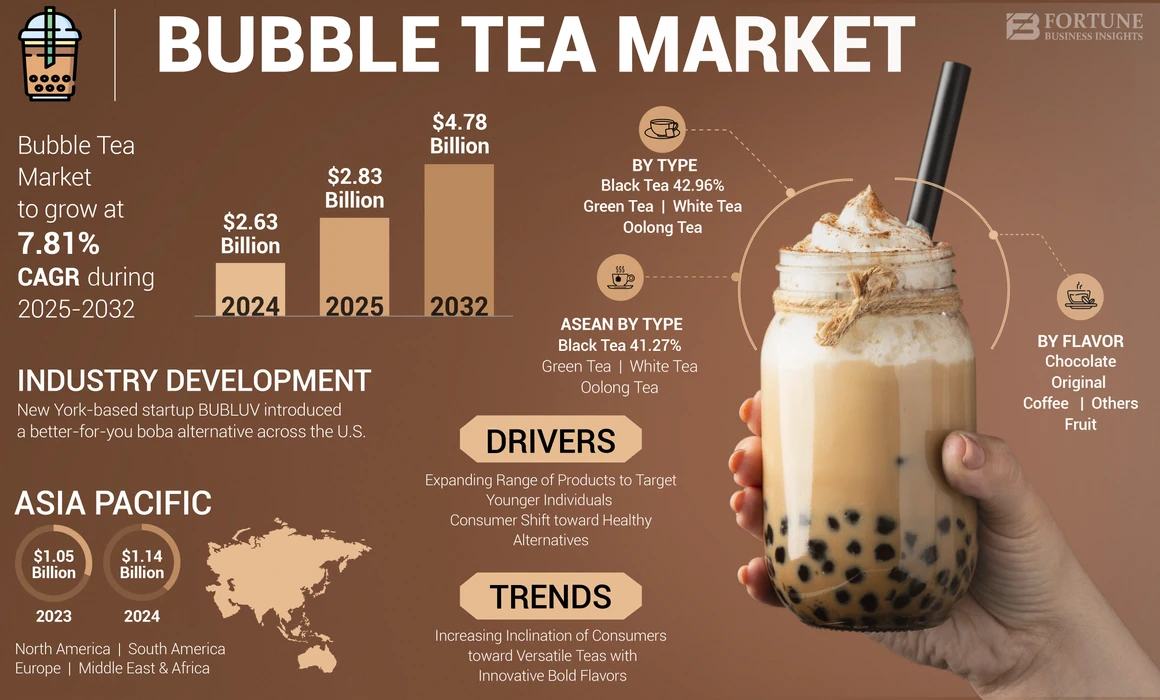
According to Fortune Business Insights, the global bubble tea market is expected to surpass USD 4 billion by 2032, with significant momentum coming from North America and Europe.
(Fortune Business Insight)
The U.S. market has seen steady growth as bubble tea expands beyond ethnic enclaves into mainstream cafés and restaurants. Meanwhile, in Europe, countries like the U.K., Germany, and France are experiencing strong adoption driven by younger demographics seeking novel beverage experiences.

Key Growth Drivers in 2025

  1. Gen Z and Millennial Influence: Younger consumers remain the largest demographic group driving bubble tea consumption. They value customization, fun textures, and social media-friendly drinks.
  2. Diversification in Foodservice: Restaurants and cafés are increasingly integrating bubble tea to differentiate their menus.
  3. Health-Conscious Options: Innovations in low-sugar bases, dairy alternatives, and fruit-based options are broadening the customer base.
  4. Digital Ordering & Delivery: Online ordering platforms and delivery services make it easier for customers to access bubble tea conveniently.

Industry Players: Global Bubble Tea Suppliers

The growth of bubble tea in the West has also been supported by a strong ecosystem of global bubble tea suppliers. Below is an overview of five notable companies:

SupplierContribution
Boba EmpireOffers end-to-end bubble tea solutions including ingredient sourcing, customized shop consultation, and operational support.
Boba CHICKnown for premium popping boba and flavor bases, widely exported to global markets.
Chatime InternationalOperates retail outlets and supplies ingredients, emphasizing branding and franchising.
Kung Fu TeaProvides franchise solutions and ready-to-drink concepts.

Each of these players contributes to making bubble tea more accessible for operators, ensuring consistent quality and driving adoption in diverse markets.

Challenges Facing the Market

Despite rapid growth, bubble tea integration in Western foodservice is not without hurdles:

  • Supply Chain Reliability: Consistent delivery of tapioca pearls and syrups is critical, especially in cross-border logistics.
  • Operational Complexity: Preparing bubble tea requires training and equipment that some operators may find challenging.
  • Health Perceptions: Concerns about sugar content may hinder adoption if not balanced with healthier alternatives.

Addressing the Challenges

Suppliers are increasingly offering ready-to-use ingredients and frozen storage options to reduce operational burdens. Meanwhile, product innovation in low-calorie sweeteners and plant-based alternatives helps address consumer health concerns.

Future Outlook

Looking ahead, bubble tea is expected to:

  • Expand into more mainstream menus at casual dining restaurants.
  • Evolve into healthier formats with plant-based, functional, and sugar-reduced options.
  • Embrace digital-first strategies to strengthen brand visibility through social media and influencer marketing.

Conclusion

The bubble tea market in 2025 is defined by rapid growth, diversified adoption, and global collaboration. With strong demand from younger demographics, operational support from suppliers, and evolving consumer health trends, bubble tea is well-positioned to remain a staple in U.S. and European foodservice for years to come.

Bubble Tea Materials: 4 Ingredients of Bubble Tea That You Should Know

Bubble Tea Materials

The bubble tea is made with 4 ingredients:

  • Flavor: flavored powder, flavored syrup, fruit purees or fresh fruit
  • Creamer: powder creamer, half-n-half, full milk or other creamer
  • Sweetener: sugar, simple sugar syrup, fructose, or honey. Sugar free sweeteners can be used such as Aspartame, Stevia and Sucralose.
  • Liquid: water, tea or milk


Tapioca Pearls or the “fun” stuff on the bottom adds a new element to the bubble tea beverage. Tapioca is distinctive, chewy and ultimately addicting. Tapioca may be the traditional black or the new colored tapioca pearl. For an added twist, coconut meat can be added for a new flavor dimension.


The Perfect Bubble Tea Experience

Drinking the Perfect Bubble Tea includes the perfect texture of the tapioca bubbles or “Boba.” The perfect texture meaning is not too soft and not too hard. The perfect chewiness is similar to a fresh gummy bear. In addition, the drink should be smooth and tasty. The cool beverages should have a good taste and a refreshing feeling.  The warm beverages should be at the right temperature to warm ones inside. Bubble drinks come in a variety of flavors and textures. Some are made with fresh fruit, some with the Bubble Tea Supply flavored powders and some with the flavored syrups. However the drink is mixed, it should not be watery. There should be a clear and distinct flavor with every drink enjoyed with bubbles or “Boba” to chew down with the drink.


Flavor of Bubble Tea


  • Cream Flavored Powder:

Cream Flavored Powders vary in quality, amount of servings and price. They are separated into A, B&C grades. We recommend the “A” grade due to better taste, texture and cost per serving. “B&C” grades are the most common in the marketplace and are referred to as market grade.


Cream Flavored Powders are created from three main ingredients:

  1. Fruit Flavoring
  2. Creamer
  3. Sweetener


Bubble Tea Supply’s Premium Grade “A” powders have a strong fruit flavoring because the juices of the fruit are used to create the flavor. The percentage and type of fruit flavoring used differs between the Premium Grade “A” and market grades “B&C”. Some of the Premium Grade “A” powders contains as much as 75% of the fruit flavoring. This gives your bubble tea a more natural, real and creamy “fruit” taste. Our market grade “B&C” products have less fruit flavoring, however, still replicates a bit of the real fruit. In our market grade “B&C” products, there is a higher percentage of creamer and sweetener added.


The sweetener that is used also makes a difference in the flavor of the drink.  Premium grade “A” powders have a much more natural taste. Sometimes when lower grade sweeteners are used there may be an artificial taste or even an aftertaste.


An important thing to know about bubble tea flavored powders are the tricks that companies play. Many suppliers will use high concentrations of inert ingredients such as creamer, artificial ingredients, etc. to make their product cost less. This is very deceiving to the customer when trying to compare powders. The best way to compare is to taste the powders sided by side in the exact same measurements.  This is an easy way to know who really has the best product. After you compare our powders to anyone else, we know you will become a lifelong customer.


  • Tea Flavored Powder:

Tea Flavored Powder is created to provide the traditional flavor of tea without the labor of brewing. The tea powder can be used to make a black milk tea or green milk tea bubble tea drink or can be used with the cream flavored powders mixed with water instead of brewed tea. An example of this is to use one scoop of tea powder with water and cream flavored powder instead of brewed tea. We also have infused tea powders with aromas such as lavender and rose. Both are very popular.


  • Gourmet Coffee Powders:

Iced coffee is a very popular drink these days and we have an easy preparation for gourmet coffee drinks. These coffee powders include flavors such as cafe latte and cafe French vanilla.


  • Juice Flavored Syrups:

The Juice Flavored Syrups are a strong thick concentrate used to infuse black or green tea with fruit flavors or for frozen blended bubble tea. Created from the juices of the real fruit, it is hard to tell the difference between fresh fruit and our bubble tea syrups. Some syrup even contains pieces of real fruit in them (i.e. strawberry bits, passion fruit seeds and the like). Most syrup have a sweet and citrus taste, depending on the flavor and provide a light and refreshing taste enhancing the flavor of the tea.


Creamer of Bubble Tea

Although the flavored powder has a milk powder already in the ingredients, using an additional creamer provides body to the bubble tea. We recommend a powdered non-dairy creamer, half n’ half, or milk.


  • Powdered non-dairy creamer is available in a variety of brands and seems to fulfill the same taste and body to bubble tea. This is the most common form of creamer used in most bubble tea shops.


Some prefer not to use the non-dairy creamer as it sometimes is more difficult to dissolve in the drink. To get rid of the bits of creamer when preparing the bubble tea, use a warm liquid to dissolve the powders first. Another option if warm liquid is not available is to make sure that the drink is shaken really well. Vigorous shaking will ensure the powders are fully dissolved.


  • Half n’ half is another option and adds a thicker body to the drink. When using half n’ half, your bubble tea will taste more like ice cream or a milk shake. Using half n’ half makes the bubble tea rich in flavor and is a favorite among coffee drinkers.


  • When using milk, whole milk is suggested. Milk gives your bubble tea a more naturally creamy taste and texture. The thickness of your bubble tea may become thinner. If making a blended bubble tea with milk as a creamer, the drink replicates a fruity milk shake.


Sweetener of Bubble Tea

While the flavored powder already has a sweetener included in its mix, it is recommended to add a bit more sweetener to your bubble tea. These are the most commonly used sweeteners.


  • Using white or brown sugar is preferable. These are normally made into simple sugar syrup. The sweetness brings out the fruit flavoring more when the drink is at a cold temperature. Cane sugar and simple sugar syrup is the most recommended sweetener as it adds a more natural taste and adds the perfect sweetness in the bubble tea.


  • Fructose is also very popular. Fructose is a sweetener that is taken from the juices of fruits. Fructose provides the bubble tea with a thicker body, yet has a different taste. Fructose is preferred by shops catering to those with sugar sensitivity. Fructose is typically less expensive than pure cane sugar syrup.


  • Honey can be used to provide a lighter sweetness to the bubble tea. Once again, the taste and texture are different but preferred by some. Honey can also be used to sweeten the tapioca pearls.


Liquid – “T-E-A” in Bubble Tea:

Although the drink first originated from a mix of real tea and fruit flavoring, this fun drink has recreated itself to being known as a tea, coffee, or smoothie with tapioca on the bottom known as “bubbles.”


Adding tea to the drink is not recommended for all of the flavors. Of course, depending on the taste preference of the customer, you will want to satisfy their taste buds. Black and Green Jasmine Teas have a refreshing sweet taste when flavored syrup or juice flavored powders are shaken with simple sugar syrup. Black milk tea powder can be substituted for brewed tea.


The cream flavored powders create the best flavored bubble tea when shaken with filtered water, creamer and simple sugar syrup. Milk can also be substituted for the water and creamer.


Texture of Bubble Tea

Tapioca Pearls or the “fun” stuff:


The texture of the tapioca pearl is one of the most important parts of making a Perfect Cup of Bubble Tea. There are two colors available, the traditional black tapioca pearl and the new colored tapioca pearl that comes in pastel colors. As another “fun” option, coconut meat with a gelatin-like texture can also be added to the bottom of the bubble tea. Coconut meat is also fun to suck up through the fat straw and will tantalize your taste buds with flavors such as lychee and pineapple.  Coconut meat can be used in addition to tapioca or as an alternative.


There are also two types of tapioca pearls available, the semi-cooked tapioca pearl and raw tapioca pearl. The semi-cooked tapioca pearl in its uncooked state is harder making it more resilient to shipping. The preparation time is about 10 minutes less than the raw tapioca and an unopened bag of semi-cooked tapioca will have a slightly longer shelf life. The downside to semi-cooked tapioca is that the pearl is not as chewy as the raw tapioca. Semi-cooked tapioca also loses its chewiness faster than the raw tapioca.


Bubble Tea supply sells raw tapioca in its highest quality to insure you serve the Best Tapioca Pearls. The raw tapioca pearl is recommended because the texture is chewier and will stay chewy longer. You will notice after opening the bag that the raw tapioca pearl is very delicate. If pinching a pearl between two fingers, the pearl breaks easily into powder.


While preparing the tapioca pearl, you want to decide if you would like to serve your pearls harder or soft. Tapioca pearls are served at different consistencies worldwide, and are usually done on preference. It should have a good texture though, not too hard (like an old gummy bear) and not too mushy (like a Juju Bee candy). You can follow our Virtual recipe book under the recipe section to prepare your tapioca pearl at the suggested texture.


When comparing Bubble Tea Supply tapioca pearl with the competition, you’ll notice that Bubble Tea Supply tapioca pearls hold together well throughout the day while retaining a chewy texture. It is not recommended to reuse left over tapioca pearls, as your customers will notice a difference in texture. We compare the tapioca to fried chicken. Fried chicken is very good when it’s first cooked but if you try to serve it the following day it isn’t the same. The same goes for tapioca. If it’s your customer’s first experience with “old tapioca” Bubble Tea, it may be their last!


If you want to find an excellent bubble tea materials supplier, I recommend that you can visit Empire Eagle Food Co., Ltd. – they not only provide bubble tea materials but also tea shop training program. Learn more details, please do not hesitate to contact with Empire Eagle.


Article Source: http://www.bubbleteasupply.biz/bubble-tea-components