Creative Ideas For Hot Foiling With Laser Heat Transfer Foil To Get The Best Results

A laser printer or copier is required for the initial printing along with some laser heat transfer foil. For the heat transfer, a regular laminator is recommended or you can also use a household clothes iron with a little practice.


Metallic foil is a good way to attain a shiny gold or silver effect which cannot be achieved with regular printer ink. The end results are shiny, realistic looking metallic effects.


Here’s a short list of transfer foil projects that I have seen using heat transfer foil:


• Christmas card borders and toppers

• Card making

• Scrapbooking projects

• Business cards

• Book covers

• Wedding invitations

• Party invites

• Craft projects


What you will need:


• Some laser heat transfer foil

• A laminator for the heat transfer (a clothes iron can also be used)

• A laser printer or laser copier to print out a black picture, design or text.


Before I owned a laser printer, I used to visit my local Staples store to print out the images that I wanted to use onto plain white paper for a small fee which is an alternative for those who do not own a laser printer.


The Process


Depending on your project, you will need to locate the pictures or text to use for the foil transfer. For instance, if you were doing a scrapbooking project about horse riding, you might want a large golden horse on the front of your project or maybe a Unicorn or Pegasus.


For this project, I would start at Google images, and do a search for “horse silhouette.” This will produce dozens of black images of horses for me to choose from. If you need a large picture, you can adjust the images that Google return by clicking onto “large” images only. Once selected, save the image by right clicking / save followed by printing out with a laser printer.


Step 1) Roughly cut your image out and put to one side.

Step 2) Grab a plain piece of A4 paper and place this on the floor

Step 3) Place your image, picture side facing up, on top of your plain sheet base.

Step 4) cut a piece out of your foil, slightly bigger than your image and place this on top of your image metallic side facing up.

Step 5) Now place either a piece of greaseproof type paper or another piece of plain paper on top of your foil to make a 4 level sandwich.

Step 6) Turn your laminator on, wait for it to reach temperature and then pass the sandwich through the laminator.


Wait a few moments to cool down, remove the top sheet / greaseproof type paper and then slowly peel the foil away from the picture. You will see that the foil has heat transferred onto the black picture, leaving it coated with gold and ready to apply to your project.


How to Make Your Own Holograms


Laser heat transfer foil also comes in a holographic form too allowing for all kinds of images, logo’s, pictures or text to be coated with a special silver spectrum effect. Again, the same steps apply as above allowing for great holographic effects for business cards and craft projects.


Foil Size


Foil sheets come in various sizes, the most popular being in sheets of 15cm x 3metres. This amount will provide you with enough material for potentially hundreds of Christmas card borders or toppers or thousands of business card logo’s etc.


Heat Transfer


Using a laminator is the most popular method to use for the heat transfer. Just one pass through the machine is enough to completely coat your once black image or text with a metallic effect. If you do not have a laminator, try using a household cloths iron instead. Many people use this with no problems.


Depending on the type of laminator or iron that you have, you may need to substitute the greaseproof top sheet with a second piece of plain paper to slightly reduce the temperature as the paper lets slightly less heat through than the heat transfer greaseproof type paper. I use the greaseproof type paper personally as this works best with my laminator.


It really is simple to make very creative designs and brighten up everyday objects if you take a little time and follow this guide. Do a search on eBay or Google for heat transfer foil and craft paper and you should be presented with various pack options for Gold, Silver and Hologram.


Article Source: http://EzineArticles.com/?expert=Ahmed_Hammad

Article Source: http://EzineArticles.com/7448097

How to Make a Ball Valve

Ball valves are used to control the flow of liquids, steam, chemicals and foods. They are simple, inexpensive and reliable valves that are often seen in laboratories, factories and food processing. They consist of a ball that can be rotated — usually through 90 degrees. A hole drilled through the ball, allows fluid flow when the hole in the ball is aligned with the flow. When the ball is rotated, the ball blocks the flow.

Instructions:

1. Clamp the ball in a vice and drill a hole through the ball. A ball with a single hole drilled all the way through it will make a ball valve that switches a single stream on and off. For a more complex valve, turn the ball and drill another hole from the surface of the ball to intersect the first hole. The balls with two holes are used where three lines come together. These ball valves can close off any one, or all three paths.


2. Attach a rod to the ball so the rod is perpendicular to the hole that goes through the ball. If you are using a plastic ball, the rod should be plastic and should be attached with crazy glue. If the ball is metal, the rod should be metal and should be welded. In either case, the joint should be polished smooth so the ball valve will move easily. The rod should terminate in simple metal handle. The handle should be attached in such a way that the handle lines up with the flow through the gate.


3. Install the ball valve. In the simplest cases this could be a simple as punching a small hole and inserting the ball and rod into a plastic tube. If this is the case, the handle should be attached only after the ball and rod are in place.


Article Source: http://www.ehow.com/how_10070341_make-ball-valve.html#ixzz2c1Ocp5a8

Use a Baler for Easier Recycling

A baler is a machine used for the purpose of creating bales or tied-up bundles of dry waste like cardboard, papers, plastic, and rags. They are used in many offices and commercial set-ups to aid the process of efficient waste disposal and recycling wherever possible. Balers may be a result of technological advancements, but the process of baling is no new chore. It was done in the previous years on hay, grass etc. to secure it for storage and transportation purposes.


* Balers for recycling


Besides being used in industries as a mechanism of compressing and then disposing off waste, a baler is also used at recycling centers to bundle similar waste matter before it embarks upon its recycle journey. Vertical, horizontal, and automatic tie balers are some of the most common baler types used in the recycling industry. These can be fed in whatever way one finds suitable – by hand, by conveyor belts, by loaders, or by air systems. Nexgen baler is a popular term used for environmentally friendly balers that make waste management so easy.


* More baler types


Besides their physical and technical structure, balers can be classified on the basis of the stuff they process.


Some of them common ones are:


Cardboard/paper baler: It is used mainly in offices to collect and tie paper waste. Since paper is a recyclable product, these balers are also used extensively in recycling stations.


Plastic baler: Much of the domestic waste includes plastic bottles and containers, all of which need to be processed by a dedicated plastic baler.


– Textile baler: Naturally the most common baler in the textile industry, it is very efficient in disposing waste cloth, threads, etc.


Metal baler: This one is a relatively large, thick-walled and powerful machine that substantially reduces the volume of metal scrap and bales it to provide for easy disposal or recycling. The crushing strength needed is highest for metal balers owing to the sharp and sturdy nature of most metals.


* Baler Wire


Baler wire is a major part of baling equipment. It is used for tying together the compressed waste matter. The kind of baler wire used depends on the baler in which it is needed and also on the items to be baled. An ideal baler wire should be high on tensile strength and compatible with the functionalities a baler is expected to perform. Flexibility is another important attribute necessarily required in a baler wire. Secured by a good quality baling wire, bales formed can be transported very easily without being vulnerable to spillage from anywhere. So it is very important that you buy a good quality baling wire from some reputed company.


* Best balers on the market


Companies specializing in making recycling equipment are generally into the production of balers. There are a few reputed names that can be trusted while placing a baler order. They keep advanced, easy to use balers or the nexgen balers in their inventory. These are the most sought after machines on the market because of their high quality and because these require little human effort and energy for operation.


Erich Lawson finds balers a useful resource for recycling waste in offices, factories, farms and other commercial setups. Technologically advanced nexgen balers of today can compact various types of waste materials easily. Besides, using baler wire the compressed waste is tied neatly for easy transportation. To learn more about recycling equipments visit Northern California Compactors.


Article Source: http://EzineArticles.com/?expert=Erich_Lawson

Article Source: http://EzineArticles.com/6972417

Manufacturer of Switching Power Supply, Adaptors – Hon-Kwang

Hon-Kwang was founded in 1981. Head office is in Kaohsiung, Taiwan. Hon-Kwang is a maker of power supplies & specialized in the design and manufacture for the domestic and foreign market.

Hon-Kwang specialized in manufacturing switching mode power supply and series AC/AC adaptors, AC/DC adaptors with different output rating, I/P voltage. Also, LED power supplies with 5W, 7W, 10W up to 250W are provided. Hon-Kwang switching mode power supplies feature universal input, high efficiency and short circuit protection.


1

Hon-Kwang Electric Co., Ltd.

Address: 246, Feng-Jen Road, Feng-Shan Kaohsiung Hsien, Taiwan

TEL: +886 (7) 743-0206

FAX: +886 (7) 742-2305

E-mail: overseas@honkwang.com

How to Make a Simple Coil Winding Machine

Whether winding coils for an experiment, hobby or repair job, coil winding can be a tedious process. The tediousness of winding coils by hand can be alleviated by constructing a simple coil-winding machine to help with the coil-winding process. These machines only have three basic parts: the mandrel, the base and the upright supports. Luckily, each of these parts can be made out of basic construction materials and assembled to make a functioning coil-winding machine in a matter of minutes.

Instructions:

1. Cut the 2 x 6 board to a length of three feet. This will serve as the base for the coil-winding machine.

2. Cut the 2 x 4 into two eight-inch pieces. These will serve as the upright supports for the coil winding machine.

3. Stand the 2 x 4’s upright six inches from each end of the 2 x 6. Mark around their perimeter with a pencil.

4. Drill two pilot holes where you will mount each 2 x 4 piece. The pilot holes should be equidistant from each other and the edges of the marking you made in Step 3. Use a drill bit with a diameter that is slightly smaller than the diameter of the screws you will use to mount the 2 x 4’s.

5. Drill a hole with a diameter slightly larger than the diameter of the steel rod you will use for the mandrel one inch from the top of each 2 x 4 piece.

6. Secure the 2 x 4’s to the base with wood screws that are at least three inches long. The hole you drilled in Step 5 should be at the top of each 2 x 4 piece.

7. Insert the steel rod into the vice with five inches of the rod sticking up above the vice. Tighten the vice until the rod is held firmly in place.

8. Hammer the rod over until it bends at a 90 degree angle.

9. Loosen the vice and slide five more inches of the rod out so that a total of 10 inches of the rod (including the bent section) are sticking up out of the vice.

10. Hammer the rod over to another 90 degree angle so that the end of the rod makes a “Z” shape. This will be the handle of your mandrel. Remove the rod from the vice.

11. Insert the steel rod into the hole you drilled in the uprights in Step 5.

12. Clamp the wire for your coils to the mandrel with the vice grips. Rotate the mandrel handle with the wire clamped in place to begin forming your coil.


Article Source: http://www.ehow.com/how_7645238_make-simple-coil-winding-machine.html#ixzz2c1Epg88R

Car Fan Motors and Car Blowers – I YUAN

2

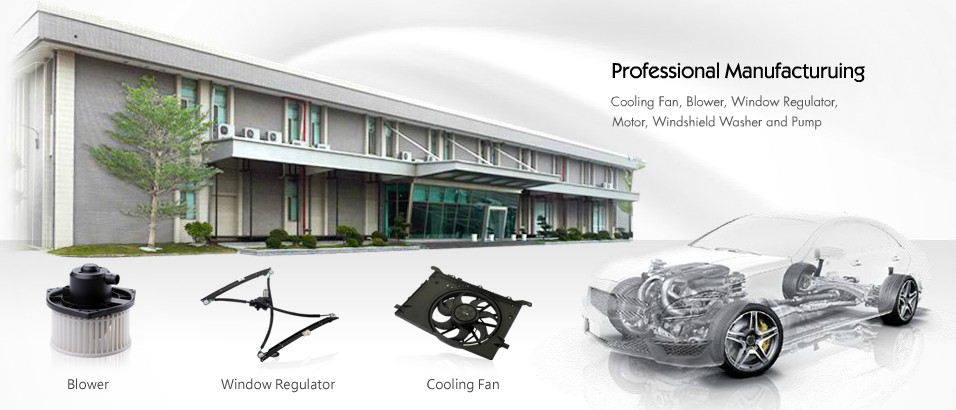
In 1986, I YUAN PRECISION INDUSTRIAL CO., LTD. started in windshield washer pump. Then, in 1993 and 2004, we expanded our product lines with cooling fan (radiator fan and condenser fan) and blowers. To expand our product line and our development, we have a new product line, power window regulator.


I YUAN has been offering a wide variety of reliable quality parts in the aftermarket. As a reputable supplier and a manufacturer of condenser fan motor, car cooling fan, blower assembly, car washer pump and power window regulator, I YUAN offers the most extensive replacement line in providing OE comparable products.


I YUAN PRECISION INDUSTRIAL CO., LTD.

Add: No.24, Dinghu Rd., Guishan Township, Taoyuan County 333, TAIWAN. R.O.C.

Tel: 886-3-3973-868

Fax: 886-3-3973-199

Email: ian wu@tiy-motor.com.tw

Choosing the Best RF Remote Controls System

Due to the different innovations in the field of technology, choosing the best RF remote controls for one’s every day needs has become quite tricky. For this reason, it is important that you look into the different factors that affect the quality of use of remote controls before you invest in a remote control system. Here are some considerations that you may use in choosing among the different choices in the market. Make sure that you look into every single one of them before you make your choice.


For one, make sure that you are fully briefed about the differences of the RF remote controls systems that you are choosing from. This is an important task to undertake, mainly because it is an integral part of choosing which one will fend for most of your needs as the user. There are different resources that you may use to learn about the different features that every remote system model has. Make sure that you have understood the differences between the models, in order for you to be able to choose the best one among the ones in the market.


Next, find out what type of purpose you will use the RF remote control system for. The best thing to go about this task is to find out what types of device you will mainly use the remote control for. Certain models work best with certain types of technology. For this reason, you better make sure that you invest your money on a remote control system that will fit your different technical needs.


You also need to look into the different location and placement issues that you would have to deal with. If you plan to use your remote control system for pieces of device that are all placed in one room, then it is imperative that you take the size of the room into consideration. For one, make sure that you will be able to control the different device from any point of the room. Most likely, you will be able to find a control system that will allow you to manipulate devices that are placed meters away, as long as there are no physical obstructions.


However, devices and appliances that are placed behind closets and cabinets are another thing. To use normal control systems for these pieces of technology, you would have to physically open the coverings prior to use. But if you have enough finds, however, you can choose to invest on more advanced remote control systems that will allow you to reach devices that are placed behind these coverings. They will cost more than the normal models, but they will be easier and more efficient to use.


Finally, choose an RF remote control system that will be very easy to manipulate. For one, you, as the owner, should be able to change the frequency and the amplification settings of the model. This will not only allow you to set the distance that you want your system to work with, but it will also allow you to restrict the controlling power that other people have over your devices.


John Samuel Smith has been writing articles online for nearly 3 years now. You can also check out his latest website about: RF Remote [http://rfremote.org/], which reviews and lists how to install RF remote controls [http://rfremote.org/how-to-install-rf-remote-controls/]


Article Source: http://EzineArticles.com/?expert=John_Samuel_Smith

Article Source: http://EzineArticles.com/6066748

The Advantages & Applications of Brushless DC Electric Motors

If you are building an item that requires DC Electric Motors (such as an electric wheelchair, a golf trolley or even refrigeration units), one of the most reliable and longest lasting types of motors are Brushless DC Electric Motors. But why are Brushless DC Electric Motors (or BLDC’s) so desirable?

First of all, it has very few moving parts, the only thing that moves is the commutator (which is a magnet), as a result there’s very little that can go wrong. Furthermore there’s very little friction, which also increases it’s lifespan, reliably and performance, but crucially also reduces it’s noise, heat production and sparks (so they’re perfectly safe to use around petrol engines, for example).

The engine works by having three (or more, but usually three) electromagnets around the outside of the commutator, held together by a ring. The electromagnets, when switched on, then pull the opposite pole towards it, whilst repelling the similar pole. This then turns the commutator, creating a spinning motion, which is connected to a gearbox or a driveshaft, resulting in power being driven to whatever the motor is used for.

They’re used for a lot, Brushless DC Motors are used for a variety of applications, as well as the ones mentioned at the top, they’re most common usage nowadays is within the IT industry. If you’re reading this on a desktop computer, there’s probably at least 3 near you! (one in the hard drive, one in the CD/DVD drive, and one in the PC cooling fan). That’s the low end usage, whereas the high end users are items such as hybrid cars. All in all, Brushless DC Motors are here to stay!

If you are in Europe, you can buy Brushless DC Motors from Fracmo, or find out more about DC Motors (Brushless, Brushed and more) from the DC Motor Guide.

Article Source: http://EzineArticles.com/?expert=Andrew_Roberts

Article Source: http://EzineArticles.com/2174651

Find the best Cables Manufacturer in FORTRON INDUSTRIAL

FORTRON INDUSTRIAL has been a professional cable manufacturer for 24 years. We provide a variety of cables, such as FFC cable (Flat Flexible Cable), LVDS cable, audio & video cable, USB cable, coaxial cables and custom cable assembly services. Asking for any engineer within Production, Purchasing, Marketing, and R&D department must pass Material Estimation, Production Technology, and Quality Control training to enhance personal strength on products and to guarantee the customers always getting satisfactory cables both for quality and price.

These strong dynamic background of each member ensure us to be specialist in the field. Fortron Cable Manufacturer have its own factory in China for manufacturing Signal Cord, Computer cables and Adapter to USB and Firewire cables; therefore we are competent to provide total solution for all demands of cable accessory which customer requested.

Fortron Industrial Co., Ltd.

Taiwan sales office: 6F-2, No. 2, Lane 251, Yang Hsin Pei Rd., Yang-Mei Town, Taoyuan Hsien, Taiwan.

Plant: In Shen Zhen city, China

Tel: 886-3-4751188

Fax: 886-3-4786805

E-Mail: sales@cable-wire.com.tw

Professional Bonded Seals Manufacturer – AOK Valve Stem Seals Ltd.

AOK specializes in valve stem seals, boned seals (washers), o rings, and precision custom designed rubber molded products. AOK has distributed valve stem seals globally. The valve stem seals are widely used in automobiles, motorcycles, chemicals, forklifts and semiconductors industries. AOK’s high quality can serve customer with great satisfaction; therefore, the valve stem seals were fully inspected before shipment.

With ISO9001 and TS16949 certification and the ability of in-house mold development, AOK is capable of making various types of rubber products from mold design to finished product. Incorporation CAD/CAM system with advanced CNC machine centers and CNC lathes to design and make molds, AOK provides high quality of valve seal and bonded seal has been assured, and approved by our valued customers from Europe, North America, Asia and China. AOK is honored to have their recognition.


3

Aok Valve Stem Seals Ltd.

No.,24-6,Nankang 3rd Rd., Nantou City 540 Taiwan

TEL: 886-49-2263777

FAX: 886-49-2263776

website: http://www.aok-oilseal.com/

E-mail: sales@aok-oilseal.com