A Discussion on Hand Tree Saws, Pruners, and Other Arborist Equipment

As a dedicated arborist, you need to make sure you have the right tools to perform your job correctly, safely and utilizing your time. Of course, you want to keep the trees you are working in healthy and looking good. That means getting your hands on the best tree pruner, hand tree saw, and other arborist equipment. After all, the difference between doing a good job and a great job not only requires your skills but also your tool selection. Don’t let anyone tell you otherwise.


The Difference between Types of Tree Saws


When shopping for hand tree saws, you will come across various types of teeth and shapes of blade. These are not mere differences in aesthetics. Each has its own functional purpose. Here is a quick breakdown to guide you in selecting the right saw for your job:


  • Curved blade – Do you need a bit of control when cutting branches in tight areas? Do you need to cut quickly and speed up the job? Then this is the piece of arborist equipment for you.
  • Straight blade – A smoother cut at a slower pace than the curved blade. Hey you have to give a little to get a little right? Well, with the straight blade you also get the ultimate control.
  • Blades with gullets – Need something for bind free cutting? This is your ticket.
  • Fine teeth – Delicate cuts for smaller pieces of wood require smaller teeth. They will give you that beautiful, manicured look.
  • Large teeth – Obviously, these teeth come in handy when cutting larger branches. They work faster as you are not as concerned about making the cut perfect for the eye to see.


As you use your tree saw, keep in mind that you aren’t using a traditional hand saw. The term “saw” may imply that you move the piece of equipment back and forth to cut the wood. Not the case here whatsoever. Instead, make sure you use a downward stroke to cut the limb in one motion. Having trouble? Perhaps you need to replace your blade. They wear down faster than you might think making cutting more difficult.


Pruning Arborist Equipment


Poles, sheers, loppers-what are they and what are they for? Well, first of all you have the pole, which allows you to reach branches at various heights. Many arborist equipment suppliers allow you to build your own pole kit. That means you choose the head, base, and middle section to piece together for your required length. Most poles have interchangeable saw or pruner heads. Pruner poles come in wood, fiberglass landscape series, fiberglass professional series, fiberglass telescoping series and fiberglass dielectric series, which are poles that are foam filled for working around electricity. Silky Hayauchi poles extend to 21’ and come with saw blade only. The Silky Hayate extends to 20′ and is a saw blade only.


Sheers and loppers that are sold in arborist stores are of professional grade. They are for people who want an easier tool to use with continued performance year after year. Marvin brand shears and loppers are made from forged steel. These tools are not only great for the professional arborist and landscaper but general gardeners will appreciate their performance and lasting quality.


Remember, as a dedicated arborist, or even a power gardener, you need to make sure you have high quality arborist equipment.


Chan Long Enterprise Co., Ltd. specializes in producing hand saws used in PVC plumbing, carpentry, interior decorating, making freight pallets and tree pruning. Hand tree saw series is one of popular products in Chan Long. Welcome to visit our website and feel free to contact with Chan Long to learn more information about hand tree saws and pruning saws.


Article Source: http://EzineArticles.com/6502566


Overview of UTR30-Turbo Air Lapper and How to Extend Its Service Life

Best Diamond Ind. Co., Ltd. is an experienced and professional manufacturer of producing air lapper and air grinder series. Various models of air lappers are provided by us on Besdia’s website.


On our website, a variety of air lappers can be found. However, in this article, only one of high quality and high performance products will be introduced. Now, we are going to having a simple product introduction of UTR30 – Turbo Air Lapper below:


UTR30 – Turbo Air Lapper

UTR-30 Turbo Air Lapper

Driven by turbine air motor.

Low noise, low vibration and durable tool life.

UTR30 is suitable for intricate area lapping.


Specification


Stroke length: 0.3mm

Speed: 40,000 spm

Weight: 220 g

Dimensions: Ø 28 X 200L (mm)

Air Pressure: 90psi (6.2kg/cm2), use oil mist lubrication for longer air tool life


To Upgrade Performance and Service Life


In order to maintain the best state of pneumatic tools and extend their life, the need arises to connect three points (Filter, Regulator, and Lubricator) in combination so as to achieve the purpose of filtering water vapor, controlling the intake air pressure and lubrication.


  • Before using pneumatic tools, be sure to confirm if there is enough oil in the oiler of the three point combination.
  • Set the intake air pressure of three point combination to be 90 psi (6.2 kg / cm2) as the most suitable condition of use.
  • Before using, please check if the water filter bottle of three point combination is full. If full, please discharge the water first.
  • Adjust the oil intake quantity of three point combination. We recommend about 2CC every minute (if used often).
  • During the holidays or when the pneumatic tools are not used for a long time, when you first turn them on, please raise the oil intake quantity of the three point combination to reach 4 cc per minute. In addition, when switching on pneumatic tools, it is better to keep them idle at low speed for 20-30 seconds, so that oil lubricates each part, and then adjust to normal speed.
  • Lubricant oil choice: Do not use thick lubricant oil. It is recommended to use circulation oil R32.


If you are interested in Air Lapper series and need more information about them, welcome to visit the website of Besdia. Any questions you have are also welcomed to send inquiry or contact with us. Besdia is always the best air lapper and grinder manufacturer for customers.


Best Diamond Ind. Co., Ltd.

4F, No. 10, Sec. 1, Chung Hsing Rd., Wugu Dist, New Taipei City, TAIWAN 24872

TEL: +886-2-8976-9341

FAX: +886-2-8976-9343

E-mail: service@besdia.com

Excellent Corrugated Fastener Tool Manufacturer – Apach Industrial Co., Ltd.

Apach is the well-known manufacturer of nailer guns. Exquisitely designs each of its nailer guns, and insists on strict durability testing of every piece of key components and parts, as well as rigid pre-delivery inspections of finished products. Our products are durable and can be used under harsh working environments. Therefore, Apach’s products are highly recognized and sought-after by professionals worldwide. Today, Apach is already a globally known brand.


APACH offers a complete product line to solve customers’ problems, including coil nailers, framing nailers, finish nailers, staplers, carton closing tools and so forth. These tools are ideal for use in construction, pre-fabricated housing, pallets, furniture, upholstery, fencing and carton closing.


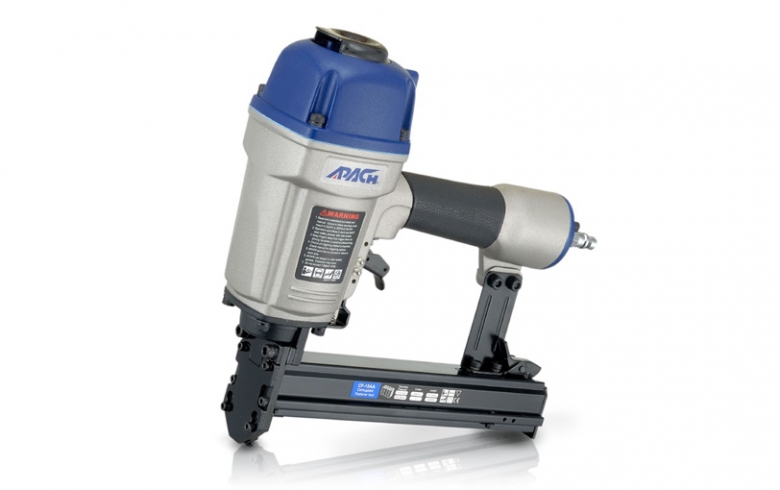
In this article, we are going to introduce one of popular products that manufactured by Apach – CF-15AA Corrugated Fastener Tool.


CF-15AA Corrugated Fastener Tool


This Apach CF-15AA Corrugated Fastener Tool is designed to be powerful, safely and comfortable to use. Our Corrugated Fastener Tool work great for joining door stiles and cabinet faces and can be used to quickly assemble window frames as well. It is also good at upholstery, building, bedding and other applications.


Features:

Bottom Load Magazine

Easy Magazine Adjustment

Jam-Free Magazine

Powerful


Fasteners:

Compatible with Bea W, Duo-Fast CF, Haubold WN, Senco SC2, Omer CF Series


Applications:

Framing, Joiner

Upholstery, Furniture, Bedding

Door, Window, Trimming, Picture Frames, Building Components

Cabinets, Furniture, Light wood assembly

Industrial, Pre-Fabricated Housing


If you need more information about Corrugated Fastener Tool, welcome to visit the website of Apach to learn further details and feel free to contact with us.


Apach continues to launch new products to meet customers’ special requirements, pays close attention to each customer’s opinions, and provides speedy, timely services to clients. This globally prestigious brand is trustworthy.


APACH INDUSTRIAL CO., LTD.

176 Industrial 9th Rd, Tali Dist., Taichung City, Taiwan 41280

TEL: +886 -4-24915576

FAX: +886- 4-24915580

E-mail: info@apach.com.tw

How to Select the Right Plastic Pelletizing Machine

Pellets may be “only” an intermediate product, but their size, shape, and consistency matter in subsequent processing operations.


This becomes even more important when considering the ever-increasing demands placed on compounders. No matter what equipment they currently have, it never seems suited for the next challenge. An increasing number of products may require additional capacity. A new polymer or additive may be too tough, soft, or corrosive for the existing equipment. Or perhaps the job requires a different pellet shape. In such cases, compounders need in-depth engineering know-how on processing, and close cooperation with their plastic pelletizing machines supplier.


The first step in meeting such challenges begins with equipment selection. The most common classification of pelletizing processes involves two categories, differentiated by the state of the plastic material at the time it’s cut:


  • Melt pelletizing (hot cut):

Melt coming from a die that is almost immediately cut into pellets that are conveyed and cooled by liquid or gas.


  • Strand pelletizing (cold cut):

Melt coming from a die head is converted into strands that are cut into pellets after cooling and solidification.


Variations of these basic processes may be tailored to the specific input material and product properties in sophisticated compound production. In both cases, intermediate process steps and different degrees of automation can be incorporated at any stage of the process.


To find the best solution for your production requirements, start with assessing the status quo, as well as defining future needs. Develop a five-year projection of materials and required capacities. Short-term solutions very often prove to be more expensive and less satisfactory after a period of time. Though almost every plastic pelletizing line at a compounder will have to process a variety of products, any given system can be optimized only for a small range of the entire product portfolio.


Consequently, all the other products will have to be processed under compromise conditions.


The lot size, in combination with the nominal system capacity, will have a very strong impact on the pelletizing process and machinery selection. Since compounding production lots tend to be rather small, the flexibility of the equipment is often a big issue. Factors include easy access for cleaning and service and the ability to simply and quickly move from one product to the next. Start-up and shutdown of the pelletizing system should involve minimum waste of material.


A line utilizing a simple water bath for strand cooling often is the first option for compounding plants. However, the individual layout can vary significantly, due to the demands of throughput, flexibility, and degree of system integration. In strand pelletizing, polymer strands exit the die head and are transported through a water bath and cooled. After the strands leave the water bath, the residual water is wiped from the surface by means of a suction air knife. The dried and solidified strands are transported to the plastic pelletizing machine, being pulled into the cutting chamber by the feed section at a constant line speed. In the pelletizer, strands are cut between a rotor and a bed knife into roughly cylindrical pellets. These can be subjected to post-treatment like classifying, additional cooling, and drying, plus conveying.


If the requirement is for continuous compounding, where fewer product changes are involved and capacities are relatively high, automation may be advantageous for reducing costs while increasing quality. Such an automatic strand pelletizing line may utilize a self-stranding variation of this type of pelletizer. This is characterized by a cooling water slide and perforated conveyor belt that replace the cooling trough and evaporation line and provide automatic transportation into the plastic pelletizing machine.


Some polymer compounds are quite fragile and break easily. Other compounds, or some of their ingredients, may be very sensitive to moisture. For such materials, the belt-conveyor strand pelletizer is the best answer. A perforated conveyor belt takes the strands from the die and conveys them smoothly to the cutter. Various options of cooling—water spray, misters, compressed-air Venturi dies, air fan, or combinations thereof—allow for a good deal of flexibility.


Based on expertise technique, KOWIN designs and manufactures the high quality plastic pelletizing machine. If you need more information about plastic pelletizing line or plastic recycling machines series, welcome to visit our website and feel free to contact KOWIN.


Article Source: http://www.ptonline.com/articles/how-to-select-the-right-pelletizer


What are Forged Pipe Fittings?

Introduction:


Forged Pipe Fittings (Thread Fittings and Socket Weld Fittings) are made in accordance to ASME (American Society of Mechanical Engineers) B16.11, MSS-SP-79\ 83\ 95\97 and BS3799 standards, and are used to connect nominal bore schedule pipes and pipelines. The applications range from chemical, petrochemical, power generation and OEM manufacturing industry as well other applications where vibration, high pressure or extremely corrosive conditions exist.


Material:


Forged pipe fittings are generally available in two materials: Carbon Steel (ASTM A105 material spec), and Stainless Steel SS316 (ASTM A182 material spec). The surface of carbon steel A105 forged pipe fittings may be further reinforced against corrosion through galvanizing. This is an optional add-on which customers may include at an additional cost.


Pressure Rating and Size Range:


Fittings come in a variety of classes and material grades for any application. The fittings are available in 2000lbs, 3000lbs, 6000lbs, and 9000lbs. Although class 2,000 and 9,000 fittings exist, these are rarely used and class 3,000 and 6,000 remain the more common class of fittings used. Sizes of forged fittings typically range from 1/8” (DN6) up to 4” (DN100). And reducing sizes are available for common parts like couplings, tees, hex bushings and nipples.


Connection Types:


Class 3,000 and 6,000 forged pipe fittings comes in two types of connection: Socket Weld, or Threaded. NPT (National Pipe Thread) is the most common thread type although BSPP (British Standard Pipe Parallel thread) is also being available for certain parts like Full Couplings, Hex Bushings and Hex Nipples. Socket weld connection is significantly more popular than threaded since most applications call for completely sealing off a line and eliminating all possibility of leakage.


The fittings are normally produced with the same connection for all sides of the same fitting. That means, a socket weld fitting will have socket weld connection on all sides. Should different connection ends be required, additional machining could be possible but at a higher cost and a longer lead time.


Brands of Forged Fittings:


A highly recommended manufacturer for forged pipe fittings is Wellgrow Industries Corp... Wellgrow was established in 1987 in Taiwan, and has been well-recognized among customers worldwide for excellence in its quality and services. Under the strict control system, we have been certified with ISO 9002 and made our OEM products widely extend to international well-known manufacturers. Learn more information about steel fittings, please feel free to contact Wellgrow.


Article Source: https://chuankok.wordpress.com/2016/01/26/what-are-forged-pipe-fittings/


What You Need To Know About Diamond Grinding Wheels

Do you know how diamond wheels are classified?

Diamond wheels are actually classified according to shape, concentration, bond, and grit size. These wheels are used in various grinding and abrasive machining operations. Consequently, diamond grinding wheels are used in grinding machines. In any machining or grinding process, it is always important to use the appropriate grinding wheel.


One of the most widely used grinding wheels today is the diamond and CBN wheels. These come in several types including resin, vitrified, metal, and electro-plated. The most common among these types is the resin wheels. These are used in most tool room and production applications. On the other hand, the vitrified and metal types are newer bond types and are used in specific applications. These are rare and are more expensive. Moreover, these are usually custom made order items. However, electro-plated wheels are typically found in cut-off wheels and low demanding abrasive grinding such as that for plastics.


It is very important to know the different types of diamond grinding wheels and their applications because each of these types is particularly used on specific applications only. Moreover, if you are not using the appropriate wheel type, grinding operations may not be done effectively. Thus, before embarking on any grinding operations, it is essential to determine the type of material to be worked on, and the type of grinding wheel as well.


Diamond and CBN grinding wheels are used in a variety of processes and materials. However, diamond wheels are used strictly on carbides while CBN is used on steels. In some cases though, there are some manufacturers that produce a special grit that can be used on both carbides and steels.


The three types of diamond grinding wheels that are available in the market are synthetic diamond, cubic boron nitride (CBN), and alumina-zirconia. Among these three types, the synthetic diamond is the hardest, while alumina-zirconia is the softest. In selecting the particular type of wheel, there are some important factors to consider.


First and foremost, it is essential to determine the hardness of the item you will be grinding. You should always remember that CBN is most advisable for iron or steel. If the metal is nonferrous though, and a large amount of metal must be removed, a synthetic diamond blade is the most appropriate wheel to use. For soft metals, alumina-zirconia should be used.


Second, look at the nomenclature plate on the grinding apparatus. The speed rating in meters per second is very important in ensuring that the bond of the diamond grit will not separate or disintegrate when used on the grinding apparatus.


Third, determine if the grinding will be done wet or dry. A wet diamond grinding wheel is used for precision cutting while a dry diamond grinding wheel is used for moderate grinding purposes.


Finally, select the coarseness of the wheel according to the amount of metal that will be removed. A coarse grit is most appropriate for fast cutting while a fine grit is used for a finish quality cut.


Best Diamond Ind. Co., Ltd. is a professional diamond grinding wheel manufacturing supplier in the industry. We not only provide diamond tools but also produce related products with high quality service to our customers. Welcome to visit our website and feel free to contact Best Diamond for more information about diamond grinding wheels series products!


Article Source: http://EzineArticles.com/expert/Darren_W_Chow/195794

Article Source: http://EzineArticles.com/5639437

Some Knowledge about Lathe Chuck Jaws

A lathe chuck is a special kind of clamp used on a lathe. These chucks hold objects that are cylindrical, radial, or irregularly shaped, gripped by what are called lathe chuck jaws. Used on wood lathes for woodworking or on machinists’ lathes for machining, chuck jaws hold steady the objects to be worked on. On some lathes, it is the chuck that does the rotating while a power tool is steadily applied to the object in its grip. The lathe chuck jaws are usually tightened into place on the object using a chuck key, a t-shaped wrench.


One type of lathe chuck is called a centering cylindrical stock chuck, having circles on its faceplate that can be used to center an object being machined. The lathe chuck jaws open wide to accept the object and center it, then the individual jaws are tightened snugly, yet carefully, so that there won’t be any movement whatsoever of the object once rotation begins. A dial indicator mounted on the lathe centers the object and measures to be certain that each of the individual jaws is bearing an equal grip on the object. Relatively large movements of the object eventually become only slight movements, as it is perfectly aligned and centered.


Another type of lathe chucks are specialty chucks. These lathe chucks come in two-jaws, six-jaws and eight-jaws configurations. The right choice of lathe chuck jaws for these depends on the type and heaviness of the objects to be handled, and on how important perfect centering and tightness of grip will be. For example, six-jaw self-centering lathe chuck jaws are used for thin-walled work pieces or for gripping finished edges of work pieces, and the large number of jaws enables less pressure per grip in order to protect a finish. Two-jaw chucks are available in a soft jaw aluminum configuration to work more like a stop to hold custom fixtures for tooling. Most chucks have one resident jaw as a master jaw, but the other lathe chuck jaws can be purchased or replaced separately at any time.


Three-jaw chucks have both inside and outside lathe chuck jaws with concave surfaces and are used for handling large diameter objects of circular or hexagonal shape. One type of three-jaw chuck is called a drill chuck, and it is for specialty self-centering to hold drill bits and other similar rotary tools. Another three-jaw chuck is the one colloquially called Super Chuck, which uses ball thrust bearings, has high torque and is used in high precision work. Three-jaws chucks can’t hold irregularly shaped pieces or any square shapes, yet the variety of types of three-jaw chucks for different purposes keeps them in high use.


Another high precision lathe chuck jaws configuration are the four-jaws chucks. These have time-consuming individually setting jaws, yet can turn in offset position as when turning cams. Four-jaw chucks can hold square, rectangular and nearly any irregularly shaped object for high-precision work. They also have more grips for handling round shapes or thin walled work pieces that need more numerous, gentler grips to spread the tension against the surface.


Di Chun expanded in 1992 and established the brand “Auto Strong“. We are a professional and high quality lathe chuck jaws, power chucks, and hydraulic cylinders manufacturer. If you are interested in or need further information about lathe chuck jaws and more products, please do not hesitate to visit our website and feel free to contact Di Chun!


Article Source: http://www.wisegeek.com/what-are-lathe-chuck-jaws.htm

The Differences between CAT, BT and HSK Tool Holder

BT & CAT tool holder – often referred to as “V-flange” by tooling manufacturers and machinists alike- is the most accepted and widely used standard of conventional milling tooling in the U.S. today. The “CAT” designation was developed by industrial conglomerate Caterpillar Inc. in order to standardize their machinery and has become the U.S. national standard. The “BT” series, on the other hand, is the Japanese equivalent and is more prevalent internationally, particularly in Europe since it was developed there. CAT and BT series holders are similar in that they both have the same 7:24 taper ratio and require the use of a retention knob, or pull stud, to secure the holder within the machine spindle (CAT tool holders generally have a standard thread while BT’s are mostly metric).


The difference between the two styles lies in the flange design where the BT bottom flange is thicker and engaged differently by the tool changer. Typical variations are CAT40, CAT50, BT30, and BT40 where the numerical portion signifies the taper dimension (the larger the number, the larger the holder). Because they are so similar, many CNC machine manufacturers and industrial tool suppliers offer the choice between CAT and BT spindles and there is some debate as to the efficacy of doing so. So why choose one over the other? Ease of tooling procurement. CAT tool holders are widely distributed in the U.S. while BT holders can be more easily procured internationally. But functionally speaking, there is little difference between the two.


There are some important limitations to note, however, when using CAT and BT systems. Both engage the CNC machine with a single-contact surface with a small gap existing between the flange of the tool holder and the spindle face. As a result, there can be inaccuracies that result from higher speeds that exceed 800 RPM’s, as centrifugal forces pull the holder up toward the spindle. While balanced holders help alleviate this problem, newer CNC clamping systems without this imitation- such as HSK- are rapidly gaining traction.


HSK is a German standard- translating to “Hollow Shank Taper” in English- that bears no resemblance to the CAT and BT styles mentioned above. The taper is much shorter and engages the spindle in a different fashion (i.e. no retention knob) with a cleverly designed dual contact method. The HSK system contains an internal clamping mechanism providing both radial and axial connection (thus the “dual contact”) providing a tremendous rigidity lacking in most CAT/BT set-ups. This allows for improved repeatability leading to increased tool life in high speed machining applications- the Holy Grail for production manufacturers.


Within the HSK family, there are 6 main styles (designated by letters “A-F” for differing applications) with HSK-63A being the most widely used today. While this style is becoming more popular, it does have some limitations. Due to the newer technology, HSK machine and tooling costs remain expensive and thus is not as popular among smaller manufacturers. However, for those engaged in machining high-value and precision parts, the HSK technology can offer tremendous value.


If you are interested and need more information about HSK, BT, and CAT Tool Holder, welcomes to visit the website of Shin-Yain – various tool holder series can be found on our website. Feel free to contact us!


Article Source: http://blog.allindustrial.com/the-differences-between-cat-bt-and-hsk-tooling/


Understanding the Differences between Automotive and Industrial Greases

“Our plant is searching for a new type of grease. Can you explain the differences between industrial and automotive greases in composition, features, and performance requirements or in any other aspect?”


In short, there is really no difference between automotive and industrial greases. Grease selection will depend on the desired application and performance.


In regards to grease and its application, there are critical elements used in the formulation process that must be considered. These elements include the thickener type and concentration, lubricant type, viscosity and additive package. Greases are rated by the National Lubricating Grease Institute (NLGI) and range from 000 through 6. An NLGI 2 grade is typically the specification used in automotive greases.


One of the only differences between industrial and automotive greases is that a two-letter designation is often used in the automotive industry to specify the type of grease to employ. For example, greases may be rated as GC or LB. GC is recommended for axle and wheel bearing grease, while LB is the industry standard for chassis grease used on tie-rod ends, ball joints, U-joints and control-arm shafts.


Regardless of the application, greases should reduce friction and wear, protect against corrosion, seal bearings from water and contaminants, and resist leakage. While one of the main reasons for grease failure is selecting the wrong type of grease for the intended application, there may also be other causes, such as incompatibility resulting in excessive softening of the grease, contamination leading to excessive wear or applying too little or too much grease for the application.


For instance, in off-road equipment, the environment generally is harsh with a variety of factors to take into account including water, dirt, poor seals and heavy loads. In this type of situation, grease selection is key. You will need a grease with good rust protection, film strength and water resistance.


Bearings normally see less contamination but often experience wide variations of speed and temperature. In this case, you should choose grease with excellent oxidation stability, exceptional mechanical stability and good performance over a wide temperature range.


In summary, the constituents of industrial and automotive greases may be quite similar and should be treated as such. The point is that no matter the application in which grease is used, it is critical to know how to properly select a grease while keeping in mind all of the important parameters.


If you need more information about MoS2 grease and lubricants, welcome to visit the website of Min Jung Hong – the quality and professional high performance motor oil manufacturer.


Article Source: http://www.machinerylubrication.com/Read/29910/automotive-industrial-greases


2016 Taiwan Machine Tool Show: The Biggest Tools, Measurement & Test Instruments Pavilion

Taiwan’s capability of metal processing is world-famous and precision measuring instrument is the mother of industry upgrading. TMTS gathers numerous tools, measurement & test instrument companies providing a variety of products, that satisfy the demand for professional technique, equipment, and products from machinery equipment buyers.

TMTS 2016 will showcase more than 700 companies and 4,000 booths. There are 8% increases in overall scale and exhibitor number respectively compared to the last show in 2014. TMTS established Tools, Measurement & Test Instruments Pavilion for the first time, occupied 450 booths with 120 companies, which is the biggest Tools, Measurement & Test Instruments Pavilion in Taiwan machine tool shows.

The application of all kinds of technology materials changes rapidly. To overcome the rising difficulty of workpiece processing, the key points of product selection include tool material, cutting efficiency, durability, precision and accuracy, etc. Workpiece processing not only tests tools’ capability of R&D and manufacturing but also challenges the limit of tools’ materials. In machinery processing, the quality of tools influences the efficiency of processing and profits of the industry. Besides the way of traditional manufacturing, there is a new highlight to promote industry upgrades by the collaboration between the industry and the school, and technology transfer.

WU CARBIDE CORPORATION and LIAN YI CO., LTD., both focusing on R&D, develop new products regarding tools materials and cutting efficiency. Taiwan local enterprises, such as SHIN-YAIN, BEST DIAMOND, TAIWAN ASAHI DIAMOND, HWA CHERNG DIAMOND, SPEED TIGER and YUANG HSIAN, etc., and TAIHO TOOL from OSG group Japan, have continuously advanced the development of all kinds of materials and technologies, supplying products to machinery industry, high-tech industry, and even aerospace industry.

Except for overseas companies, such as MARPOSS, MITUTOYO, and RENISHAW, Taiwan measurement & test Instrument companies are also well-known to the world. Taiwan local companies, such as ARCS PRECISION and HANN YAN PRECISION, established automatic testing systems with the use of precision measuring instruments, to reach multi-purpose of high-speed automation, space saving, testing time cut down, testing quality improvement, and cost saving.

More information about TMTS:http://www.tmts.tw

Contact Information

Company Name: Taiwan Machine Tool & Accessory Builders’ Association (TMBA)

Contact Person: Jolin Lin

Tel.: +886-4-2350-7583

Email: jolin.lin@tmba.org.tw

Website: http://www.tmts.tw