
Power Factor Regulator: How Does It Work?

The power factor regulator combines comprehensive operations with user-friendly control settings. It uses numerical techniques to compute the phase difference between the fundamentals of current and voltage, enabling precise power factor measurement even in the presence of harmonics.


The power factor regulator is designed to optimize the control of reactive power compensation. Reactive power compensation is achieved by measuring continuously the reactive power of the system and then compensated by the switching of capacitor banks. The sensitivity setting optimizes the switching speed. With the built in intelligent automatic switching program, the power factor regulator further improves the switching efficiency by reducing the number of switching operations required to achieve the desired power factor.


Usage of the capacitor bank is evenly distributed by the intelligent switching algorithm. This ensures uniform ageing of the capacitors and the contactors used.


The four-quadrant operation feature allows the power factor regulator to operate correctly in the case of active power feed back to the mains where regenerative power sources are used.


Harmonic current in the system can be harmful to the capacitor bank. This power factor regulator is capable of measuring the total harmonic distortion (THD) in the system and produces an alarm if the THD level is higher than the pre-set value. Other alarms include under/over compensate alarm, under/over current alarm and under/over voltage alarm.


Current transformer (CT) polarity is important in determining the correct phase angle different between the current and voltage hence the power factor. This power factor regulator will automatically correct the CT polarity internally in the event that the

Polarity is reversed.


If you want to learn more information of power factor regulator, visit Yuhchang Electric Co., Ltd. that will be a great choice! They are the professional manufacturer of specializing in kinds of power capacitors. To buy ideal power factor regulators, welcome to check out their website and feel free to contact with Yuhchang for more details.


Article Source: www.itmikro.com.my

Which Pump Will Work With Your Portable Hydraulic System?

Portable hydraulic pumps are taking over more tasks that would otherwise require dangerous and strenuous human labour. These time and back-saving devices make significantly lighter work of a plethora of plant maintenance chores such as lifting equipment, tightening and loosening bolts, spreading flanges, and cutting corroded nuts. As powerful as these tools are, using the right pump is crucial to ensuring safety and efficiency on the job.


Because of the vast spectrum of capabilities and functions of portable hydraulic pumps, several factors should be taken into account when determining the appropriate power source. Hydraulic tool users can choose from three primary power sources: hand, electric, or air. Each method offers unique benefits relative to a wide range of situations.


Hand Pumps

A hydraulic hand-powered pump is usually the simplest and most economical type of pump to use. It is ideal for sporadic use of small or medium-sized hydraulic tools and is especially suitable for use in remote locations where other reliable power sources cannot be secured. In some potentially hazardous cases, a manually powered pump could be the only viable option as it does not require a source of power that could ignite.


Hand-operated pumps are available in sizes ranging from smaller single-speed devices weighing less than 5 kg to larger metal two-speed models weighing almost 45 kg. These pumps can come with oil capacities of up to eight litres and valving for either single or double-acting tools. The proper hand pump will meet requirements for system oil capacity, fluid compatibility, and valving type. Duty cycle is not a major issue because a hand pump is normally used for short one-time tasks.


The primary drawback with hand-powered pumps is its reliance on manual effort: its use is limited to the physical ability of its operator. Additionally, since one hand must be used to work the pump, the operator must sacrifice convenience and efficiency. Although hand-powered pumps are quite portable, they may not be operative in cramped locations, such as on ladders or catwalks, where operators may not be able to generate enough power. Further, these types of pumps require a flat surface for operating.


Electric Pumps

Electric pumps are the most common high-pressure pumps used after hand-powered pumps. Electric units come with versatile options of motor types, heat exchangers, valves and actuators, and operating voltages. The abundance of variations makes it challenging to choose the correct pump in this category.


While the major factors in selecting a pump are size, voltage, reservoir capacity, and valving, the additional aspects of electric motor and the necessary duty cycle are critical in choosing the best electric pump. Duty cycle is the time frame in which the pump will run at a particular percentage of full loads. Most high-pressure pumps are not suitable for higher duty cycles. Tasks that necessitate pressures over 5,000 psi for over an hour require pumps with coolers to regulate oil temperatures at a safe level of 65C (150F) or less. Electric motors are either induction or universal. The application determines the proper selection of either.


Induction motors operate for longer periods of time with greater durability. They perform at reduced noise levels, which is a significant benefit for jobs in restricted spaces. Induction motors are usually heavier, which explains why they are more commonly used in areas where a stationary, high-production pump is needed. An induction motor requires a highly stable electrical power source. A reduction in line voltage — even as small as 10 percent — could cause extensive damage to the motor. Using this kind of pump is not advisable for settings where electricity is sourced by a generator with an extension cord.


A universal motor pump may be ideal for situations that require the performance and speed of an electric pump and flexibility with portability and power sources. These motors are lighter than induction motors, provide more power in proportion to weight, and can function with less stable electrical power. If necessary, universal motors can run full torque on half of terminal rated voltage.


Air Pumps

Like a hand-powered pump, an air pump is relatively easy to use, portable and lightweight. Air pumps are available in many different sizes. They offer greater performance capabilities relative to hand-operated pumps. Another advantage is that they can be safely used in a location where an electrical current could be hazardous, provided that the pump is positioned at a sufficient distance from a compressor.


Reciprocating pumps are more popular than other air pumps, offering greater performance at lower cost. Usually, they are single-speed models that provide high flows at lower pressure since it can operate faster under diminished loads. However, a dual reciprocating air-powered pump is available for situations where high flow is necessary. With this design, the high-flow unit can stall at high pressure without an unloading valve.


A rotary air pump is ideal for higher performance needs. This type of pumps utilizes a rotary air motor which drives an ordinary hydraulic pump. However, rotary air pumps are typically noiser, heavier, and need more air than reciprocating pumps.


Sufficient air supply is the most critical factor to consider when choosing either air pump style. All air-powered pumps require a certain air flow rate to perform at their maximum level. If the airflow rate cannot be determined beforehand, a common standard is that each horsepower at the compressor will supply five scfm (approximately 142 litres).


Air pumps are suitable for operation in environments where pneumatic lines have been installed and are easily accessible. However, air pumps are typically more costly to use relative to electric pumps as compressed air tends to power tools less efficiently.


Guidelines for Pump Selection


  • Determine proper ratings for maximum operating pressure, oil capacity, flow rate, cycle frequency and duration, and valving.
  • Analyze cost factors including impact on productivity and manpower.
  • Research ergonomic and safety features. Weight, dimensions and portability must be considered to help determine the level of dexterity and strength the operator will need. Noise levels should be as low as possible.
  • Know the power source requirements. The power that is safely available often determines what pump is best to use.
  • Ensure that tool speed matches pump size needed. Power requirements increase exponentially with pump size. The ideal pump matches the necessary speed without superseding it.


If you need more information of portable hydraulic pump or other hydraulic pumps, I recommend you to visit YEOSHE Hydraulics Technology Co., Ltd. – they are the professional hydraulic pump and hydraulic unit supplier Taiwan. To get more details of hydraulic pumps, please do not hesitate to contact with YEOSHE.


Article Source: https://www.rg-group.com/blogs/which-pump-will-work-with-your-portable-hydraulic-system/
Which RFID Reader Option Is Best For You?

For those of you, who are new to the world of RFID and rugged handheld computing, welcome. We hope this post serves as a guide to help you better understands which information collection option best suits the needs of your project. A common question often answered here at Juniper is, “Which RFID frequency should I use?” We want to make sure you’re getting the tools you need, without overpaying for features that won’t be useful in your situation. Because identification readers are used in so many different cases, it’s hard to identify a customer’s exact needs without speaking to them directly. However, we hope these questions serve as a starting point to launch you in the right direction and prepare you to ask the right questions when determining the best option for your project.


Do You Need The Ability To Read And Write Data Over A Distance Greater Than ~50 Cm?

  • Yes → UHF might be a better option, allowing you to transfer data over several meters, while HF can only transfer data up to about 50 cm. If you need the ability to read over an even larger distance, UHF long-range RFID would be the best option for you.


  • No → HF might be better for you because its range is shorter, making it more reliable.


Will Your RFID Tags Be Placed Near Liquids, Metals, Carbon Substances, Or Other Dielectric And Conducting Objects?

  • Yes → HF would most likely work better because it is less vulnerable to interferences from surroundings. However, there are some manufacturers that have designed UHF tags that will work in these environments as well.


  • No → HF and UHF would both work well.


Do You Need To Read More Than 20 RFID Tags At One Time?

  • Yes → UHF might be better for you since it can read up to 200 tags at a time, whereas HF can only read up to 20 tags at a time.


  • No → Both HF and UHF would work. However, if you are planning to narrow down on one tag at a time, HF would probably be better since UHF might pick up multiple readings.


Will Your Tags Be Located In An Area With A High Amount Of Electromagnetic Interference (EMI)? EMI Is Emitted By Motors, Robots On Assembly Lines, Conveyors With Nylon Belts, Etc.

  • Yes → HF would probably be best because it is less susceptible to inaccuracies due to EMI.


  • No → HF and UHF would both work.


Does Your Application Require Faster Data Transfer?

  • Yes → UHF would probably be better because it transfers data faster than HF.


  • No → HF and UHF would both work.


Are There Inhibiting UHF Restrictions In Your Geographic Location That Would Interfere With Your Use Of UHF RFID?

  • Yes → HF might be better because the same HF technology is accepted worldwide, whereas UHF restrictions vary according to region.


  • No → HF and UHF would both be fine.


We hope answering these questions provides you with the information necessary to feel a little more confident about frequency options. If you need more information of UHF reader, welcome to check out the website of Pongee Industries Co., Ltd. – they are the professional manufacturer of RFID readers. Learn more details, please do not hesitate to contact with Pongee!


Article Source: http://blog.junipersys.com/which-rfid-reader-option-is-best-for-you/

About BT Tool Holders: BT30, BT40, BT50

There are two types of tools in CNC machinery: tool holders and cutting tools. There are other items related to tool holders, such as collets, set screws, wrenches and other setup tools.


Tools for CNC machinery are manufactured by a variety of brands and come in few different standards.


BT standard for tool holders originated in Japan and is somehow similar to CAT tool holders.


As well as CAT tool holders, it has numerical designations that correspond to the size of the taper: BT-30, BT-35, BT-40, BT-45, and BT-50. The higher the number is, the bigger is the taper.


Like CAT Tooling, BT Tooling comes in a range of sizes designated as BT 30, BT 40, BT 50, etc. and uses the same NMTB body taper as CAT 40. BT tooling is symmetrical about the spindle axis, which CAT tooling is not. This gives BT tooling greater stability and balance at high speeds.


BT Tool Holders will accept both Imperial and metric sized tools. BT Tooling looks very similar and can easily be confused with CAT tooling.


The difference between CAT and BT is the flange style, thickness, and the thread for the pull stud is a different size. BT Tool Holders use Metric thread pull studs (retention knobs).


If to compare BT to CAT tool holders – they look very similar and can be easily confused, however, they has different flange system and its thickness is different too. Also, the retention knobs are different. Therefore BT and CAT tool holders are not interchangeable.


Though both standards use the same NMTB body taper. BT tool holders are symmetrical around the main spinning axis, while CAT tool holders are not. That makes BT tool holders better balanced and more stable at higher speeds.


BT tool holders along with CAT and HSK standards are among the most used in CNC machinery. They will accept both imperial and metric sized tools; however, BT tools come in metric sizes. They are durable and are best choice for very high speed machinery.


BT Tools: Overall Maintenance

To insure proper performance of your toolholders, overall cleanliness of toolholder, collet pocket, collet, and nut must be maintained. It’s important to remember that all these components are manufactured to perform within tolerances of ten-thousandths (.0001”) of an inch.


Any dirt, dust, oil, chips, or other contaminant left on the spindle, taper, flange, collet, collet pocket, or nut can cause poor T.I.R. (runout) leading to premature wear of cutting tool, toolholder, and spindle mouth.


We recommend a regular preventive maintenance program be implemented in your shop to protect your investment in cutting tools, toolholders, and collets, and reduce scrap.


BT Tools and Performance & Productivity

BT tools allow use of ATC (Automatic Tool Change) technology to maximize the speed and productivity of manufacturing.


BT tool holders perform work with high strains and pressures, so be sure to store them safely without any chance for the tool being damaged – as this may cause some misbalance that can be critical at high speeds and precise CNC machinery.


BT Tool Holders: Bottom Line

Depending on your particular machining tool needs, the wide array of BT Holders that are manufactured and sold can help your job to me more efficient.


If you need more information of BT tool holder or CAT tool holder, I recommend you to visit Shin-Yain Industrial Co., Ltd. – they are the professional manufacturer of tool holders. To get more details of these products, please do not hesitate to contact with SYIC.


Article Source: https://toolholderexchange.com/bt-tool-holders-bt30-bt40-bt50/

Vacuum Forming Plastic Process: The Economical Way for Manufacturing Plastic Parts

Vacuum forming is a very economical method for producing plastic parts. The vacuum forming plastic process can produce parts in various configurations in small and large quantities at a reasonable price. This process involves the controlled heating of plastic materials to a temperature where it is flexible enough to be altered by the shape of a mold with the help of vacuum. In this method, the heated plastic sheet is forced against the mold by the air pressure differential created by pulling a vacuum between the sheet and the mold.


Vacuum Forming Can Be Used For Projects Like:

  • Product packaging
  • Agricultural applications
  • Medical applications
  • Lift truck enclosures
  • Railcar interior trim parts and seating components
  • Engine covers for construction equipment
  • Fascias for outdoor kiosks and ATM applications


Vacuum forming has advantages over other plastic production methods.


Here Are Some Potential Advantages That Would Make Vacuum Forming A Good Choice For Your Plastic Part:

  • Large parts or multi-part uses
  • Moderate annual volumes
  • Tight tooling budget
  • Rapid product development


Materials Commonly Used In Vacuum Forming:

  • ABS
  • PC / ABS
  • HDPE
  • TPO
  • HIPS
  • PVC / Acrylic

If you need vacuum forming services, I sincerely recommend you to contact with Marathon Enterprise Co., Ltd. – they are Taiwan professional vacuum forming plastic packaging supplier. You can get services of providing PP sheets, LDPE sheets, transparent plastic sheet, PP food container, etc. To get more details, please do not hesitate to contact Marathon at +886-3-3590801.


Article Source: https://www.emcoplastics.com/vacuum-forming/

Victor Taichung Sees 70% of Orders for Customized Machine Tools

Taiwan-based machine maker Victor Taichung Machinery Works has coped with waning competitiveness in prices for the export markets by offering customized manufacturing services to create product differentiation, with around 70% of orders associated with customization, according to company chairman MH Huang.

Huang said that Taiwan machine tool makers used to see their quotes some 30-40% lower than those offered by their biggest competitors from Japan, but such a price competitiveness has been significantly undermined by the sharp depreciation of the Japanese yen. As a result, international customers have turned to Japan machine tool brands, directly squeezing the survival space for Taiwan makers.

Huang said that since 2013, Victor Taichung has maintained a customer value-creating application center, gathering the firm’s experienced sales staff and engineers to directly face customers and respond to their actual needs. This way, Victor Taichung can agilely adjust its product development strategies based on direct responses from customers, thus effectively boosting product values and customer loyalty through customized production services.

Huang stressed that Taiwan machine tool makers cannot compete well with China and Korea rivals in terms of production volume of low- to medium-tier models or with Japan makers in the market for high-end products. Accordingly, he indicated, it will be a major challenge for business transformation of Taiwan machine tool builders as to how they can work out differentiation to highlight corporate values and even develop the market for higher-end products.

If you have any interest in vertical machining centers and much more custom machine tools, come and visit Victor Taichung Machinery Works Co., Ltd. for more details!

Article Source: https://www.twmt.tw/victor-taichung-sees-70-of-orders-for-customized-machine-tools/

The Difference Between Proportional vs. Directional vs. Servo Valves

Understanding the available technologies in fluid power is imperative in order to design the most efficient, cost effective, and energy saving system. Traditional hydraulic equipment designs used directional control valves almost exclusively.


These directional valves are sometimes referred to as either “switching” or “bang-bang” valves and can be used to control flow direction, flow volume and fluid pressure. These valves can be operated by either AC or DC power.


Directional Control Valves


Directional control valves have been commonly referred to as switching valves because they simply direct or “switch” fluid passing through the valve from the source of flow to one of a selection of available cylinder ports. The flow control variety of valve generally selects an orifice which only allows a specified volume of flow to pass. The specified volume controls the speed of a cylinder or hydraulic motor. Likewise, the pressure control type is used to select a particular pressure setting.


Changing direction, flow or pressure during machine operation with these valves would require a separate individual valve for each direction, flow or pressure desired. The hydraulic circuit would become quite complex very quickly!


Proportional Valves


The technological solution to these more complex circuits has been the development of proportional valves. These revolutionary valves allow infinite positioning of spools, thus providing infinitely adjustable flow volumes. Either stroke-controlled or force-controlled solenoids are used to achieve the infinite positioning of spools.


This variable positioning allows spools to be designed with metering notches to provide flow/speed control as well as directional control functions all in one valve, instead of requiring separate valves for direction and speed. The other major benefit is when the circuit requires more than one speed. The various speeds are achieved by changing the electrical signal level to deliver the flow/speed required. No additional hydraulic components are required! These proportional directional valves are controlled by DC power.


The proportional controls, used with their associated electronic controls, also add the desirable features of acceleration and deceleration. This offers a variety of machine cycles, safely operated at greater speeds, yet with controlled start and stop characteristics. Regulated acceleration and deceleration result in improved machine overall cycle times and production rates.


Servo Valves


The third type of hydraulic directional control technology is the servo valve. Servo valves are not a new technology as servo valves were first used in the 1940s. Servo valves operate with very high accuracy, very high repeatability, very low hysteresis, and very high frequency response. Servo valves are used in conjunction with more sophisticated electronics and closed loop systems. As a result, servo valves are always much more expensive. A proportional control valve system can be used to improve control of most machines without the high price tag of servo control systems.


If you need more information of directional control valves or other hydraulic control valves, I recommend you to visit Propiston Hydraulics Co., Ltd. – they are the professional manufacturer of piston pumps and flow control valves. To get more details, welcome to check out their website and feel free to contact with Propiston Hydraulics!


Article Source: https://www.qualityhydraulics.com/blog/what-proportional-valve/

Types of Transmission Oil Seals: Static and Dynamic

There are two main types of oil seal: static and dynamic. A static oil seal fits between two non-moving parts, a dynamic oil seal between a stationary part and a moving one. Most oil seals are made of synthetic rubber.


An example of a static seal is a simple ‘O’ ring. These seals can be found in such places as the oil filter used on combined automatic gearbox and engine units, on conventional gearbox front covers and in automatic gearboxes.


Dynamic seals are more complex in shape, with one or two lips, depending on where they are situated. These transmission oil seals are widely used in the transmission system of both front and rear-wheel-drive cars, where oil must be sealed in where a rotating shaft passes through a component. For example, at the outer end of a half shaft and on the differential pinion.


Types of Oil Seals

Dynamic seals also contain a thin coiled spring, called a ‘garter spring’, which holds the sealing lip in contact with the revolving shaft.


Many seals have a metal outer casing for added strength and ease of fitting. Because the seal is in constant contact with a moving part, dynamic seals eventually wear and begin to leak, and both dynamic and static seals deteriorate with age.


Most seals are inexpensive and easy to replace, but many are in places where you must do a lot of dismantling to get at them.


For example, gearbox oil seals (apart from the extension-housing seal on rear-wheel-drive cars) can be replaced only with the gearbox removed – a task best left to a garage.


However, the seals on the rear axle and final drive should all be possible to replace fairly easily, although special tools may be necessary.


After many miles and several new seals, the moving part against which the dynamic seal fits may wear.


Slight wear can sometimes be taken up by fitting a shim between the seal and its housing, to change the point of contact. But if a shaft becomes seriously grooved it must be replaced or repaired at a garage or engineering machine shop.


This is not a common occurrence, but any point at which a shaft rotates in a seal is a possible leak source. Check such points regularly.


When fitting and handling any oil seal, keep it and its sealing point absolutely free from dirt and grit. Make sure you fit the seal the right way round. The lip (or lips) always faces the oil it is sealing.


To get more information of transmission oil seals, I sincerely recommend you to visit ASA Oil Seals Co., Ltd. – they are the professional oil seal manufacturer in the industry. If you need much more choice of oil seals, please contact with ASA immediately!


Article Source: https://www.howacarworks.com/transmission/replacing-transmission-oil-seals

Do You Know What BTA Drilling Is?

What is BTA Drilling?

Start Here: Deep Hole Drilling Overview

BTA drilling is a deep hole drilling process that uses a specialized drilling tool on a long drill tube to produce deep holes in metal, from holes with a diameter of 20 mm [0.80 in] and larger, up to depth-to-diameter ratios of 400:1. BTA drilling is the most effective method of drilling deep holes, as it is a cleaner, more reliable and capable process than conventional twist drills, and can achieve larger diameters and higher feed rates than the alternative gundrilling.


BTA drilling tool heads are threaded or mounted onto long drill tubes, and use multiple cutting surfaces on a single tool to remove chips efficiently, exhausting them using high-pressure coolant through holes in the tool head, then out the drill tube and through the machining spindle. BTA tooling is available in brazed or inserted carbide configurations.


BTA stands for Boring and Trepanning Association, and is also sometimes referred to as STS (single tube system) drilling, as it uses one single drill tube for the BTA tool, compared to other processes such as ejector drilling, which use two.


BTA Drilling vs Gun Drilling

BTA drilling can achieve drill feed rates of typically 5-7 times faster than gundrilling at the same diameter, due to the tool design, more efficient chip exhaust, and machine design and power. BTA drilling machines introduce coolant around the tool head, and evacuate chips through the drill and machine spindle, compared to gundrilling, where coolant is introduced internally and chips exit through an external groove. BTA drilling is effective in holes from 20 – 200 mm [0.80 – 8.00 in], a greater size range than gundrilling.


Optimal Specifications for BTA Drilling

BTA deep hole drilling is the ideal process for a range of larger deep hole drilled depths and diameters. BTA drilling, and secondary processes, are capable of drilling extreme depth-to-diameter ratio holes while achieving strict tolerances.


BTA Tooling Diameter Range

  • 8 – 65 mm Brazed Disposable BTA
  • 10 – 114 mm Spade Drill BTA
  • 16 – 28 mm Indexable BTA, Single Insert
  • 25 mm +     Indexable BTA, Multiple Insert


BTA Drilling Equipment

Deep hole drilling machines that are designed to perform BTA and related processes are complex systems of high-precision components, designed and built for extremely deep holes and strict tolerances.


If you need more information of BTA drilling equipment, I sincerely recommend you to visit Honge Precision Industries Corp. – they can provide high-quality and high-performance BTA deep hole drilling machine for clients. To get more details of this hole drilling machine, welcome to check out their website and feel free to contact with Honge Precision Industries!


Article Source: https://www.unisig.com/information-and-resources/what-is-deep-hole-drilling/what-is-bta-drilling/

Central Impression Press Buyer’s Guide: Productivity vs. Cost Concerns

Maximum productivity at minimum cost! Mid web and wide web flexographers want it all from any new press that gets installed in their plants. High on their lists of demands: quick-change features, waste management assets, open access to print decks and all componentry they hold. “Compact and capable” is the mantra. The mission: control, control, control.


Another three Cs—“connectivity, customization and color”—are carefully evaluated in pursuit of peak performance. Energy efficiency is seen as desirable; ease of materials handling, attractive. Automated features are built into the design and are directly linked to press uptime, quality output and customer satisfaction. They impact registration, impression, tension, washup, temperature control, defect detection, etc.


Recognizing flexography as a highly sensitive process, today’s converters pride themselves on efficiency and versatility and they expect the same from their presses. They calibrate or fingerprint machinery, yet stand ready to adapt at a moment’s notice and compensate for every variable that arises.


Business partners are acutely familiar with these printers’ daily challenges and tribulations. Engineers dedicate hour after hour to addressing new needs as they are identified. FLEXO Magazine set out to learn more about those evolving needs, so the magazine recently approached representatives from major original equipment manufacturer (OEM) and asked list out 10 features should consider when evaluating the purchase of a mid-web or wide web central impression press.


Quality Control

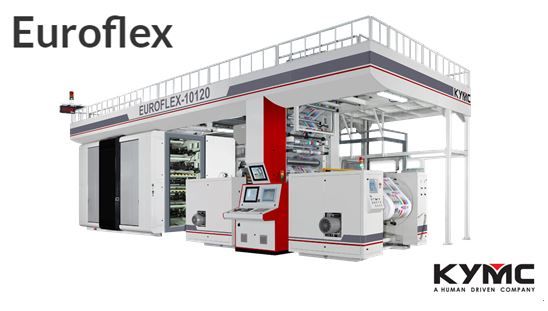
Setup and breakdown of every job is the key to saving both time and money. Standard features are now driving quality control and resulting in noticeable continuous improvement. That’s the position held by John Pan, general manager, Kuen Yuh Machinery Engineering Co., Ltd. (KYMC). He contends that, “Automation is boosting productivity.”


John uses that word in listing out 50 percent of the top 10 concerns to address in evaluating a potential press purchase.

KYMC Euroflex CI Flexo Press

  • Auto-Register Control—a good and effective automatic pre-register control system can set all colors in register within 164-ft. (50-m.), as on an 8-color press
  • Auto-Impression Control—good and effective auto-impression control should be able to set the impression for all colors within 656-ft. (200-m.), as on an 8-color press. Most importantly, it can set the desired impression from the operator’s determination, not the machine’s
  • Auto Wash With Auto Ink Viscosity And Temperature Control—keeping ink under control is the key for quality print, therefore, ink viscosity and temperature control are equally important to the auto-wash system
  • Drum Cleaner—the drum cleaner really saves the operator a great amount of time and is an important issue for quality print production
  • Auto Defect Detection—100 percent full width defect detection certainly benefits uninterrupted quality control. It increases productivity through automatic print monitoring, reduces waste and complaints, and increases customer satisfaction
  • Print and Anilox Sleeve System—the sleeve system is becoming standard on every modern press, yet customers should pay attention to the type of sleeve they are acquiring. It will affect the quality of printing and the life of the sleeve
  • Auto Splice on Unwind and Rewind, And Reel Handling System—continuous running while orchestrating a reel change has become a challenge to the operator. He or she needs a system to help to load/unload the reel every 20 to 30 minutes easy and efficiently. Those systems include a trolley, lifting table, robot, etc.
  • Energy Saving Drying System—a high-efficiency drying system is required on a high-speed press, yet it needs to be energy saving as well. Heat recovery and/or the use of an energy saving heating element/source are becoming standard on every modern press
  • Hybrid Solution—thanks to the development of the electronic driving system, the link of post processes (finishing) on the press is no longer an issue. This includes: inline coating/lamination, inline digital printing, inline cutting/sheeting, inline bag making, etc.
  • Ready for Industry 4.0—the CI flexo press must demonstrate interconnectivity, with major components monitored through any mobile device. It must also be able to connect to external management systems like APS, MES and ERP


John predicts the industrial production revolution will continue. “All printers should prepare themselves. The most basic principle in the new industrial revolution is that their equipment has the ability to connect with other equipment or systems through the network.”


Standing in Unison

Fast-change, quick-set, operator-friendly, quality-minded machinery is what every OEM FLEXO talked to says converters expect of their flexo press. Material-minded and considerably equipped with automated features is translating to faster, cheaper, better, more efficient print production.


The advent, arrival and acceptance of the integrated and optimized press is driving the principle of “control without compromise” with continuous improvement evident with each passing year.


Article Source: Flexographic Technical Association