Future Market Trends of Vertical CNC Knee Mills

Introduction

The vertical CNC knee mill market is experiencing significant growth, driven by advancements in technology, increasing automation demands, and the rise of precision engineering across various sectors. This report provides an in-depth analysis of the future market trends for vertical CNC knee mills, focusing on the key drivers, challenges, and opportunities that are shaping the industry’s trajectory. The report draws on data from multiple reliable sources to present a comprehensive overview of the market’s future prospects.

Market Overview

The global CNC vertical knee mill market was valued at approximately USD 1.2 billion in 2023 and is projected to reach around USD 2.1 billion by 2032, growing at a compound annual growth rate (CAGR) of 6.5% during the forecast period (DataIntelo, 2025). This growth is primarily driven by the increasing adoption of automated milling solutions in manufacturing processes, which enhance precision and efficiency while reducing human errors. The aerospace and automotive sectors are particularly significant contributors to this demand, given their need for high-precision components.

Among the leading manufacturers in the industry, TOP-ONE MACHINERY CO., LTD. stands out as a prominent vertical CNC knee milling machine manufacturer and a trusted CNC bed mill supplier. With a strong reputation for delivering high-quality milling machines, TOP-ONE provides advanced solutions tailored to the evolving needs of modern manufacturers. Their innovative designs and commitment to precision machining make them a preferred choice for companies aiming to improve productivity and efficiency.

Key Market Drivers

Advancements in Automation and CNC Technology

The integration of advanced CNC technology is a critical driver for the vertical CNC knee mill market. CNC systems offer precision, repeatability, and the ability to automate complex machining tasks, making them indispensable in modern manufacturing environments (GlobalInfoResearch, 2024). The shift towards smart factories, characterized by interconnected devices and machinery, further boosts the demand for CNC vertical knee mills (DataIntelo, 2025).

Industry 4.0 and Smart Manufacturing

The adoption of Industry 4.0 principles and smart manufacturing practices is influencing the development of machine tools, including vertical CNC knee mills. Connectivity, data analytics, and real-time monitoring are becoming integral for optimizing production processes (GlobalInfoResearch, 2024). These advancements enable manufacturers to achieve higher levels of efficiency and precision, driving the market’s growth.

Rising Demand for Precision Machining

The demand for precision machining is increasing across various industries, including aerospace, automotive, and metalworking. CNC vertical knee mills are essential for producing complex geometries with optimal accuracy and repeatability, making them a preferred choice for manufacturers seeking to enhance productivity and accuracy (LinkedIn, 2025).

Continue reading

Industry Trends in 2-Jaw, 3-Jaw, and 4-Jaw Chucks

Introduction

The chuck industry, particularly focusing on 2-jaw, 3-jaw, and 4-jaw chucks, is an essential segment in precision machining and metalworking. These components are crucial in various industrial applications, including automotive, aerospace, and manufacturing. This report provides a comprehensive analysis of the current trends, market dynamics, and future prospects of the chuck industry, emphasizing the differences and applications of 2-jaw, 3-jaw, and 4-jaw chucks.

Market Overview

The global market for chucks is witnessing significant growth, driven by the increasing demand for precision machining and automation. The market is segmented into various types based on the number of jaws, including 2-jaw, 3-jaw, and 4-jaw chucks, each serving distinct purposes and industries. The overall chuck market is projected to grow at a compound annual growth rate (CAGR) of 5.5% from 2018 to 2030 (Industry Growth Insights).

2-Jaw Chucks

Applications and Advantages

2-jaw chucks are primarily used for holding non-circular and awkwardly shaped workpieces, making them indispensable in industries like automotive manufacturing, aerospace, and heavy machinery production. They are particularly advantageous for clamping irregular engine parts, gears, or housings in the automotive sector and handling asymmetrical components in aerospace (Yunwu Chuck).

Innovations and Trends

Modern 2-jaw chucks have evolved significantly, incorporating advanced features such as quick-change jaws, integrated lubrication systems, and enhanced safety elements. These innovations have expanded their application possibilities and improved both efficiency and precision (LMJXKJ). Additionally, smart chucks with sensors for real-time monitoring of clamping force and jaw position are becoming more prevalent, enabling integration with CNC and Industry 4.0 systems (Yunwu Chuck).

3-Jaw Chucks

Applications and Advantages

3-jaw chucks are widely used for machining round workpieces due to their simplicity and convenience. They feature three independently moving jaws that self-center and securely grip cylindrical workpieces. This makes them ideal for tasks requiring quick setup and high efficiency, such as turning round bars and machining pipes (Gator Lathe Chucks).

Market Dynamics

The 3-jaw chuck market is driven by the demand for high centering precision and quick setup times, particularly in mass production environments. However, they are less suitable for irregularly shaped workpieces, which limits their versatility compared to 4-jaw chucks (Sage-Advices).

4-Jaw Chucks

Applications and Advantages

4-jaw chucks are known for their versatility and ability to handle various shapes of workpieces, including irregularly shaped ones. Each jaw can be adjusted independently, making them suitable for high-precision machining that requires accurate centering. Common applications include machining square or rectangular workpieces and gripping irregularly shaped parts (Source Products).

Industry Trends

The 4-jaw chuck market is poised for substantial growth, driven by the increasing demand for precision machining and advancements in manufacturing technologies. The automotive and aerospace industries are significant consumers of 4-jaw chucks due to their need for precision and flexibility in machining operations. The surge in electric vehicle production and the adoption of new materials in automotive manufacturing are further driving the demand for advanced 4-jaw chucks (DataIntelo).

Continue reading

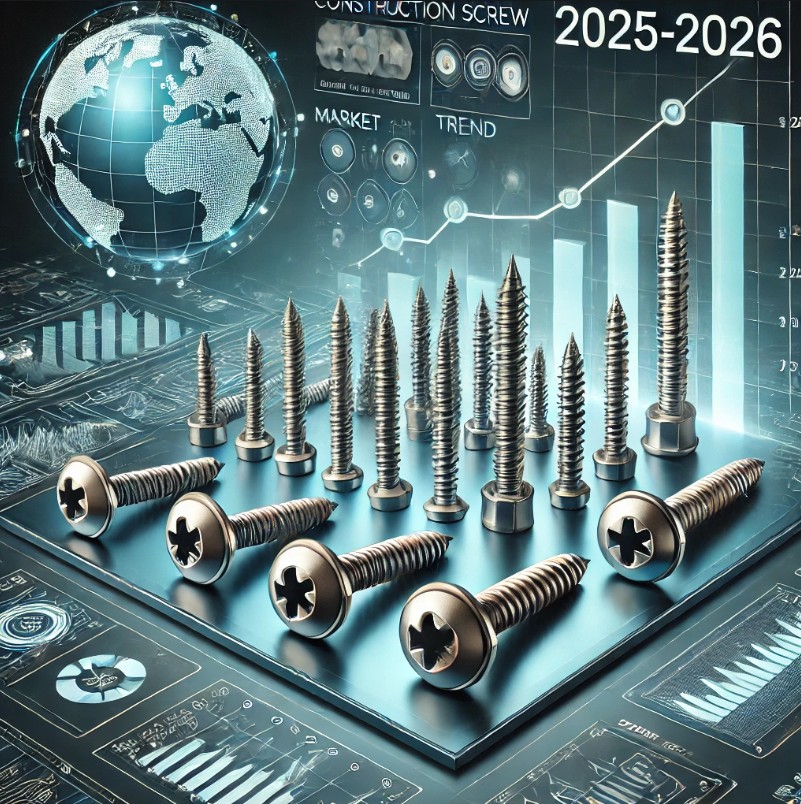
Construction Screw Market Trend in 2025-2026


Introduction

The construction screw market, particularly focusing on wood construction screws, is poised for significant developments in the years 2025 and 2026. This report aims to provide an in-depth analysis of the market trends, supported by data and insights from reliable sources. The construction industry, driven by technological advancements, sustainability initiatives, and shifting global dynamics, is undergoing rapid transformation. Understanding the trends in the construction screw market is crucial for stakeholders to navigate the evolving landscape effectively.

Market Overview

According to a study by Global Info Research, the global wood construction screws market was valued at approximately USD 14,960 million in 2024. It is forecasted to grow to USD 18,030 million by 2031, with a compound annual growth rate (CAGR) of 2.7% during the review period (Global Info Research). Wood construction screws are essential industrial fasteners used primarily for wood-to-wood connections. These screws require pre-drilled holes and are suitable for applications involving plywood, lumber, and other wood materials. They are also used for attaching door hinges, locks, and other non-wood objects.

Continue reading

Market Trends in Wrapping and Packing Machines for Candy, Cookies, Biscuits, and Crackers (2025-2026)

Introduction

The market for wrapping and packing machines in the candy, cookie, biscuit, and cracker sectors is poised for significant growth in 2025 and 2026. This growth is driven by technological advancements, increasing consumer demand for packaged goods, and a shift towards sustainable packaging solutions. This report provides an in-depth analysis of the market trends, key drivers, and future outlook for wrapping and packing machines in these sectors.

Market Overview

Growth Drivers

  •  Technological Advancements: The integration of advanced technologies such as AI, IoT, and robotics in packaging machinery is enhancing production efficiency and flexibility. These technologies allow for customization, improved sealing mechanisms, and higher production capacities (Markwide Research).
  •  Consumer Preferences: There is a growing demand for convenience, portion control, and visually appealing packaging. This is shaping product development and machine innovation, with manufacturers focusing on attractive packaging designs to enhance brand image (Finance Yahoo).
  •  Sustainability Initiatives: With increasing environmental concerns, there is a strong push towards sustainable packaging solutions. Manufacturers are adopting eco-friendly materials and energy-efficient processes, which are influencing the design and functionality of packaging machines (AMEFT).

Market Segmentation

The market is segmented based on product type, application, and region. Key product types include:

  •  Cookies and Crackers: This segment is characterized by a diverse range of products, requiring flexible and efficient packaging solutions. Syntegon, for instance, offers a broad portfolio of handling and flow wrapping solutions that can be seamlessly integrated into existing production environments (Syntegon).
  •  Candy: The candy wrapping machine market is experiencing robust growth due to the rising demand for packaged candies and the need for efficient and attractive packaging solutions. Customization options and sustainability initiatives are key trends in this segment (Markwide Research).
  • Biscuits: The biscuit packaging market is driven by the need for flexible and durable packaging solutions that cater to a wide variety of product shapes and sizes (Syntegon).

Key Market Trends

Continue reading

How Ultrasonic Fruit and Vegetable Washers Save Time and Water: An Eco-Friendly Solution

Introduction

In today’s world, where environmental sustainability and efficiency are paramount, the adoption of eco-friendly technologies is crucial. Ultrasonic fruit and vegetable washers have emerged as a promising solution that not only enhances the cleaning process but also conserves time and water. This report delves into the mechanisms, benefits, and environmental impact of ultrasonic washers, providing a comprehensive understanding of their role in modern kitchen practices.

Mechanism of Ultrasonic Washers

Ultrasonic fruit and vegetable washers utilize high-frequency sound waves to clean produce. These sound waves create microscopic cavitation bubbles in water, which implode with significant force. This implosion generates a powerful cleaning action that effectively removes dirt, bacteria, and pesticides from the surface of fruits and vegetables (Special Magic Kitchen). The process is gentle enough to preserve the integrity and nutritional value of the produce, making it a preferred choice for health-conscious consumers.

Time-Saving Benefits

One of the most significant advantages of ultrasonic washers is their ability to save time. Traditional methods of cleaning fruits and vegetables, such as scrubbing and soaking, can be labor-intensive and time-consuming. In contrast, ultrasonic washers can clean produce in a matter of minutes. Most cleaning cycles range from 3 to 6 minutes, depending on the type and amount of produce being cleaned (Sonic Soak). This efficiency allows users to focus on other tasks while the washer operates, enhancing overall productivity in the kitchen.

Continue reading

What is the Different Between Slant Bed CNC Lathe and Flat Bed CNC Lathe

Computer Numerical Control (CNC) lathes have revolutionized the manufacturing industry by providing precision, efficiency, and versatility in machining operations. Among the various types of CNC lathes, slant bed and flat bed configurations are widely used, each offering distinct advantages and suited for different applications. This report delves into the differences between slant bed CNC lathes and flat bed CNC lathes, providing a comprehensive analysis based on structural design, performance, applications, and other critical factors.

Structural Design

Slant Bed CNC Lathe

The slant bed CNC lathe is characterized by its inclined bed design, where the plane of the guide rails intersects the ground at angles typically ranging from 30° to 75° (Smart Lathe). This configuration forms a right-angle triangle when viewed from the side, allowing for longer X-direction travel and more tool alignments. The inclined design facilitates gravity-assisted chip removal, which enhances machining efficiency and reduces the risk of tool interference (HCNC Group).

Flat Bed CNC Lathe

In contrast, the flat bed CNC lathe features a horizontal, flat bed where the guide rails are parallel to the ground. This design provides a stable and robust platform, making it suitable for handling large or irregularly shaped workpieces. The flat surface allows for easy mounting and alignment of workpieces, which is beneficial for certain types of operations (Blin Machinery).

Continue reading

Magnetic Drive Centrifugal Pump Market Trend in 2025

Introduction

The global market for magnetic drive centrifugal pumps is poised for significant growth in 2025, driven by technological advancements, increasing demand for efficient fluid handling solutions, and stringent environmental regulations. Magnetic drive centrifugal pumps, known for their sealless design and ability to handle hazardous fluids, are gaining traction across various industries, including chemical processing, oil and gas, and water treatment. This report provides a comprehensive analysis of the market trends, growth drivers, and key players shaping the magnetic drive centrifugal pump market in 2025.

Market Overview

Market Size and Growth

The global magnetic drive centrifugal pump market is projected to witness steady growth in 2025, with a compound annual growth rate (CAGR) of approximately 3.5% during the forecast period from 2023 to 2029 (Global Info Research). The market size, valued at USD 497 million in 2023, is expected to reach USD 634.1 million by 2029 (Global Info Research). This growth is attributed to the increasing adoption of magnetic drive pumps in industries requiring reliable and leak-free fluid transfer solutions.

Continue reading

What are the benefits of custom-made transmission gears over standard ones?

Custom-made transmission gears offer several advantages over standard gears, making them an attractive option for various applications. Here are the key benefits:

Tailored Specifications
Custom gears are designed to meet the precise requirements of specific applications. This customization ensures that the gears can handle unique operational conditions, such as high speeds, heavy loads, or specific environmental factors, optimizing performance and longevity.

Enhanced Performance and Reliability
By utilizing high-quality materials and precision engineering, custom gears often exceed the performance of standard options. They are crafted to fit perfectly within a system, which reduces wear and tear and enhances overall reliability. This tailored approach minimizes the risk of failure and extends the lifespan of both the gears and the machinery they operate within.

Flexibility in Design
Custom gear manufacturers can produce a wide variety of gear types, including spur, helical, bevel, and worm gears, allowing for greater flexibility in design compared to standard gears. This is particularly beneficial for OEMs that need innovative solutions to adapt to changing industry demands.

Cost-Effectiveness Over Time
Although custom gears may involve higher upfront costs compared to standard options, they can lead to significant long-term savings. Custom solutions reduce the frequency of replacements and repairs, minimize downtime, and improve operational efficiency. This can ultimately result in lower total costs over the gear’s lifecycle.

Elimination of Guesswork
Working with a custom gear manufacturer eliminates the uncertainty associated with fitting standard gears into specific applications. Custom solutions ensure that the gears will meet operational needs without requiring modifications or adjustments that could be costly and time-consuming.

Continue reading

How BAILDIA Smart IoT Technology-assisted Medication Trolley from Machan Own Brand Revolutionize Healthcare Efficiency

Machan Own Brand BAILDIA Smart IoT Technology-assisted Medication Trolley Wins Taiwan Excellence Gold Award

Machan’s BAILDIA Wins the Taiwan Excellence Gold Award

In 2025, Machan International’s BAILDIA brand achieved a significant milestone by winning the Taiwan Excellence Gold Award for its Smart IoT Technology-assisted Medication Trolley. Competing with thousands of innovative entries, this recognition underscores BAILDIA’s commitment to excellence and innovation in healthcare solutions.

The Smart IoT Medication Trolley addresses pressing challenges in medical environments by blending advanced technology with user-centered design. This honor cements BAILDIA’s reputation as a leader in medical innovation, reflecting Taiwan Excellence’s core values of quality, functionality, and forward-thinking.

Why Choose the BAILDIA Smart IoT Medication Trolley?

Continue reading

CNC Machining vs Manual Machining: A Comprehensive Comparison

Whether you are a seasoned professional in the industry or someone just beginning to explore the world of machining, understanding the nuances and differences between CNC and manual machining is essential. This blog investigates the intricacies of both machining processes, exploring their strengths, limitations, skills needed, costs, and more.

What is CNC Machining?

CNC (Computer Numerical Control) machining is a manufacturing process where pre-programmed computer software dictates the movement of tools and machinery. It operates through a series of numerical codes, guiding the machinery to produce complex shapes and components from various materials such as metals, plastics, wood, and composites. In CNC machining, a computer controls the movement and operation of precision machining tools like mills, lathes, routers, grinders, and lasers. The process typically involves creating a digital design (CAD) that is converted into a set of instructions (G-code) for the CNC machine to follow.

What is Manual Machining?

Manual machining refers to shaping, cutting, or forming materials using manually operated machine tools such as lathes, milling machines, drill presses, grinders, and saws. In this process, operators control the movement of the cutting tool or workpiece by hand. Manual machining requires skill and precision to produce accurate and high-quality parts.

Comparison of CNC vs Manual Machining

Continue reading