
Types of Dyeing Machine

Dyeing is a process of coloring textile materials for giving attractive look. In broadly we can explain, dyeing is a process by which a yarn, fabric, garments and any other materials that come to contact of dye by presence of auxiliaries that create the condition of dyeing environment. Dyeing operation is done by different types of dyeing machine. The machine which is used to dyeing or coloring of materials like yarn, fabric, garments or any other materials is called dyeing machine. Dyeing machines come in all shapes and sizes to accommodate the various forms and quantities of textile materials. Actually it is the device that is used by different industries for imparting colors. Various types of dyeing machineries are used to dye the textile materials.


Different Types of Dyeing Machine:

We can classify dyeing machine in the following way.


Types of dyeing machine according to textile material:

 A.Fiber Dyeing Machine

  1. Conical Pan Loose Stock Dyeing Machine
  2. Annual Case For Loose Stock Dyeing Machine
  3. Hussong Loose Cotton Dyeing Machine
  4. Jagen Barg Dyeing Machine
  5. Simplex Dyeing Machine
  6. Dreze Dyeing Machine
  7. Ober Maier Dyeing Machine
  8. Long Close Loose Cotton Dyeing Machine

 B.Yarn Dyeing Machine

  1. Hank Form:
    1. Hussong Hank Dyeing Machine
    2. Pulsatur Hank Dyeing Machine
    3. H.S. Hank Dyeing Machine
    4. Clauder Weldon Hank Dyeing Machine
  2. Package Form:
    1. Cop Dyeing Machine
      • Mather And Platt Cop Dyeing Machine
      • Long Close Cop Dyeing Machine
      • Beaumont Cop Dyeing Machine
    2. Cheese Dyeing Machine
      • Ober Maier Cheese Dyeing Machine
      • Franklin Cheese Dyeing Machine
      • Krantz Cheese Dyeing Machine
    3. Warp Dyeing Machine
      • Zittau Warp Dyeing Machine
      • Ball Warp Dyeing Machine
      • Chain Warp Dyeing Machine

 C.Fabric Dyeing Machine

1.Jet Dyeing Machine

  • Special Temperature Winches
  • Jet Dyeing Machine With Additional Winches
  • Partially Folded Jet Dyeing Machine
  • Fully Folded Jet Dyeing Machine

2. Jigger Dyeing Machine

  • Mather And Platt Jigger Dyeing Machine
  • Closed Jigger Dyeing Machine
  • Cyclotric High Performance Jigger Dyeing Machine

3. Pad / Padding Mangle Dyeing Machine

  • Two Bowl Padding Mangle Dyeing Machine
  • Three Bowl Padding Mangle Dyeing Machine
  • Fiber Bowl Padding Mangle Dyeing Machine
  • Houbold Bowl Padding Mangle Dyeing Machine
  • Zittau Bowl Padding Mangle Dyeing Machine

4. Beam Dyeing Machine

5. Winch Dyeing Machine

6. High Temperature Winch Dyeing Machine

7. Molter Metal Stand Fast Dyeing Machine

8. Solvent Dyeing Machine


According To Dyeing Process:

  • Open Dyeing Machine
  • Enclosed Dyeing Machine


According To Material and Liquor Movement:

  • Material Move But Liquor Does Not Circulate i.e. Jigger
  • Liquor Circulate But Materials Does Not Move i.e. All Package Dyeing Machine.
  • Both Materials And Liquor Circulate i.e. Jet Dyeing Machine


According To The Materials To Be Dyed:

  • Loose Stock Form Dyeing Machine
  • Hank Dyeing Machine
  • Package Form Dyeing Machine
  • Fabric Form Dyeing Machine


If you have requirement of yarn dyeing machine and fabric dyeing machine, I sincerely recommend you to visit Tong Geng Enterprise Co., Ltd. – they are the professional manufacturer of specializing in dyeing machines. Tong Geng’s aims are to design and manufacture top quality, advance and efficient textile machineries, and continuously research & develop innovated products, and comprehensive customer services global wide. Now, come and visit their website for more information of dye machines!


Article Source: Textile Learner
The Use of Shredders in Recycling

A shredder is a machine or equipment used for shredding. Shredding systems are used to reduce the size of a given material. While most online dictionaries define the shredder as “a device used for shredding documents as a security measure to prevent identity theft,” shredders can be of many types based on the material being processed.


There are shredders designed to support material reduction across a range of recycling applications, including plastic recycling, e-waste recycling, scrap metal, tire recycling, and wood recycling. The shredding process produces raw material to be re-introduced into manufacturing, as well as finished products such as landscape mulch. Various terminologies are used to describe size reduction equipment, including grinders, chippers, granulators and hammer mills. Overall, their main function is to reduce the size of a given material.


The Consumer Shredder Versus Industrial Shredder

Based on the purpose of use, shredders can be categorized as consumer shredders and industrial shredders. Thus, a paper shredder normally falls into the category of consumer shredder as it is mostly used by consumers.


Industrial shredders are typically heavy-duty and high volume systems used to process such recycling material streams as e-waste, plastic, wood, and paper. Industrial shredders are equipped with different kinds of cutting systems such as vertical shaft design, horizontal shaft design, single shaft, two shaft, three shaft and four shaft cutting systems.


The Use of the Shredder in Waste Management

In waste management, industrial shredders for waste products play a very crucial role. The benefits of using mega-shredders in large-scale waste disposal systems recycling centers and municipal landfills are related to material reduction. Asphalt, rubber, wood, plastics and similar materials can be quickly condensed to a mere fraction of their original size. Also of note, bio-degradable waste decomposes faster when shredded. If properly shredded, the materials that are buried in landfills take much less space.


The Use of Shredders in Recycling

In today’s economic environment, communities and businesses are always looking for new ways of cutting costs and use of shredders provides new strategic options. There are two main purposes of shredding materials in a recycling process.


Firstly, by reducing the volume of material through reduction, transportation and storage costs may be decreased. Secondly, automated shredders, particularly in e-waste recycling, also liberate materials for recycling. Such equipment is offered by several vendors. Many options are available, depending upon the specific application. Before making an investment, potential buyers should understand such factors as:


  • Assortment of items to be recycled
  • Volume of throughput
  • Requirements of residual buyers in terms of such parameters as particle size


A flat incline belt is often used to feed materials into the shredder. The material can be placed on the belt through a variety of methods, depending on the particular operation. Material handling equipment assigned to perform this task can include grappling devices, front-end loaders, forklifts and drop-bottom containers.


Shredding solutions of choice typically involve low speed, high torque units that slowly tear material apart, minimizing problems such as embedding metal in plastic during the shredding process.


Where large items are to be shredded versus a stream of only smaller items, a larger primary breakdown unit may be required. A second pass can be then made with a secondary shredder or granulator to further reduce particle size and facilitate the liberation of recyclable materials. Sizing screens are utilized to ensure a uniformly sized product.


Some vendors offer a single pass machine that will do both the primary breakdown and particle reduction. A variety of sorting machines can be used to sort material for maximum recovery.


If you have requirement of plastic shredder machine, I recommend you to visit Ko Win Yang Industrial Co., Ltd. – they are the professional manufacturer of specializing in plastic recycling machinery. KOWIn continuously dedicates to the research & development and marketing of various types of plastic recycling machinery for a long period. To get more information of plastic shredder, welcome to check out their website and contact with KOWIn.


Article Source: https://www.thebalancesmb.com/an-overview-of-the-shredder-and-its-uses-2877771

Plastic Injection Molding Industry Trends in 2018

According to Global Market Insights Inc., the plastic injection molding industry is one of the “most dynamically evolving businesses in recent times”. The application of plastic injection molding can be found in various industries such as medical, aerospace, automotive, packaging, household appliances, and construction.


Wondering how plastic injection molding works? Let us have a brief look at the overall process. Plastic is melted in the plastic injection molding machine and then injected into a mold under high pressure. The material is then cooled, solidified and released by opening the two halves of the mold. This technique results in a plastic product that has a predetermined and a fixed form.


Given the importance of injection molding to the plastics industry as a whole, it is very important to keep up on the most recent trends. Let us take a look at trends in the injection molding industry.


Replacing Metal Parts with Plastics


Plastic offer numerous advantages when compared to their metal counterparts such as:


  • Lightweight
  • Cost-effective
  • Durability
  • Corrosion resistant
  • Reusability


Due to the benefits that plastics offer, many businesses in the injection molding industry are now replacing metal parts with plastics. The companies that are able to identify niche markets where metal can be replaced with plastics will be well positioned in the market for 2019.


Product Design for Ease of Manufacture


Integrated product design and manufacturing can increase product quality and decrease production costs. Design teams are now working directly with manufacturers throughout the design process. This allows them to design parts that can be manufactured cheaply with a low defect rate and a high degree of efficiency.


Precision Molding


Precision molding is the current trend used to address manufacturing challenges. It allows engineers to quickly address production issues using advanced tools that help to –


  • Simulate mold flow
  • Monitor the injection process
  • Make changes to the process in real-time
  • Send alerts during a malfunction


Computer-Aided Mold Design


With the help of computer-aided mold design, companies can design highly effective and reliable molds resulting in a reduced need for design modifications. They offer numerous benefits such as


  • Accurate than hand-drawn designs.
  • Reduces human error.
  • Modify existing ideas and save time.
  • Automate the manufacturing process.


Sustainability & Energy Efficiency


Due to the rising energy costs combined with an increased corporate interest in sustainability, companies are now focused on being more energy efficient. They are doing this by incorporating plastics in their operations. Plastics are extremely durable and increase the overall functionality of products. They also help in reducing transport weight and fuel consumption, making them environment-friendly and cost-effective.


These trends will help plastic injection molding will continue to play a vital role in the development of products that serve a plethora of industries. We hope the trends mentioned above, provide you with valuable insights and help you in making smart decisions for your business in the year 2.


By the way, if you have requirement of high-quality plastic injection moulding machine, I recommend you to visit Multiplas Enginery Co., Ltd. – they can provide kinds of injection moulding machines to meet your needs. Learn more information, please do not hesitate to contact with Multiplas!


Article Source: http://plastivision.org/blog/plastic-injection-molding-industry-trends-in-2018/

Benefits of Using Automatic Lathes

No matter their size, CNC lathes are designed to make intricate cuts on different types of material, specifically wood, plastic, and metal—making CNC machines key players in glassworking, metal spinning, metalworking, and wood turning. These machines can be used to produce anything from plane surfaces and screw threads to three-dimensional, complex products. And, because they’re easily set up and operated, CNC lathes are a growing necessity for companies of any size and production level.

These machines offer tremendous repeat-ability, top-notch accuracy, versatile functionality, and customized programming, making CNC lathes the perfect solution for the following industries: automotive, electronics, aerospace, firearm manufacturing, sporting and many others.

Your overall productivity depends on the efficiency of the tools you use, period. Ineffective equals slow. Slow equals less profit. In order to fulfill your work orders and gain higher production levels, you need to have the right machine, and that machine needs to be in the highest condition to perform.

Article Source: https://asimachinetool.com/blog/benefits-of-using-cnc-lathes/

Why Choose A CNC High Precision Grinding Machine?

If you’re working on complex workpieces that normal centerless grinding machines can’t handle, CNC high precision grinding machines may be the best choice for your company.


CNC high precision grinding machines come in two types: cylindrical grinding machines and surface grinding machines. These devices perform a final, ultra-precise grinding stage that removes material to as little as 200 nm per pass. Also, at such rates of material removal (200nm/pass), there is only negligible heat generation – even without applying coolant. This makes it rare for the metallurgical characteristics of the workpiece to be affected.


In addition, CNC high precision grinding machines make it easy to machine components with intricate internal features. You won’t have to use several machines to carry out the external grinding and the internal grinding. One machine is enough to do both.


Also, due to the high precision of the machined parts, there’s a better consistency of what’s produced. Again, the entire grinding process is computer controlled with no human input that could lead to errors. Once the settings are made, every part is machined with exact dimensional accuracy.


CNC high precision grinding machines can be used on a wide variety of materials including steel, hardened aluminum, brass, plated aluminum, bronze, powdered metals, tungsten carbide, plastics, and titanium alloy. CNC high precision grinding machines are also the best choice for use in machining bearings, bushings, valves, shafts, pistons, sleeves, industrial nozzles, and industrial needles. These types of parts all require very high precision in both dimensional accuracy and surface finish.


If you need more information of high precision grinding machines, I recommend you to visit SIGMA CNC Technology Machinery Co., Ltd. – they are the professional manufacturer of specializing in grinding machines and machining centers. Now, check out their website and feel free to contact with SIGMA for more details!


Article Source: https://www.maxgrind.com/cnc-high-precision-grinding-machine/

Victor Taichung Sees 70% of Orders for Customized Machine Tools

Taiwan-based machine maker Victor Taichung Machinery Works has coped with waning competitiveness in prices for the export markets by offering customized manufacturing services to create product differentiation, with around 70% of orders associated with customization, according to company chairman MH Huang.

Huang said that Taiwan machine tool makers used to see their quotes some 30-40% lower than those offered by their biggest competitors from Japan, but such a price competitiveness has been significantly undermined by the sharp depreciation of the Japanese yen. As a result, international customers have turned to Japan machine tool brands, directly squeezing the survival space for Taiwan makers.

Huang said that since 2013, Victor Taichung has maintained a customer value-creating application center, gathering the firm’s experienced sales staff and engineers to directly face customers and respond to their actual needs. This way, Victor Taichung can agilely adjust its product development strategies based on direct responses from customers, thus effectively boosting product values and customer loyalty through customized production services.

Huang stressed that Taiwan machine tool makers cannot compete well with China and Korea rivals in terms of production volume of low- to medium-tier models or with Japan makers in the market for high-end products. Accordingly, he indicated, it will be a major challenge for business transformation of Taiwan machine tool builders as to how they can work out differentiation to highlight corporate values and even develop the market for higher-end products.

If you have any interest in vertical machining centers and much more custom machine tools, come and visit Victor Taichung Machinery Works Co., Ltd. for more details!

Article Source: https://www.twmt.tw/victor-taichung-sees-70-of-orders-for-customized-machine-tools/

Do You Know What BTA Drilling Is?

What is BTA Drilling?

Start Here: Deep Hole Drilling Overview

BTA drilling is a deep hole drilling process that uses a specialized drilling tool on a long drill tube to produce deep holes in metal, from holes with a diameter of 20 mm [0.80 in] and larger, up to depth-to-diameter ratios of 400:1. BTA drilling is the most effective method of drilling deep holes, as it is a cleaner, more reliable and capable process than conventional twist drills, and can achieve larger diameters and higher feed rates than the alternative gundrilling.


BTA drilling tool heads are threaded or mounted onto long drill tubes, and use multiple cutting surfaces on a single tool to remove chips efficiently, exhausting them using high-pressure coolant through holes in the tool head, then out the drill tube and through the machining spindle. BTA tooling is available in brazed or inserted carbide configurations.


BTA stands for Boring and Trepanning Association, and is also sometimes referred to as STS (single tube system) drilling, as it uses one single drill tube for the BTA tool, compared to other processes such as ejector drilling, which use two.


BTA Drilling vs Gun Drilling

BTA drilling can achieve drill feed rates of typically 5-7 times faster than gundrilling at the same diameter, due to the tool design, more efficient chip exhaust, and machine design and power. BTA drilling machines introduce coolant around the tool head, and evacuate chips through the drill and machine spindle, compared to gundrilling, where coolant is introduced internally and chips exit through an external groove. BTA drilling is effective in holes from 20 – 200 mm [0.80 – 8.00 in], a greater size range than gundrilling.


Optimal Specifications for BTA Drilling

BTA deep hole drilling is the ideal process for a range of larger deep hole drilled depths and diameters. BTA drilling, and secondary processes, are capable of drilling extreme depth-to-diameter ratio holes while achieving strict tolerances.


BTA Tooling Diameter Range

  • 8 – 65 mm Brazed Disposable BTA
  • 10 – 114 mm Spade Drill BTA
  • 16 – 28 mm Indexable BTA, Single Insert
  • 25 mm +     Indexable BTA, Multiple Insert


BTA Drilling Equipment

Deep hole drilling machines that are designed to perform BTA and related processes are complex systems of high-precision components, designed and built for extremely deep holes and strict tolerances.


If you need more information of BTA drilling equipment, I sincerely recommend you to visit Honge Precision Industries Corp. – they can provide high-quality and high-performance BTA deep hole drilling machine for clients. To get more details of this hole drilling machine, welcome to check out their website and feel free to contact with Honge Precision Industries!


Article Source: https://www.unisig.com/information-and-resources/what-is-deep-hole-drilling/what-is-bta-drilling/

Central Impression Press Buyer’s Guide: Productivity vs. Cost Concerns

Maximum productivity at minimum cost! Mid web and wide web flexographers want it all from any new press that gets installed in their plants. High on their lists of demands: quick-change features, waste management assets, open access to print decks and all componentry they hold. “Compact and capable” is the mantra. The mission: control, control, control.


Another three Cs—“connectivity, customization and color”—are carefully evaluated in pursuit of peak performance. Energy efficiency is seen as desirable; ease of materials handling, attractive. Automated features are built into the design and are directly linked to press uptime, quality output and customer satisfaction. They impact registration, impression, tension, washup, temperature control, defect detection, etc.


Recognizing flexography as a highly sensitive process, today’s converters pride themselves on efficiency and versatility and they expect the same from their presses. They calibrate or fingerprint machinery, yet stand ready to adapt at a moment’s notice and compensate for every variable that arises.


Business partners are acutely familiar with these printers’ daily challenges and tribulations. Engineers dedicate hour after hour to addressing new needs as they are identified. FLEXO Magazine set out to learn more about those evolving needs, so the magazine recently approached representatives from major original equipment manufacturer (OEM) and asked list out 10 features should consider when evaluating the purchase of a mid-web or wide web central impression press.


Quality Control

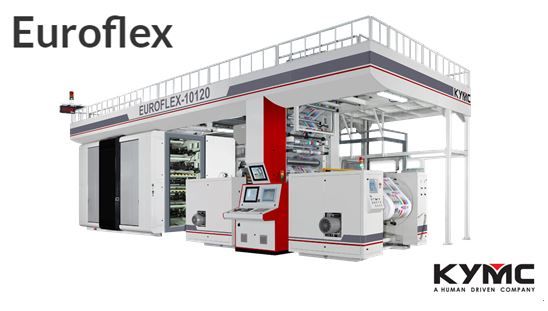
Setup and breakdown of every job is the key to saving both time and money. Standard features are now driving quality control and resulting in noticeable continuous improvement. That’s the position held by John Pan, general manager, Kuen Yuh Machinery Engineering Co., Ltd. (KYMC). He contends that, “Automation is boosting productivity.”


John uses that word in listing out 50 percent of the top 10 concerns to address in evaluating a potential press purchase.

KYMC Euroflex CI Flexo Press

  • Auto-Register Control—a good and effective automatic pre-register control system can set all colors in register within 164-ft. (50-m.), as on an 8-color press
  • Auto-Impression Control—good and effective auto-impression control should be able to set the impression for all colors within 656-ft. (200-m.), as on an 8-color press. Most importantly, it can set the desired impression from the operator’s determination, not the machine’s
  • Auto Wash With Auto Ink Viscosity And Temperature Control—keeping ink under control is the key for quality print, therefore, ink viscosity and temperature control are equally important to the auto-wash system
  • Drum Cleaner—the drum cleaner really saves the operator a great amount of time and is an important issue for quality print production
  • Auto Defect Detection—100 percent full width defect detection certainly benefits uninterrupted quality control. It increases productivity through automatic print monitoring, reduces waste and complaints, and increases customer satisfaction
  • Print and Anilox Sleeve System—the sleeve system is becoming standard on every modern press, yet customers should pay attention to the type of sleeve they are acquiring. It will affect the quality of printing and the life of the sleeve
  • Auto Splice on Unwind and Rewind, And Reel Handling System—continuous running while orchestrating a reel change has become a challenge to the operator. He or she needs a system to help to load/unload the reel every 20 to 30 minutes easy and efficiently. Those systems include a trolley, lifting table, robot, etc.
  • Energy Saving Drying System—a high-efficiency drying system is required on a high-speed press, yet it needs to be energy saving as well. Heat recovery and/or the use of an energy saving heating element/source are becoming standard on every modern press
  • Hybrid Solution—thanks to the development of the electronic driving system, the link of post processes (finishing) on the press is no longer an issue. This includes: inline coating/lamination, inline digital printing, inline cutting/sheeting, inline bag making, etc.
  • Ready for Industry 4.0—the CI flexo press must demonstrate interconnectivity, with major components monitored through any mobile device. It must also be able to connect to external management systems like APS, MES and ERP


John predicts the industrial production revolution will continue. “All printers should prepare themselves. The most basic principle in the new industrial revolution is that their equipment has the ability to connect with other equipment or systems through the network.”


Standing in Unison

Fast-change, quick-set, operator-friendly, quality-minded machinery is what every OEM FLEXO talked to says converters expect of their flexo press. Material-minded and considerably equipped with automated features is translating to faster, cheaper, better, more efficient print production.


The advent, arrival and acceptance of the integrated and optimized press is driving the principle of “control without compromise” with continuous improvement evident with each passing year.


Article Source: Flexographic Technical Association

Packaging Equipment Market Projected To Exceed $47 Billion By 2024

The packaging equipment market is set to grow from its current market value of more than $38 billion to more than $47 billion by 2024, according to a new research report from Global Market Insights Inc. (Selbyville, DE).
Packaging Equipment Industry By 2024
The growing adoption of automation in several industrial sectors is driving growth. Technological advances provide several advantages to industries using these products in packaging applications. For instance, smart sensors offer fault detection, data collection, mobile connectivity and remote monitoring, boosting efficiency in processes and operations performed in factories. Industries using traditional packaging equipment are focusing on substituting legacy machinery with new innovative equipment to enable mass production.


Demand for packaging equipment is primarily driven by the development of energy-efficient equipment, increasing adoption of automated packaging machines and consumer demand for personal care goods. Growing demand for packaging robots from several end-use industries is also a key factor in the packaging machinery market. These machines play a key role in ensuring product safety throughout the value chain. Equipment manufacturers are emphasizing solutions that have minimal environmental impact.


High costs associated with the development and installation of packaging equipment is restricting market growth. Small companies cannot afford to purchase these machines, forcing them to implement manual packaging techniques over automated systems, leading to adoption of an equipment rental business model. In addition, increasing maintenance costs are further hindering industry demand. Periodic maintenance and checks need to be performed to ensure proper operation of the equipment.


Palletizing equipment is experiencing a high adoption rate in several industrial sectors owing to the automated functions provided by the machines. These help in handling heavy loads and stacking cases, bags, bottles and cartons for packing and labeling. Advantages of these machines include easy circulation of commodities, manual and automatic handling, and reduced risk of product damage and worker injuries. Several companies are adopting automated palletizing machines to increase their manufacturing capabilities, deliver high-quality end-products and efficiently manage their processes.


The food and beverage industry accounted for more than 55% of packaging machinery market share in 2017. The packaging equipment market has witnessed growing demand for new machinery from developing markets due to the increase in spending on a wide range of processed and ready-to-go food and beverage products. To satisfy demand, several major companies operating in the food and beverage industry are looking to expand in untapped markets by building new plants and purchasing new machinery. In addition, with changing consumer preferences, food and beverage companies are expected to introduce a range of new products that require innovative or newer packaging machinery.


Asia Pacific is expected to see steady growth and will reach $18 billion by 2024, owing to the rise in the number of pharmaceutical companies. Countries including India, China, Japan and South Korea are moving toward automation and adoption of smart industrial solutions in the manufacturing processes. Stringent regulations that mandate pharmaceutical companies to follow certain standards for the packaging of drugs are positively driving the packaging machinery market. Several industrial players in the region are deploying liquid and solid packaging machinery to fulfill product requirements.


If you have interest in automatic packaging machines, I recommend you to visit KWT Machine Systems Co., Ltd. – they provide various packaging system in different industries and capacities working with diverse types and shapes of packages. To get more details, you can contact KWT for seeking an expert consultation. Rely on KWT to help you determining the best packaging solution for your business.


Article Source: PLASTICSTODAY

Guillotine vs. Swing Beam Shear

Guillotine Shear

A guillotine shear is a machine that can shear or cut various materials with a guillotine design. The word “guillotine” is associated with a blade that drops along a vertical track. This type of machine was primarily used in familiar history as a method of execution, particularly in the French Revolution, but the modern guillotine shear cutter is a tool used to form and shape products for a market.


The principles of the guillotine shear were incorporated into the design of metal shears and have been the primary design for all of these years. Some of the shortcomings of a guillotine shear are that it must run in gibs and ways and therefore need a certain amount of clearance which has a direct effect on the thinnest sheet than can be cut.


Also, the ram moves down with approximately 1 degree of backward motion. This allows the cut sheet to clear the back gauge and drop, although sometimes even this is not enough and the cut part is wedged between the lower blade and the back gauge.


When a guillotine shear has a throat it must be heavily re-enforced to avoid the deflection that would normally result from a deep throat. The apron of the upper ram is heavily gusseted to keep the blades parallel to the bottom blades. This system has worked well for hundreds of years however times change and new engineering becomes available.


Swing Beam Shear

On a swing beam shear the ram moves on bearings so there is no play what so ever. This allows the swing beam shear to be able to cut paper as long as the blades are sharp. The ram moves from a fulcrum point in the rear of the side frames giving the shear a massive amount of plate between it and the cutting point. This means almost no detectable deflection.


The back gauge is attached to the bottom of the cutting column and moves up as the blade goes down. This means there will never be a possibility for the material to become stuck between the blade and the back gauge.


Rather than gussets on the apron a swing beam shear wraps the entire ram as one solid gusset making it much stronger than a similarly gusseted ram. It can have a deep throat with no possibility of deflection and can cut even the thickest piece of metal with a very low rake angle.


In my opinion the swing beam shear reviewed the short comings of the guillotine shear and fixed them; however, it is important to remember that before making a decision on purchasing any kind of a shearing machine factors such as the type of shear, required capacity, productivity options, and safety should be carefully evaluated.


One important consideration used in deciding what shear is the right one for any job is the capacity required to perform the job. Most of the shears on the market today list capacities for mild steel and stainless steel. It is advised to compare a fabricator’s requirements to those of the actual machine.


Some shear capacities are rated on mild steel, which may have 60,000 pounds per square inch (PSI) tensile strength, while others are rated for A-36 steel or 80,000 PSI tensile strength. Capacities for stainless steel are almost always less than those for mild or A-36 steel. Surprisingly enough certain grades of aluminum require as much power to shear steel does. As always, when making a decision on any kind of metalworking machinery purchase, it is important to work with a reputable and knowledgeable company that can answer all the questions regarding the performance and capacity for the machine.


To get more details of swing beam shear, welcome to visit Yeh Chiun Industrial Co., Ltd. – they are the professional manufacturer of specializing in hydraulic shears. Learn more information, please do not hesitate to contact with Yeh Chiun anytime!


Article Source: https://www.cmarshallfab.com/guillotine-vs-swing-beam-shear/