Buying a Wire EDM: Speed, Accuracy and Finish

What kind of surface finish can the purchaser of a wire EDM expect with today’s technology?


The two things every wire electrical discharge machine (EDM) user wants are speed and accuracy. Unfortunately, these objectives are usually incompatible. You don’t get speed with precision, and you can’t achieve high accuracy without also achieving a fine surface finish. Accuracy and surface finish go together. Speed and accuracy do not.


Cutting Speed, Accuracy and Surface Finish

EDM units from the early 1980s might achieve cutting speeds of 3 to 4 square inches per hour. With changes in machine design and power supplies, speeds of 17 square inches per hour became attainable in the 1990s. Today, with improved power supplies, working in conjunction with sophisticated adaptive controls, it is not uncommon to achieve 24, 37 and in some cases 45 square inches per hour.


The type of material and the height of the part being cut are critical as well. It is generally easier and faster to cut hardened tool steel than cold-rolled steel, for example. The harder material is the better. Typically, tool steels, carbide and special alloys have fewer impurities and lower porosity, making them easier to cut. Cold-rolled steel may contain impurities, so wire cutting is slower, and the surface finish is poorer. Although aluminum is easy to cut at higher speeds, the material is so soft that it is very difficult to get a good surface finish. Even a 30-microinch surface finish is difficult to achieve in aluminum. In contrast, it is possible to cut a 3-inch-thick carbide workpiece, with accuracies of ±0.0001 inch, and still produce a of 5-microinch Ra surface finish.


A typical wire EDM process consists of several passes, traveling at varying speeds. The first pass is generally a roughing pass designed to cut as quickly as possible, while accuracy and surface finish are less of a concern. Each subsequent skim cut travels at progressively faster speeds, takes less and less material while steadily improving dimensional accuracy and quality of the surface finish.


During the finish cuts, the tension on the wire is increased, the current is reduced, and the voltage gap narrowed, allowing the user to refine the spark and the distance the spark jumps from the wire to the part. The offset applied to the last finish pass might be as small as 3 microns. To achieve a 4- or 5-microinch Ra finish, as many as six or seven skim cuts might be necessary. Whereas the diameter of a cutting tool determines the offset in milling, the EDM controller applies a cutter comp based on the diameter of the wire. For example, if a 0.010-inch-diameter brass wire is used, the cutter comp will approach 0.005 inch plus a spark gap as the wire gets closer and closer to the part surface, and possibly finish at 0.0051 inch.


To achieve these close tolerances and super-fine surface finishes, every parameter must be properly set. The right type of EDM wire must be selected. The wire must have the right diameter and tensile strength. The power setting and tension of the wire must also be right. The condition of the deionized water and flushing arrangements must be optimized, as well.


Machine Accuracy

When attempting to hold ±0.0001-inch positional accuracy with wire EDM, the shop environment becomes a factor. For example, both steel and carbide have a thermal expansion coefficient of ~6.8 ppm per degree Fahrenheit. This means that, for every 2°F change in shop temperature, a 12-inch part could grow as much as 0.00016 inch, putting the operation over the 0.0001-inch tolerance it is trying to hold. To be successful under these conditions, a shop must be able to hold its ambient temperature within 1°F in either direction during an eight-hour period. Controlling the temperature of the dielectric solution to ±1°F also helps control the temperature of the machine and the workpiece.


The two most common machine designs use either ballscrews or linear-motion systems. In terms of machine accuracy, each design has pluses and minuses, which must be explored when choosing a wire EDM unit.


High-precision glass scales are used to negate the effects of pitch error or backlash on the linear feedback. On the best machines, high-resolution servodrives with fine increments are used to position the wire, thus improving surface finish and accuracy. Adaptive controls can compensate for thermal growth. High-speed circuitry in servomotors enables them to react instantaneously for finer control of the spark. High-peak power supplies can now put more electrical energy into the wire, greatly enhancing productivity.


If you need more information of EDM machine manufacturers, I sincerely recommend you to visit Excetek Technologies Co., Ltd. – the company specializes in manufacturing high-quality EDM machines. To get more details of EDM machining, welcome to check out their website and feel free to contact with Excetek!


Article Source: https://www.mmsonline.com/blog/post/buying-a-wire-edm-speed-accuracy-and-finish
Tips for Making Sheet-Metal Parts

Follow these straightforward guidelines to create durable parts that exactly meet your design’s requirements.


In sheet-metal fabrication, parts are formed from metal sheets by punching, cutting, stamping, and bending. 3D CAD files are created using a host of different CAD packages and then converted into machine code, which controls machines that precisely cut and form the sheets into the final parts. Sheet-metal parts are known for their durability, which makes them great for a wide variety of applications. Parts for low-volume prototypes and high-volume production runs are most cost-effective due to large initial setup and material costs.


Below are some tips and guidelines for designing sheet-metal parts. If you follow the design advice and maintain the tolerances expressed in this article, you are more likely to end up with parts that meet the needs of your designs.


Wall Thickness

Parts should maintain a uniform wall thickness throughout their entirety, but this should be easy because parts are formed from a single sheet of metal.


Bends

Sheet-metal brakes bend sheets into a part’s desired geometry. Bends in the same plane should be designed in the same direction to avoid having to reorient the part during manufacturing, which will save money and time. Another trick is to keep the bend radius consistent to keep parts more cost-effective. Thick parts tend to become inaccurate, so they should be avoided if possible.


Rule of thumb: To prevent parts from fracturing or distorting, make sure to keep the inside bend radius at least equal to the sheet’s thickness.


Curls

Holes should be placed away from the curl at least a distance equal to the radius of the curl plus the material’s thickness. Bends should be at least six times the material’s thickness plus the radius of the curl.


Rule of thumb: Outside radius of curls must be at least twice the sheet’s thickness.


Countersinks

Countersinks must be separated from each other by a distance of at least 8 times the material thickness, from an edge by at least 4 times the material’s thickness, and from a bend by at least 3 times the material’s thickness.


Rule of thumb: The maximum depth for a countersink is 3.5 times the material’s thickness.


Hems

Hems are folds to the edge of a part that create rounded, safe edges. Hems may be open, flat, or tear-dropped, and tolerances depend on the hem’s radius, material thickness, and features near the hem. It should be noted that flat hems should be avoided because they risk fracturing the material at the bend.


Rule of thumb: For open hems, the inside diameter should at least equal to the material thickness (larger diameters tend to lose their circular shapes); and the return length should be at least 4 times the material’s thickness. Tear-dropped hems must maintain an inside diameter of at least equal to the material’s thickness, an opening of at least ¼ the material’s thickness, and the return length should also be at least 4 times the material’s thickness.


Holes and Slots

Holes and slots may become deformed if positioned near a bend. The minimum distance that holes should be placed from a bend is a function of the material thickness, bend radius, and the hole’s diameter. Holes should be at least 2.5 times the material thickness plus the bend radius away from any bends. Slots should be placed 4 times the material’s thickness plus the bend radius away from the bend.


Be sure to put holes and slots at least twice the material’s thickness from an edge to avoid a “bulging” effect. And holes should be separated from each other by at least 6 times the material’s thickness.


Rule of thumb: Keep hole and slot diameters at least as large as the material’s thickness. Higher-strength materials require larger diameters.


Notches and Tabs

Notches must be at least one-eighth of an inch (3.175 mm) away from each other. For bends, notches must be at least 3 times the material’s thickness plus the bend radius. Tabs must be at least 0.04 inches (1 mm) from one another or the material’s thickness, whichever is greater.


Rule of thumb: Notches must be at least 0.04 inches (1 mm) thick or as thick as the material, whichever is greater. A tab should not be any longer than 5 times its width. Tabs must be at least 0.126 inches (3.2 mm) thick, or two times the material’s thickness, whichever is greater. Tab length should be no larger than 5 times its width.


Corner Fillets and Relief Cuts

Sheet-metal parts may have sharp corners, but designing a fillet of ½ the material’s thickness will make parts more cost-effective.


Relief cuts help parts avoid “overhangs” and tearing at bends. Overhangs become more prominent for thicker parts with smaller bend radii, and may even be as large as one half of the material’s thickness. Bends made too close to an edge may cause tearing.


Rule of thumb: Relief cuts for bends must be at least one sheet’s thickness in width, and be longer than the bend radius.


If you have any interest in sheet metal process, I recommend you to visit the website of Tailift Co., Ltd. – they are the professional manufacturer for kinds of high-quality sheet metal machines and punch presses. To get more information of sheet metal machine series, please do not hesitate to check out their website and feel free to contact with Tailift.


Article Source: https://www.machinedesign.com/mechanical/tips-making-sheet-metal-parts

What You Need Pay Attention When Buy Edge Banding Machine?

You need pay attention to some item when buying edge banding machine. Let’s move on and see these tips!


  1. The matching of edge banding machine mainly depends on the shape characteristics of the workpiece to be machined, the type of edge sealing material, and the productivity and quality.


  1. Linear edge banding commonly used in office furniture and cabinets and other simple products, mainly considering the yield and some of the features or configuration:
  • The PVC or ABS scraper device for sealing material
  • Solid wood edge, need to add finishing knife and sanding device
  • In order to ensure the quality of the edge is not affected by low winter temperatures the best choice, edge banding machine equipped with far infrared preheating device
  • Additional configuration options: automatic tracking fillet trimming function, cutter device, etc.


  1. Automatic edge banding machine has many functions, mainly include: pre milling, glue, edge, blunt, rough trimming, refinement, tracking, scraping, polishing, slotting, which is characterized by high efficiency, automation, high precision, and beauty.


These features are also based on various types of division, some is relatively simple, with glue block, scraping, polishing, finishing, and other functions, some more comprehensive, almost all functions are, these are based on the customer base, to buy sheet.


  1. Edge curve can be processed in several ways. The curve edge banding machine in order to achieve a stable high level of quality, the NC machining center or NC edge machine, the two machines for some special surfaces edge can show special advantages, such as the edge with the length of the counter can make the smallest circumference of the gap edge docking that is more suitable for the manufacture of high-end furniture products. The difference between the two is that all processes from saw cut to the last parts forming the machining center, complete sealing and trimming process of CNC sealing machine dedicated only, using the processing center edge is the edge takes a larger total processing time, reduces the production efficiency.


Most manufacturers use manual edge machining curved parts, especially sheet metal parts within the arc, the maximum edge machine will decide by the wheel diameter can be processed Curve depth. Manual edge banding machine sealing curved edge has the advantages of simple operation, less investment. But due to edge by hand, quality is relatively high, mainly in the lower bonding strength, poor repeatability, high rework rate. At the same time manual sealing machine for thick edge banding commonly used (1.0-3.0mm) edge is relatively difficult but, to use some thin edge sealing strip is not visible on the component (0.4-1.0mm) can be made straight and curve processing.


  1. Generally, the use of manual edge banding machine and automatic linear edge sealing machine can meet the requirements of the general product, and the product will improve the efficiency and reduce the production cost.


  1. Automatic edge banding machine with preheating, glue, trimming, scraping, polishing and other functions, the current use of this structure there are several large manufacturers, some small manufacturers are eliminating the need for preheating, scraping and other functions, and even the polishing function is not.


  1. Listen to the manufacturer’s product introduction, from the machine specifications, performance, use, operation methods, prices, services, and so on, so that the machine needs to have a general perceptual knowledge.


  1. Look at the outside of the body in good condition. Check the parts, accessories are complete, look at the demonstration of the operation of the factory demonstration, look at the bonding effect, and master the operation of the machine Essentials.


  1. Open the machine to run the test. Check the power supply, gas supply line is smooth, sensitive; the main spindle is running smoothly, no noise.


  1. As can be seen from the above analysis, the purchase and use of edge banding machine should pay attention to product output and the ability to adapt to market demand, so as to select different levels of automation equipment and combinations.


If you need more information about edge banding machines, please do not miss Boarke Machine Co., Ltd. – you can find kinds of woodworking machines on their website. Now, contact with Boarke for more details!


Article Source: https://www.linkedin.com/pulse/what-you-need-pay-attention-when-buy-edge-banding-machine-wenlong-han

What Is A Deep Hole Drilling Machine?

Do you know what a deep hole drilling machine is? Have you encountered this type of machine before?


A deep hole drilling machine is a mechanism used in the process of deep hole drilling. Commonly, it is used to produce deep, straight holes especially in metals particularly in the process of gun making. Deep hole drilling machines are the best mechanism to produce accurate holes necessary for most manufacturing processes.


Deep hole drilling is the machining of holes with a relatively large depth to a diameter ratio. Essentially, any hole deeper that ten times the diameter of the material should certainly constitute the process of deep hole machining. Specialized drilling technique should be considered in dealing with these processes.


Interesting to note as well: deep hole drilling machines were initially developed for manufacturing of guns and armaments. It was used to drill gun barrels. Throughout time, however, other industries also saw the potential of this tool. Nowadays, a lot of industries such as energy, oil and gas use gun drilling machines for resource exploration. It is also useful in the metal cutting industries, automotive, aircraft, petro-chemical industries. Gun drilling mechanisms are also found useful even in the medical field.


Construction of deep hole drilling machines is not only expensive but a difficult task as well. It requires specific planning and a variety of tools and machinery. Despite the difficulty of production, deep hole drilling machines are still seen as an important machine in most processes in different industries.


Depending on the required processes, there are different kinds of deep hole drilling machines. As a machinist, you have to consider the dimensions of the machine you are going to use, and the dynamics of the materials. In addition to the machine dimensions, power and dynamics, compatibility of these tools with various machines is primarily determined by the fluid delivery and chip exhaust systems. Achieving a perfect deep hole is not only reliant to the drilling machine but to a variety of mechanisms or systems. The two most common deep hole drilling systems enforced by different industries are gun drilling system and the BTA system.


Here is how a drill machine operates in the system of gun drilling: the drill is positioned and held in a spindle nose. It is then guided to a pre-started hole to avoid vibration of the drill. With this setup, the gun drill system operates in full accuracy. The high pressure coolant flushes the chips and lubricates the system. This operation produces the fine finish and burnished surface of the hole.


Important to note as well that, in using a drilling machine, safety precautions must be enforced. As with all power equipment, safety and security of you and your environment plays a crucial role. For instance, you must wear the correct and appropriate working clothes in using a deep hole drilling machine. An appropriate uniform lessens the possibility of an accident. Make sure also that you know how the machine works so that you can preempt an incident waiting to happen.


If you need more information about hole drilling machine, please choose Honge Precision Industries Corp. – the company’s deep hole drilling machine has wide range of model, suitable for various industrial part’s deep hole drilling. Due to its excellent quality, good management system and superior after-sales service, Honge has already enjoyed a long-lasting good reputation in the world market. Learn more details, feel free to contact Honge at 886-4-2496-0300.


Article Source: https://www.quora.com/What-is-a-deep-hole-drilling-machine

Best Square Pipe Making Machine: Recommend Roll Forming Machines Manufacturer – Yunsing Industrial

Taiwan First Choice of Roll Forming Machine Supplier

Established in 1972, Yunsing Industrial Co., Ltd. hold “adhering to excellent quality and enhanced reliability to create outstanding customer satisfaction” as our business philosophy, Yunsing has accumulated more than 40 years of experience specializing in manufacturing steel plate automatic cold roll forming machines with advanced technologies and superior quality products, such as roofing and wall cladding, corrugated sheets, stepped tile roofing, floor decking, C-Purlin, rolling shutters and door frames.


Below, I will present you an excellent machine from Yunsing, that’s square pipe making machine.


Square Pipe Roll Forming Machine


YS-300 Square Pipe Making Machine complete with hydraulic cutting, including angular cutting, and punching hole devices by computer system.


Yunsing’s roll forming machines are driven by chain in hydraulic system. Chain Drive System can save the power compare with other system. That also means that customers do not need to pay the extra power fee during production of steel channel.


Features:

  • Without any welding
  • Using raw material is Galvanized coils, so the pipe inside is also galvanized
  • The length of the pipe is variable
  • All punching and cutting, inclduling angular cutting are automatic
  • Automatic stacker, so two workers can handle this production line


Certificate:

SGS; CE


Order Information:

  • Minimum Order: one set
  • Branded Product
  • FOB: Any port in Taiwan


If you need more information about square pipe making machine, please come and visit Yunsing Industrial Co., Ltd. for further details.


Yunsing Industrial Co., Ltd.

No, 472, Yen Ping N. Rd., Sec. 6, Taipei, Taiwan R.O.C

TEL: +886-2-28120007

FAX: +886-2-28131932

Email: info@yunsing.com.tw

How to Choose A CNC Engraver?

First of all, you have to pay attention to rigidity. Even the most nicely-looking engraver but with mediocre rigidity (e.g. twisted aluminum profiles) will not ensure proper operation. This can cause jagged edges, burrs, and clear traces of the tool vibration during operation. The machine cannot have sliding elements because they will quickly abrade and backlash will occur. So linear roller bearings and ball screw gears must be applied, which will allow the elimination of backlash.


As for the control system, engraving machines which communicate with a PC via serial or parallel ports have already gone out of date. For large works, in particular 3D ones, the file can reach tens of megabytes. Currently only Ethernet and technologies based on it come into play, which enables convenient operation of the machine with full visualization while working in real time.


A highly important thing is also the control software. Forget the printer driver which allows “printing” to the engraving machine. The engraving control software must generate the tool path itself (internal and external correction, concurrent and counter treatment, excavating pockets, excavating pockets with detection of islands, working on many stages of plunge cutting, cutting corners with an engraving cutter, etc.)


Well, and finally the speed – the fastest engraving machines reach the feed rate up to 1500mm/s, but the speed 150mm/s is good enough. Machines which reach speed not exceeding 50mm/s are toys.


If you have any interest in CNC engravers, please do not miss the website of Ares Machinery Co., Ltd. – the company specializes in a variety of tapping centers. Learn more details, welcome to contact Ares Machinery at 886-4-24925555.


Article Source: http://www.kimla.pl/en/HowtochooseaCNCengraver

PP Hollow Sheet Extrusion Line Manufacturer – Leader Extrusion Machinery

Leader Extrusion Machinery Company is the professional extruder machine manufacturer in the industry.


Leader Extrusion Machinery has more than 20 years’ experience designing and manufacturing plastic extrusion machinery. They are specializing in manufacturing of PP, PS, PVC, PC sheet extrusion lines and PP, PC PET hollow profile sheet extrusion lines.


To assure high quality and high precision products Leader Extrusion Machinery Company is equipped with sophisticated high tech production machinery and equipment. Furthermore, with the improvement of technology, plastic extrusion film and sheets have become everyday products. With lightweight, waterproof, durable and environmental features applications are unlimited!


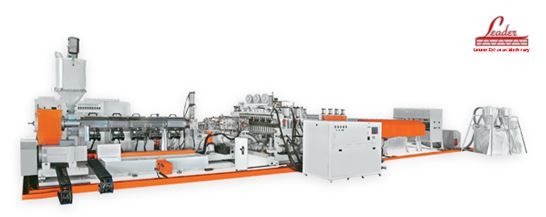
Below, I will present you Leader Extrusion Machinery’s PP hollow sheet extrusion line.


Plastic Hollow Profile Sheet Extruder

PP Hollow Profile Sheet Extrusion Production Line

pp hollow sheet extrusion line


PP Hollow Sheet Extrusion Line is lightweight, impact and oil resistant, and waterproof. Applications include packaging containers, display panels, daily use items, stationery, and protective packaging for building materials. PP can be formed into any shape and type of product such as turnover boxes, component boxes and plastic partitions. This is excellent material widely used for protecting electronic parts.


If you want to get more specification about this PP hollow sheet extrusion line, please do not hesitate to check out the website of Leader Extrusion Machinery. You also can find a variety of extruder machines on their product catalog.


Leader Extrusion Machinery Ind. Co., Ltd.

No.235, Sec.1, Gangbu Rd., Wuqi Dist., Taichung City 43546, Taiwan.

Tel: 886-4-2638-0888

Fax: 886-4-2638-0333

E-mail: leadertw.ex@leadertw.com

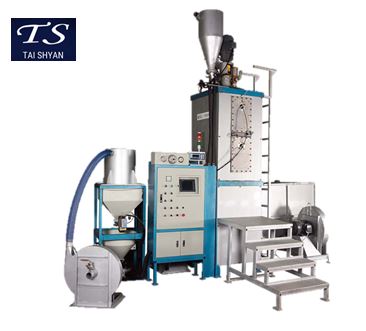
Best Cooperation Partner for Batch Pre Expander – Tai Shyan Machinery

If you need EPP or EPS machines, Tai Shyan will be your best choice. Read this article to learn more information.


Taiwan EPS Machines Manufacturing Expert


Established in 1978, Tai Shyan Machinery Industrial Co., Ltd. specialized in whole machinery equipment and designs for EPS, EPP fully automatic molding machinery and essential accessories for machines.


With “Service and Development” as the business philosophy, Tai Shyan attaches importance to pre-sales, sales, and after-sales services, wish to be the trustworthy project partner of customers. As a professional EPS / EPP automation solution provider, Tai Shyan is just there for you.


Below, I will present you one of excellent Tai Shyan EPS machines – that’s a batch pre expander.


Batch Pre-Expander Machine I-II

TS500-1600

Batch Pre Expander


Features of Batch Pre Expander

  • The batch pre expander applies PLC and touch screen, automatic feeding, electronic weighting, temperature control, material level control to realize automatic production.


  • Electronic weighing system and material level control system assure the density of the foamed material, which make the granule uniformity and keep the density tolerance within ±2.5%.


  • With advanced proportional control valve, pressure reducing valve and totally closed foaming barrel can ensure the stability of temperature and pressure in cylinder.


  • The machine is equipped with fluidized drying bed; it can dry, crush and filter the foamed materials automatically.


  • Most components used in the machine are world famous brand with its reliable performance stable quality, long service life and low maintenance cost.


  • The computer has memory function, which can record all information such as brands, specifications, expanding foam techniques and parameters of EPS material manufacturers. When customers want to use the materials that had been used before just press the touch computer screen to quickly to back to the original technique.


If you want to get further details about specifications of this batch pre expander or other EPS machines, please do not hesitate to check out Tai Shyan Machinery product catalog and send inquiry to let them know your requirements.


Tai Shyan Machinery Industrial Co., Ltd.

No.398, Dawu St., North Dist., Tainan City 704, Taiwan (R.O.C.)

TEL: 886-6-2526325

Hot Line: 886-910280292

E-mail: taishyan@ms22.hinet.net

The Advantage of Using CNC Surface Grinder in Auto Parts Processing

Auto parts (auto spare parts) constitute the overall car of each unit and in the   service of automobile products. Auto part usually requires high precision and high reliability. Manufacturing of auto bearing parts with CNC surface grinder could gain the following advantages:


  1. High Precision: two parallel plane, through the disc, the swing arm type feeding NC vertical double end face grinding machine grinding, the precision of the products can reach 0.002 ~ 0.003 mm.


  1. High stiffness is the difference between two sides of the plane can control within 0.006 mm dimension consistency control ability.


  1. High Efficiency: disc, the swing arm type feeding CNC grinding machine, compared to its efficiency on the basis of the same precision grinding machine is more than 10 times.


  1. For many applications, grinding is the preferred process strictly because of the finish it provides. These machines handle the tight tolerances of tenths or millionths without a struggle. Extremely stable machines, they’re made for dealing with super tight tolerances.


  1. Temperature changes in and around a machine can create steady fluctuations in component sizes. Although these variations may seem minute, when tolerances are in tenths and millionths, they can spell the difference between a good part and scrap.


  1. Easy to Operate: vertical double end face grinding machine, CNC control convenient operation convenient operation compared with horizontal double end face grinding machine fixture design more reasonable, more scientific and more flexible.


  1. For successful hard turning, the key components for a machine are that it is rigid, thermally stable, the more can be integrated into the process and the more efficient the operation.


  1. Along with vibration stress release, these outstanding structural features assure high strength, maximum damping capability, and longer service life.


Just as streamline, CNC surface grinding machine is another very important   revolution in auto parts manufacturing. With these machines, manufactures can   produce both normal and special auto parts in large amount. That shorts the whole design and manufacturing processing of an auto part and also lowers the cost.


If you need more information about CNC surface grinders, I recommend a company to you – that’s Tong Yi Machinery Inc.


From manual shaping grinding machine, semi-automatic grinding machine, the full-automatic grinding machine of three axes, NC level grinding machine, NC level rotary grinding machine, any product was all researched and developed and designed high-accuracy towards pluralism and humanization, believe that can offer more perfect quality service for every customer. Get more details, please feel free to contact with Tong Yi Machinery.


Article Source: Quora

Transformer Winding Machines: Significance and Types

Transformer is one of the most crucial components of any electrical circuit. A transformer is basically used to convert (increase or decrease) the voltage, depending upon the maximum allowable voltage of an application. Thus, there are two main types of transformers, namely, step-up and step-down transformers. The main difference between these two types of transformers is the number of windings. Thus, winding becomes the most important part of this electrical device. These windings are manufactured with the help of transformer winding machines.


Transformers are used in a wide range of applications varying from a mobile charger to huge industries. Thus, the rating of the transformers can vary from VA to MVA. VA is the voltage and current rating of a transformer. Thus, based on the applications, transformers with different windings are used. There are different types of transformer winding machines used to manufacture transformers with different VA/MVA ratings. Besides this, different types of winding machines are required, depending upon low volume or high volume production. What are these machines? What is the significance of these machines in manufacturing winding? Are you intrigued to know more about them? Read the following post to get a detailed understanding of these machines.


What Are the Types of Transformer Winding Machines?


As discussed earlier, transformers with different VA ratings require different coil winding machines. Based on this, there are three main types of winding machines used. These three types of machines are as follows:


  1. Manual Transformer Winding Machines –

These transformer coil winding machines can either be operated by hand or with the help of a small motor. Transformer coils can be wound precisely by using the manual transformer winding machines. One of the major advantages of these machines is that they are light weight. This makes them portable and can be carried from one place to another easily.


  1. Programmable Transformer Winding Machines –

The programmable transformer coil winding machines are an advanced version of winding machines, which feature a 16 Bit microprocessor for smart operation. These machines also have a stepper motor, which is capable of winding up to 750 RPM. In these machines, various functions of a transformer are set-up and programmed. This is one of the biggest advantages of these machines, as programming these functions provides high level of precision in operation. Thus, coils of transformer can be wound easily. Some striking features of this achiness are:


  • They have a built-in production counter, which keeps an eye on the number of transformer coil winding.
  • There are a number of menu items, which can be programmed easily.
  • These winding machines are equipped with a speed control knob. This helps adjust the speed.
  • Another important and beneficial feature of these transformer winding machines is that they have a display.


  1. Automatic Transformer Winding Machines –

As their name suggests, the automatic transformer winding machines do their job with no or very less need of human interference. The advantage of using these types of winding machines is that they help reduce the labor costs. Various tasks can be fed to these machines, and they are operated using computerized programs. The multi-spindle feature of these machines help to make the equipment multi-coil winding. Multiple coil windings can be done simultaneously using these types of machines.


These were the three basic types of transformer winding machines used by a number of manufacturing firms. If you want to get more information about transformer coil winding machine, try to check out the website of DETZO Co., Ltd. – the company specializes in producing fully automated production line and winding machines. Learn more details please do not hesitate to visit DETZO immediately.


Article Source: https://www.armaturecoil.com/blog/transformer-winding-machines-their-significance-and-types/