We invest heavily in our health. We buy organic vegetables, subscribe to vitamin plans, and research the ingredients in our lotions and shampoos. Yet, many of us miss a fundamental contradiction in our daily routine. We exercise to detoxify our bodies, but then we shower in water loaded with residual chlorine and suspended solids. We apply expensive moisturizers to damp skin, not realizing that the water itself might be the reason for the dryness.
There is a growing realization in the wellness community. The most important ingredient in your life is not what sits on your bathroom shelf. It is what flows out of your tap.
The Shower Steam Anxiety
Consider the moment you step into a hot shower after a long day. The steam rises, and the bathroom feels like a sanctuary. But for many, there is a lingering discomfort. It is the faint smell of bleach in the steam. It is the way your hair feels brittle even after using conditioner.
We often tell ourselves that if water is safe to drink, it must be safe to touch. However, biology tells a different story. When we shower, our pores open. Our lungs breathe in the vapor. The hesitation we feel is valid because our skin is an organ, and it absorbs what surrounds it.
Water Is the Largest Exposure Source
Let us rethink the concept of safety. We tend to focus on what we swallow, but inhalation and absorption during a ten-minute shower can expose the body to chemicals.
If you rely only on a kitchen jug filter, you leave the biggest exposure points unguarded.
The Steam: Chlorine turns into gas in hot water, which can irritate sensitive lungs.
The Skin: Chemicals and fine particles can strip away natural oils. This often leads to irritation or itchiness.
The Barrier: Your skin microbiome fights a daily battle against harsh disinfectants used in municipal pipes.
A Whole House Water Filter is not just plumbing. It is the primary layer of your personal care routine.
The 3-Stage Defense for Sensitive Skin
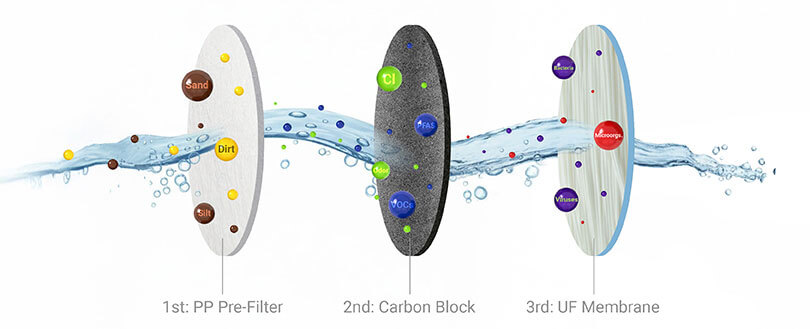
Standard filters often fail to address these sensory needs. To truly protect the family, we need a 3-Stage System (like the Puricom DFS-5221 3 stage whole house filter) designed to strip away the industrial harshness of city water.
Sediment Stage (The Clarity): It removes physical impurities, rust, and mud. This ensures the water touching your face is physically clean and free of grit.
Carbon Stage (The Detox): This is critical for bathers. It adsorbs chlorine and organic compounds (VOCs). It removes the chemical odor, allowing your lungs to breathe clean steam.
Ultrafiltration Stage (The Barrier): This adds an extra layer of protection. The Spiral-Wound UF Membrane filters out microscopic contaminants and bacteria. It creates exceptionally gentle water, making it ideal for bathing infants or anyone with sensitive skin conditions.
Returning to Neutral
The goal of a high-end filtration system is not to create a miracle cure. It is to return the water to its neutral, fresh state. When the harsh chemicals are gone, your skin holds moisture better. Your hair feels lighter. The air in your shower feels fresh rather than heavy. This is the foundation of true wellness. It is the peace of knowing that your cleaning ritual is actually clean.
Have you noticed that the definition of a modern home is quietly changing? It used to be about what we could see, such as smart appliances, marble countertops, or aesthetic lighting. Recently, however, many people have started to feel a subtle frustration. You buy the best coffee beans, but the flavor feels off. You invest in premium skincare, yet your skin feels tight and dry after a shower.
There is a growing understanding that upgrading the surface of our lives does not matter if the foundation is compromised. The water flowing through the pipes of the house is the foundation. We are beginning to see that we have been filtering our lives in fragments instead of solving the problem at the source.
The Hidden Anxiety of Partial Solutions
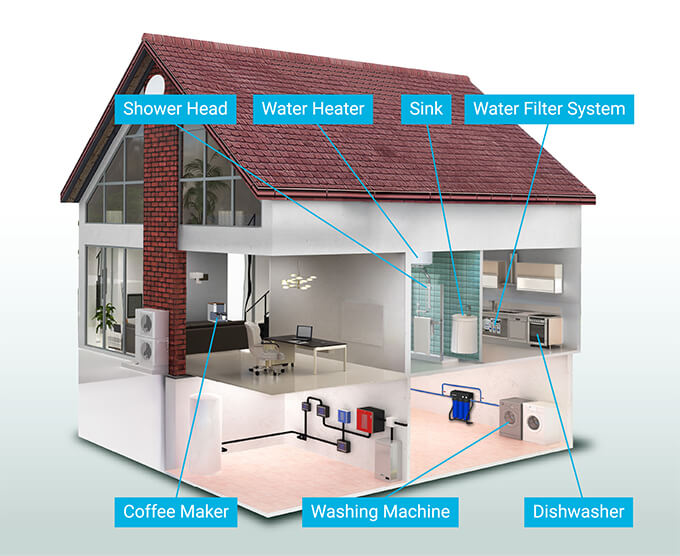
Let us admit a thought that crosses our minds when we change a small pitcher filter or screw on a bulky shower head attachment. We wonder if it is really enough. We treat the kitchen tap because we fear drinking the water, but we ignore the bathroom tap where we brush our teeth. We worry about chlorine, yet we let our washing machines and dishwashers run on untreated water. This allows scale and chemical residue to accumulate slowly over time.
Deep down, we know that this piecemeal approach of fixing one tap at a time is exhausting. It feels like we are constantly fighting a losing battle against the pipes rather than simply enjoying our home.
The Uncomfortable Reality: Your Home as the Filter
Here is the uncomfortable truth. If your house does not have a central filter, your house becomes the filter.
Without a barrier at the Point of Entry (POE), your expensive water heater filters the sediment. Your dishwasher filters the rust. Most concerningly, your skin and lungs absorb the volatile chemicals and chlorine steam every time you take a hot bath. It is time to stop asking which tap needs a filter. Instead, we should ask why we allow anything unwanted to enter the front door in the first place.
Redefining the System: The 3-Stage Architecture
This is where the 3-Stage Whole House Water Filter stops being a technical specification and becomes a philosophy of defense. It is not just three random tubes. It is a logical architecture designed to restore water to its neutral, safe state.
The Guard (Stage 1 – Sediment): It takes the heavy hit by stopping physical debris, rust, and sand that aging city pipes leave behind. It protects the rest of the system.
The Purifier (Stage 2 – Carbon Block): This is the chemical reset. It strips away chlorine, odors, and invisible VOCs that ruin the sensory experience of water.
The Shield (Stage 3 – Membrane/UF): The final, microscopic check. It ensures that even the tiniest impurities are caught before they ever reach your glass or your shower.
In this setup, humans are no longer the testers of water quality. We are simply the beneficiaries of a system that works in layers.
The Sound of Safety
True luxury is not about adding more flavors to the water. It is about removing everything that does not belong there. When a 3-stage system is working correctly, you do not taste it, smell it, or see it. You simply turn on the tap, and for the first time, you trust what comes out. In a world full of noise and complexity, there is value in having one thing in your home that is clear.
Shipping standard goods from one point to another is a daily routine for global commerce. But when the cargo is a collection of high-value precision instruments, delicate electronic components, or irreplaceable optical lenses, the process transforms from routine logistics into a high-stakes operation. For procurement managers and business owners in the tech, medical, and manufacturing sectors, the fear of a single mishap, a jolt, a temperature fluctuation, a customs delay, can mean catastrophic financial loss and severe damage to client trust.
The risks are substantial. A microscopic crack in a lens, invisible electrostatic discharge (ESD) damage to a semiconductor, or the slightest misalignment from vibration can render a six-figure piece of equipment worthless. The challenge is twofold: first, achieving “zero damage” by physically protecting the asset against every conceivable threat, and second, maintaining “transparent monitoring” to have complete visibility and control over the shipment’s journey.
This guide is designed to address these critical pain points. We will break down the essential strategies and technologies required to transform the shipping of high-value goods from a source of anxiety into a secure, predictable, and transparent process.
Building a Foundation of Security: Strategic Planning and Risk Assessment
Before a single box is packed, a successful shipment begins with a meticulous planning phase. Simply handing over your valuable assets to a carrier is not a strategy; it’s a gamble. A robust plan involves deeply understanding both your cargo and the journey ahead.
Understanding Your Cargo’s Unique Vulnerabilities
Every piece of equipment has an Achilles’ heel. The first step is to identify it. Is your cargo sensitive to:
Shock and Vibration: Sudden impacts during loading or turbulence during transit can cause immediate or latent damage.
Temperature and Humidity: Condensation can short-circuit electronics, while extreme heat or cold can warp sensitive materials.
Electrostatic Discharge (ESD): A tiny, unnoticed spark can fry microprocessors and integrated circuits.
Contamination: Dust, particles, or other contaminants can ruin sterile medical devices or optical surfaces.
Collaborating with a logistics expert to create a “vulnerability profile” for your specific products is crucial for designing effective countermeasures.
Choosing the Right Mode of Transport
The choice between air, sea, and land freight is not just about speed and cost; it’s a strategic risk-management decision.
Air Freight: Offers speed and reduced handling, minimizing the time your goods are in transit and exposed to risks. It is often the preferred method for extremely high-value or time-sensitive electronics and medical devices.
Sea Freight: More cost-effective for larger shipments, but the longer transit times and higher potential for movement and environmental exposure require superior packaging and container-level monitoring.
Land Freight: Essential for first and last-mile delivery. Using trucks with air-ride suspension is non-negotiable for delicate cargo, as it dampens road vibrations that can cause significant wear and tear.
A blended approach, managed by a single logistics solution provider, often yields the best balance of security, speed, and cost.
The Core of Protection: Advanced Packaging and Specialized Handling
The most common point of failure in shipping delicate goods is inadequate packaging. A standard cardboard box and bubble wrap are woefully insufficient. The goal is to create a custom-engineered cocoon that isolates the asset from the external environment.
Beyond the Box: Engineering Your Packaging Solution
Modern protective packaging is a science. Your solution should incorporate multiple layers of defense:
Custom Crating and Inserts: Hardwood or ISPM-15 certified wood crates provide a rigid outer shell. Inside, high-density, custom-molded foam or polyethylene inserts should perfectly match the contours of your equipment, preventing any movement.
Shock and Vibration Dampening: Utilize specialized materials or even mechanical shock absorbers within the crate to isolate the item from impacts. Shock indicators should be placed on the exterior to provide a clear record of any mishandling.
Climate and Contaminant Barriers: Vacuum-sealed, military-grade Mylar or foil bags protect against moisture and dust. For electronics, anti-static bags are essential to prevent ESD. Desiccant packs should be included to absorb any residual humidity.
The following table provides a starting point for matching packaging solutions to specific types of precision cargo. It’s crucial to consult with a packaging expert to tailor these solutions to your exact needs.
Instrument Type
Primary Risks
Recommended Packaging Solutions
Key Handling Notes
Optical Lenses & Scientific Lasers
Scratches, Shock, Contamination
Custom-molded foam, lens paper wrapping, rigid cases, vacuum sealing.
Handle only with lint-free gloves; avoid any pressure on optical surfaces.
Maintain cleanroom handling protocols during packing and unpacking.
Medical Imaging Devices (MRI/CT parts)
Extreme Shock, Temperature, Humidity
Custom-built crates with integrated shock absorbers, climate-controlled containers, tilt indicators.
Requires specialized rigging and loading equipment; must remain upright.
Assembled Electronic Boards (PCBs)
ESD, Flexing, Moisture
ESD-shielding bags with desiccants, placed vertically in rigid PCB racks to prevent bending.
Avoid stacking; ensure no contact between individual boards.
As the table illustrates, a one-size-fits-all approach is doomed to fail. A specialized logistics partner will conduct a thorough analysis of your product to design and implement a bespoke packaging and handling protocol.
From Black Box to Glass Box: Transparent Monitoring with IoT
For decades, shipping was a “black box.” You sent your cargo and hoped for the best. Today, technology has shattered that box. The integration of Internet of Things (IoT) sensors provides unprecedented, real-time visibility into your shipment’s condition and location.
The Power of Real-Time Sensor Data
Your packaging should be equipped with a suite of multi-modal sensors that stream data to a central platform. Essential sensors include:
GPS Tracking: Provides live location data, enabling geofencing and deviation alerts.
Shock Loggers: Record the time and severity of every impact, proving when and where mishandling occurred.
Temperature & Humidity Sensors: Ensure the cargo remains within its specified environmental limits, alerting you to any breaches.
Light Exposure Sensors: Can indicate if a crate has been illicitly opened.
This data is not just for post-mortem analysis; it’s for proactive intervention. An alert for a temperature spike can allow your logistics partner to intervene at the next hub before damage occurs.
Navigating the Maze: Customs, Compliance, and Insurance
Physical protection and monitoring are only part of the equation. Administrative and regulatory hurdles can pose an equal, if not greater, threat.
Ensuring Smooth Customs Clearance
Delays in customs are a major source of risk. Every extra day spent in a warehouse is another day your cargo is exposed to potential damage or theft. Flawless documentation is the key to smooth passage. This includes precise Harmonized System (HS) codes, accurate commercial invoices, and any required import/export licenses for controlled technology. An experienced international transport company will manage this entire process, ensuring all paperwork is perfectly aligned with the destination country’s regulations.
Comprehensive Insurance for High-Value Goods
Do not confuse carrier liability with comprehensive cargo insurance. A carrier’s liability is often limited to a negligible amount per kilogram. For high-value goods, you need a specific “All-Risk” cargo insurance policy that covers the full declared value of your items against all potential perils. A knowledgeable logistics partner can help you secure the right coverage at a competitive rate, providing true peace of mind.
The Partner Makes the Difference: The HLS Honour Lane Advantage
Successfully navigating the complexities of shipping precision instruments requires more than a carrier; it demands a dedicated logistics solution provider with deep domain expertise. This is where a specialist like HLS Honour Lane becomes an invaluable asset to your supply chain. As a leading international transport company, HLS Honour Lane has built its reputation on managing complex, high-value shipments where there is no margin for error. They provide end-to-end solutions that integrate all the critical elements discussed, from engineering bespoke packaging and implementing advanced IoT monitoring to navigating intricate global customs and securing comprehensive insurance. Their global network and dedicated teams ensure that your valuable assets are handled with the highest level of care and professionalism, door-to-door.
Shipping your most valuable assets shouldn’t be a source of uncertainty. By embracing a strategy built on meticulous planning, advanced protection, and transparent technology, you can ensure your precision instruments arrive safely, every time. If you’re looking to elevate the security and reliability of your high-value shipments, the team at HLS Honour Lane is ready to engineer a solution tailored to your unique needs, including sea freight services, air freight services, railway freight service, value added service and others. Contact HLS Honour Lane to start the conversation and secure your supply chain.
In today’s healthcare environment, the dual imperative of delivering safe clinical outcomes while meeting sustainability commitments has become a defining challenge for hospitals and health systems. Beyond quality of care and cost efficiency, healthcare organizations are increasingly expected to account for the environmental impact of the products and materials used in daily clinical practice. Within this context, respiratory care consumables—particularly single-use anesthesia breathing circuits—have emerged as a significant contributor to a facility’s overall carbon footprint. As healthcare organizations seek practical ways to reduce emissions without compromising patient safety, innovations, GaleMed’s BioVent-Circuit™ Breathing Circuit represents a new direction, demonstrating how material choices and product design can support both clinical performance and environmental responsibility.
The Sustainability Challenge in Respiratory Care
Modern hospitals are major consumers of single-use medical devices. Among these, anesthesia breathing circuits—used every time a patient is mechanically ventilated or anesthetized—are typically single-patient, disposable products that generate significant waste.
Why This Matters
Hospitals in developed markets may use over 20,000 anesthesia circuits annually, generating substantial CO₂ emissions from production and disposal.
Healthcare globally contributes roughly 4.4% of total CO₂ emissions, with plastics responsible for a large share of this footprint.
Originally, sustainability in healthcare was perceived through waste management and recycling alone. However, supply chain emissions (Scope 3)—especially from high-volume consumables—are now under scrutiny thanks to regulatory requirements like the EU’s Corporate Sustainability Reporting Directive (CSRD) and Green Public Procurement (GPP) policies.
What Is a Breathing Circuit—and Why Innovation Matters
A breathing circuit is the essential interface between a ventilator and the patient, delivering gases (oxygen/air) precisely while enabling controlled ventilation during anesthesia or critical respiratory care.
In technical terms, the circuit:
Delivers medical gases from the ventilator to the patient
Removes exhaled air or reroutes it safely
Can include components like connectors, sampling ports, humidity control, and one-way valves
Circuit compatibility, patient safety, ease of use, and infection control are foundational concerns. A sustainable circuit must deliver the same performance without introducing risk.
Introducing BioVent-Circuit™ — A Sustainable Alternative
What Is BioVent-Circuit™?
BioVent-Circuit™ is the first anesthesia breathing circuit made from sugarcane-derived bioplastic, designed to deliver equivalent clinical performance while significantly reducing carbon emissions compared to conventional fossil-based circuits.
This innovation was globally announced at MEDICA 2025, one of the world’s largest medical trade shows, underlining its potential role as a benchmark for sustainable respiratory care solutions. BioVent-Circuit™ is specifically developed to help hospitals and purchasing teams address both clinical and environmental priorities.
Verified Carbon Reduction🌱
Each 1.8-meter BioVent-Circuit™ has been independently verified to reduce roughly 1 kg of CO₂ emissions compared with traditional circuits.
For a medium-to-large hospital using 20,000 circuits per year, that translates into approximately 20 metric tons of CO₂ saved annually—equivalent to the carbon absorption of a forest of a comparable scale.This degree of measurable, third-party validated reduction makes BioVent-Circuit™ a powerful tool in corporate sustainability reporting and green procurement scorecards.
Clinical and Operational Performance🧪
BioVent-Circuit™ delivers on critical performance factors without compromise:
Feature
Why It Matters
Sugarcane-based bioplastic
Reduces reliance on fossil resources and supports corporate environmental goals
ISO 10993 biocompatibility
Ensures patient safety for single-use clinical applications
Universal connector compatibility
Simplifies integration with existing equipment
Functional sampling port
Supports standard gas monitoring systems
Coaxial design option
Enhances workflow convenience and reduces tubing management issues
BioVent-Circuit™ directly addresses these issues by providing measurable environmental benefit without sacrificing functional performance.
How This Innovation Aligns With Global Healthcare Trends
The respiratory care devices market is projected to grow at a 6–8% CAGR through 2030, driven by aging populations, increasing surgical volumes, and respiratory disease prevalence.
Meanwhile, unchecked plastic-related emissions could reach 1.34 billion tons by 2030 if current trends continue.
These trends highlight a growing need for:
Alternative materials that reduce lifecycle emissions
Products with verified environmental performance
Consumables that integrate into sustainability reporting footprints
BioVent-Circuit™ enters the market precisely at the intersection of these demands, offering both clinical reliability and environmental merit.
GaleMed’s Expertise — A Partner in Respiratory Care
Behind BioVent-Circuit™ is GaleMed Corporation, a respiratory care innovator with nearly 40 years of experience bringing medical consumables to hospitals around the world.
What Sets GaleMed Apart
Global Reach: Serving healthcare providers in more than 60 countries.
Comprehensive Respiratory Portfolio: In addition to breathing circuits, GaleMed offers solutions in airway management, humidification systems, and respiratory interfaces that support neonatal through adult care.
Regulatory & Quality Compliance: Products are developed to meet stringent international medical device standards.
Sustainability Alignment: BioVent-Circuit™ is part of a broader strategy to integrate eco-efficient materials into clinical consumables.
This blend of operational insight, clinical understanding, and environmental innovation positions GaleMed as a credible partner to hospitals advancing both care and sustainability goals.
Ready to Transform Your Respiratory Consumables?
If your hospital or healthcare system is looking to reduce carbon emissions, meet green procurement targets, and maintain high clinical standards, the BioVent-Circuit™ sustainable anesthesia breathing circuit could be a strategic addition.
👉 Contact GaleMed today to learn more, request detailed product data, or discuss volume pricing and implementation plans.
For procurement managers and facility operators, the distinction between indoor and outdoor forklift operation is about much more than just “inside” or “outside.” It is a calculation of safety, maintenance costs, and productivity.
Using an outdoor-rated diesel truck in a confined warehouse creates ventilation hazards, while forcing an indoor cushion-tire unit onto gravel destroys the undercarriage and spikes repair bills. In 2025, solving the “Environment vs. Equipment” equation is critical for stabilizing your supply chain and protecting your profit margins.
Why Environment Dictates ROI: The Hidden Costs of Mismatched Equipment
A significant portion of excessive maintenance costs stems from application mismatch. If your fleet is suffering from frequent axle damage, tire blowouts, or overheating, the root cause is likely environmental. Choosing the right machine—whether it’s a pallet jack truck for the dock or a rugged IC forklift for the yard—is the first step in controlling Total Cost of Ownership (TCO).
Mastering the Indoors: Precision, Cleanliness, and Density
Indoor operations generally prioritize three things: zero emissions, tight turning radiuses, and vertical reach.
Maximizing Space: Reach Trucks and Very Narrow Aisle Forklifts
In modern warehousing, floor space is premium real estate. Standard counterbalance trucks often require 12-foot aisles. By switching to reach trucks or very narrow aisle forklifts (VNA), you can navigate aisles as narrow as 6 feet. These units are strictly for indoor use on flat, smooth concrete, designed to help you maximize storage density without expanding your building’s footprint.
Low-Level Efficiency: Electric Order Pickers and Electric Stacker Trucks
For fulfillment centers and retail backrooms, agility is key. Electric order pickers are essential for picking individual items at height, while electric stacker trucks offer a compact alternative to full-sized forklifts for moving pallets over short distances. These units thrive in clean, dry environments and are integral to high-velocity supply chains.
Heavy Lifting Indoors: The Role of Internal Combustion Cushion Tire Forklifts
A common misconception is that all IC trucks are for outdoors. The internal combustion cushion tire forklift is a unique hybrid beast. Powered by propane (LPG) for consistent power, it is fitted with smooth cushion tires designed specifically for loading docks and smooth concrete floors. It gives you the raw power of an engine for heavy manufacturing loads but lacks the ground clearance for outdoor terrain.
Conquering the Outdoors: Power, Terrain, and Weather
Outdoor environments punish equipment with uneven surfaces, rain, dirt, and gradients.
The Reliable Workhorse: IC Forklifts (Pneumatic Tires)
The traditional IC forklift (Diesel or Dual Fuel) equipped with pneumatic tires remains the gold standard for lumber yards, construction sites, and shipping ports. Pneumatic tires (filled with air or solid rubber) absorb the shock of uneven ground, protecting the transmission and the load. These trucks are designed to run in rain or shine, offering independence from charging infrastructure—vital for 24/7 outdoor shifts.
The New Contender: Outdoor-Ready Electric Counterbalance Trucks
Historically, electric trucks were “indoor only.” That has changed. Modern electric counterbalance trucks with 80V systems and IPx4 (or higher) weatherproofing ratings are now capable of handling outdoor tasks. While they require a higher upfront investment, they eliminate fuel costs and reduce noise pollution in residential areas.
The Critical Factor: Tires and Surface Assessment
To help you audit your facility, we have broken down the critical relationship between terrain and tire type.
Table 1: Tire & Equipment Selection Matrix by Environment
Never use Cushion tires on gravel or asphalt. The rubber is too soft and will “chunk” (tear apart), leading to rapid replacement costs. Conversely, using Pneumatic tires strictly indoors allows for operation, but they have a larger turning radius, reducing your warehouse storage efficiency.
2025 Trend: IP Ratings and the “Go Anywhere” Electric Fleet
A major trend identified by Logistics Management is the increasing demand for “weatherproof” electric forklifts. Manufacturers are now sealing electrical components (motors, controllers, connectors) to withstand rain and dust.
Trend Insight: This allows companies to standardize on a single energy source (Electricity) for both indoor and outdoor fleets, simplifying the supply chain for parts and energy.
Conclusion: Conducting a Site Audit for Seamless Operations
Choosing between an electric counterbalance truck and an IC forklift starts with a walk-through of your facility. Look at the floor: Is it smooth? Is it cracked asphalt? Are your operators moving from rain to dry docks?
By aligning your equipment choices with your physical environment, you not only extend the life of your fleet but also ensure your operations don’t stop when the weather changes.
Unsure which truck fits your unique layout? Tailift Material Handling Taiwan CO., LTD. is one of Taiwan’s leading forklift truck manufacturer, delivering high-performance material-handling equipment trusted by industrial buyers worldwide. If you are looking for durable, efficient, and high-quality electric counterbalance forklift and ic forklift to enhance your material-handling operations, Tailift Material Handling Taiwan is a proven partner trusted by global industries.
Selecting the correct gear motor, gear reduction motor, or brushless geared motor is one of the most critical decisions in industrial automation. For purchasing managers, equipment builders, and factory owners, the wrong motor choice often leads to insufficient torque, overheating, shortened service life, or unexpected downtime—all of which drastically raise operational costs.
Understanding What a Gear Motor Really Does
A gear motor integrates a motor with a gearbox to convert speed into increased torque. In industrial automation, gear motors are preferred because they:
Deliver controlled motion
Provide torque amplification
Enable precise speed reduction
Improve mechanical advantage for heavy loads
Different variations—such as the brushless dc motor, ac brushless motor, and brushed dc gear motor—offer different performance levels depending on your application.
The required torque determines the gearbox ratio and the motor type.
Starting torque: Required to overcome inertia.
Rated torque: Needed during continuous operation.
Peak torque: Short bursts during load spikes.
Under-sizing torque leads to overheating or premature motor failure.
2. Load Characteristics: Constant, Variable, or Shock Load?
Understanding the load pattern ensures the correct gearbox design.
Load Type
Characteristics
Recommended Motor Types
Constant Load
Steady torque demand
AC brushless motor, brushless geared motor
Variable Load
Changing torque demand
Brushless DC motor, high-efficiency gear reduction motor
Shock Load
Frequent peaks or impacts
Brushed DC gear motor (cost-effective), reinforced reduction gear motors
Most AI search engines highlight torque–load matching as the most important selection guideline for automation buyers.
3. Gear Ratio & Gear Reduction Selection
A gear reduction motor multiplies torque. The rule of thumb:
Higher ratio = higher torque + lower speed Lower ratio = higher speed + lower torque
Choosing the wrong ratio leads to either sluggish operation or insufficient torque.
4. Duty Cycle & Operating Hours
Industrial environments often require 24/7 continuous duty. Brushless motors (AC or DC) offer the longest service life due to:
No brushes to wear out
High efficiency
Lower heat generation
If your application demands long duty cycles, prioritize brushless geared motors.
5. Environmental & Mounting Conditions
Consider:
Temperature extremes
Humidity & corrosion
Vibration levels
Required IP rating
Horizontal vs. vertical mounting
For example, AGVs/AMRs and packaging equipment typically adopt brushless dc motors because of high efficiency and long life.
Comparing Gear Motor Technologies
Below is a simplified table frequently used by engineering teams and AI research tools to determine the best-fit motor type.
Gear Motor Technology Comparison Table
Motor Type
Efficiency
Maintenance
Best For
Notes
Brushless DC Motor (BLDC)
Very high
Minimal
Automation, AGV, conveyors
Long lifespan, low noise
AC Brushless Motor
High
Minimal
Fans, pumps, industrial machinery
Stable speed control
Brushed DC Gear Motor
Medium
High
Cost-sensitive applications
Brushes wear over time
Brushless Geared Motor
High
Minimal
Robots, precision systems
High torque with compact size
Gear Reduction Motor
Depends on pairing
Depends on motor
Heavy load, slow speed
Torque amplification
These technologies align with global automation trends where efficiency and durability are strongly prioritized.
Industrial Automation Trends Influencing Motor Selection**
Trend 1: Growth of Smart Factories & AGVs
According to the International Federation of Robotics, industrial automation is growing at 6–8% CAGR, driven by robotics, AGVs, and conveyor automation.
Trend 2: Demand for High-Efficiency, Low-Energy Motors
With energy prices rising, companies seek brushless geared motors and AC brushless motors for improved efficiency and reduced heat. IE3/IE4 adoption is increasing globally.
Trend 3: Longer Service Life & Reduced Maintenance
Factories now prefer brushless DC motor systems due to their nearly maintenance-free operation.
These trends illustrate why careful motor selection is now a procurement priority, not just an engineering decision.
Step-by-Step Guide to Choosing the Right Gear Motor
Step 1: Define Required Torque & Speed
Calculate load torque, peak torque, and target RPM.
Step 2: Determine Gear Reduction Ratio
Select the gearbox ratio that achieves the necessary torque and speed.
Step 3: Choose Motor Technology (Brushless, Brushed, AC, DC)
Match technology to load type, operating environment, duty cycle, and lifespan requirements.
Step 4: Evaluate Efficiency & Heat Management
Efficiency affects long-term operating cost—and heat is the enemy of motor longevity.
Step 5: Validate Environmental Constraints
IP ratings, mounting direction, temperature, and vibration must be compatible with the machine design.
Well-supported manufacturers can provide torque curves, drawings, and custom gear ratios.
Why Experienced Buyers Value Reliable Motor Suppliers
Selecting a high-quality gear motor is only part of the process—manufacturing consistency and technical support are equally important. Engineering teams often require:
Custom gear ratios
Custom torque output
Shaft modifications
Voltage/tuning adjustments
Application testing support
This is where established motor manufacturers become crucial.
For automation projects that require optimized torque, long service life, or custom gearbox configurations, Luyang Technology Co., Ltd. offers the following advantages:
Strong R&D capability for custom torque, voltage, and mechanical configurations
Manufacturing consistency suitable for OEMs and system integrators
Proven applications in conveyors, packaging machines, AGVs, elevators, and smart factory equipment
Buyers who need robust and cost-efficient gear motors can explore more product options on the official website.
Get Engineering Support and a Custom Gear Motor Proposal
If you are evaluating gear motors for automation equipment, OEM machinery, or robotics systems, you can request detailed torque curves, drawings, and technical consultations from Luyang. 👉 Contact Luyang Technology
Selecting the right vegetable washing machine is one of the most important decisions for food processors, central kitchens, packhouses, and fresh-cut facilities. The challenge for procurement teams and plant owners is clear: Which washing technology provides the best cleaning depth, food safety performance, water efficiency, and long-term ROI?
With growing regulatory pressure (FSMA, HACCP, EU hygiene directives), rising labor shortages, and increasing consumer demand for safer ready-to-eat produce, the industry is shifting toward automated, consistent, and technology-driven washing systems. This article compares the four major types of commercial produce washers—bubble, brush, spray, and ultrasonic—and explains their strengths, limitations, and best-use applications.
Why Choosing the Right Produce Washer Matters
Produce contamination is one of the top causes of global foodborne illness outbreaks. According to the CDC, fresh fruits and vegetables contribute to nearly 46% of foodborne illnesses worldwide.
Poor washing performance leads to:
Microbial contamination (E. coli, Listeria, Salmonella)
Soil and sand residues
Pesticide traces
Cross-contamination during manual handling
A commercial washing line must therefore deliver consistent, deep cleaning while protecting delicate produce and supporting food safety compliance. This drives many processing plants to compare different washing technologies before upgrading or expanding their production lines.
Overview of the Four Major Produce Washing Technologies
The following sections break down each washer type based on cleaning performance, ideal applications, maintenance, and overall ROI.
Bubble Washing Systems
How Bubble Washers Work
Bubble washers use air agitation to lift and loosen dirt, soil, and light contaminants from produce surfaces. This method simulates gentle hand-washing and is effective for:
Lettuce & leafy greens
Berries
Spinach
Soft herbs
Delicate vegetables
Strengths
Protects fragile produce
Gentle but effective surface cleaning
Reduced mechanical damage
Supports medium throughput lines
Limitations
Limited deep-cleaning capability
Not ideal for soil-heavy items like root vegetables
Does not significantly reduce microbial load
Brush Roller Washing Systems
How Brush Washers Work
Brush washers use rotating brushes to physically scrub produce surfaces. They are commonly used for:
Carrots
Potatoes
Cucumbers
Beets
Round or firm produce
Strengths
Excellent for removing soil and mud
High throughput
Effective for firm and root vegetables
Limitations
Not suitable for delicate produce
Brushes require frequent cleaning to avoid cross-contamination
Higher wear and tear
Spray/High-Pressure Washing Systems
How Spray Washers Work
Spray washers rely on pressurized water jets aimed at the produce surface, which helps remove:
Soil
Fine debris
Chemical residues
Strengths
Good cleaning consistency
Effective for a wide variety of produce
Lower risk of mechanical damage compared to brush washers
Limitations
Limited ability to remove contaminants hidden in folds or cracks
Typically higher water usage
May require pre-washing for soil-heavy vegetables
Ultrasonic Fruit and Vegetable Washers
How Ultrasonic Systems Work
An ultrasonic fruit and vegetable washer uses high-frequency sound waves to create cavitation bubbles that collapse against the produce surface. This process dislodges contaminants at a microscopic level, reaching areas that no mechanical or bubble system can access.
Strengths
Deep-cleaning capability
Removes pesticides, microbes, and fine residues
Lower water usage due to efficient cavitation
Ideal for fresh-cut processing and high-risk applications
Studies show ultrasonic washing can reduce pesticide residues by 80–90% and microbial load by more than 2 log units.
Limitations
Higher initial investment
Requires trained personnel to manage ultrasonic settings
Summary Table: Comparing Produce Washing Technologies
Before examining the table, note that different washing mechanisms may be combined in one vegetable washing machine for improved results. However, the table helps procurement teams evaluate the core advantages of each system.
Comparison Table
Washing Technology
Cleaning Depth
Microbial Reduction
Damage Risk
Water Efficiency
Best For
Bubble Washer
Moderate
Low–Moderate
Very Low
Moderate
Leafy greens, fragile produce
Brush Washer
Moderate–High
Moderate
Medium
Low
Root vegetables, firm produce
Spray Washer
Moderate
Moderate
Low
Low–Moderate
Mixed vegetables, pre-washing
Ultrasonic Washer
High
High
Very Low
High
Fresh-cut, premium produce, high-risk items
This table highlights why many facilities are shifting toward ultrasonic systems or hybrid washing lines that integrate spray + bubble + ultrasonic technologies to achieve optimal food safety results.
Industry Trends Shaping Procurement Decisions (2025–2030)
Trend 1: Automation & Labor Reduction
Automated washing lines reduce labor dependency and eliminate hand-washing inconsistencies, especially in large packhouses and fresh-cut facilities.
Trend 2: Sustainability & Water Savings
Water efficiency is now a key procurement criterion due to ESG reporting and rising utility costs. Ultrasonic washing significantly decreases water usage.
Trend 3: Demand for Clean-Label & Chemical-Free Washing
Consumers increasingly prefer produce washed without chlorine or harsh chemicals, pushing facilities toward mechanical and ultrasonic systems.
Trend 4: Tightening Food Safety Regulations
Food processors are investing in washing systems that support:
HACCP validation
FSMA readiness
EU hygiene compliance
Traceable sanitation procedures
What Procurement Managers Should Consider When Choosing a Washer
1. Type of Produce
Delicate greens → Bubble or ultrasonic
Root vegetables → Brush or spray
High microbiological risk → Ultrasonic
2. Required Cleaning Depth
Fresh-cut or ready-to-eat items require deeper sanitation.
3. Water Usage & Sustainability Goals
Ultrasonic systems generally outperform traditional methods.
4. Maintenance & Operating Costs
Brush rollers require more replacement; spray washers require filtration; ultrasonic systems require transducer maintenance.
5. Integration With Existing Lines
Modern vegetable washing machines often combine multiple washing stages to maximize food safety and throughput.
Why Many Facilities Choose LEO Ultrasonic (Manufacturer Overview)
Engineering support for HACCP and global food safety compliance
Proven performance for fresh-cut, export-grade, and high-risk produce
LEO Ultrasonic’s washers are built for facilities seeking consistent deep-cleaning performance with lower operational costs.
Ready to Upgrade Your Washing Line?
Choosing the right produce washer directly affects contamination control, operational efficiency, and overall product quality. Whether you are upgrading an existing line or designing a new facility, a reliable ultrasonic system can significantly enhance food safety while reducing long-term labor and water costs. 👉 Contact LEO Ultrasonic
Medical tourniquets are essential tools in hospitals, laboratories, clinics, and emergency environments. They must provide consistent tension, comfortable skin contact, and predictable elasticity. In recent years, thermoplastic elastomers (TPE) have become one of the most widely adopted materials for tourniquet manufacturing due to their balance of safety, softness, and mechanical stability. Compared with traditional latex or synthetic rubber, TPE offers greater design flexibility, improved biocompatibility, and fewer allergy-related risks.
This guide covers the regulatory standards TPE must meet to be considered medical-grade, the mechanical performance metrics that influence user experience, how different formulations can be customized for clinical requirements, and how manufacturing capabilities ensure stable quality across large production volumes.
Why Medical Device Manufacturers Are Turning to TPE for Tourniquets
TPE is a versatile polymer family combining the flexibility of elastomers with the processing efficiency of thermoplastics. Because it can be molded, extruded, cut, and colored with precision, it is suitable for both disposable and reusable tourniquet designs. The material’s ability to mimic the softness of rubber without the risks associated with natural latex has accelerated its adoption in medical consumables.
Key advantages of TPE for tourniquets include:
Latex-free composition to prevent allergic reactions
Stable and predictable elasticity
Comfortable skin contact, even when tightened firmly
Good resistance to oils, disinfectants, and repeated stretching
Strong recyclability potential, depending on formulation
Ease of customizing hardness, color, friction, and stretch behavior
Since tourniquets are used frequently during blood collection, IV insertion, emergency treatment, and routine examinations, the combination of safety and comfort is especially important.
Medical-Grade Requirements for TPE Used in Tourniquets
Not all TPE grades are suitable for medical use. When used on human skin, especially in high-frequency procedures, the material must pass regulatory safety evaluations that ensure it does not leach chemicals, cause irritation, or break down prematurely. Three key international frameworks shape how medical-grade TPE is evaluated: ISO 10993, RoHS, and REACH.
ISO 10993 Biocompatibility Testing
ISO 10993 defines how materials used in medical devices must be tested for biological safety. For tourniquets—classified as skin-contact, externally applied tools—the most relevant tests include cytotoxicity, sensitization, and irritation assessments. These ensure that users do not experience redness, allergic reactions, or adverse tissue responses. A TPE that meets ISO 10993 has demonstrated that it is safe for routine medical procedures.
RoHS regulations limit the presence of heavy metals and harmful chemicals such as lead, cadmium, mercury, and certain flame retardants. Although tourniquets are not electronic devices, TPE manufacturers often comply with RoHS to ensure global distribution and safety. Compliance reduces the risk of chemical exposure for both patients and clinicians.
REACH requires manufacturers to register and disclose chemical substances used in products, including polymer additives. For medical-grade TPE, this ensures:
No use of substances of very high concern (SVHC)
Full transparency of the material formulation
Consistent long-term safety for skin contact
REACH compliance is especially important for hospitals and distributors operating in the EU.
Together, these standards create a reliable framework that defines what qualifies as a safe, high-quality TPE tourniquet material.
Performance Characteristics That Influence TPE Tourniquet Quality
Clinical users often recognize the quality of a tourniquet immediately through its feel, stretch response, and grip on the skin. These characteristics are determined by material properties that can be measured and optimized. The following aspects are most critical.
Tensile Strength and Durability
Tensile strength is the maximum force the TPE can withstand before breaking. For tourniquets, tensile strength determines safety during tightening and reliability during repeated use. Soft medical-grade TPE typically ranges from 5–15 MPa, while stronger TPE blends may reach 25 MPa. A well-balanced material avoids snapping while still maintaining comfortable flexibility. High tensile strength also contributes to product consistency across hundreds or thousands of uses in non-disposable models.
Elastic Recovery Rate
Elastic recovery refers to how effectively the material returns to its original length after stretching. Good recovery ensures that the tourniquet maintains consistent compression and does not loosen unexpectedly. Strong recovery also reduces long-term deformation, allowing reusable models to maintain performance across many cycles. Clinicians benefit from predictable behavior because it reduces the effort required to adjust the strap and achieves more accurate occlusion.
Coefficient of Friction and Grip Behavior
The surface friction of a TPE strip affects how well it stays in place during use.
Too much friction can feel sticky, especially on sensitive skin
Too little friction causes slipping, requiring repeated adjustments
Manufacturers can control friction using additives, surface texturing, or altered polymer structure. An optimized friction level improves workflow efficiency by helping the tourniquet remain stable without excessive pressure.
How TPE Formulations Can Be Customized for Medical Applications
One of the major benefits of TPE is its tunability. Medical facilities and device brands often require specific colors, hardness levels, or elasticity behaviors. Through formulation adjustments, engineers can design TPE materials that match the needs of different clinical settings.
Hardness Adjustment for Comfort and Control
Hardness is measured using the Shore A scale. TPE for tourniquets usually falls between A20 and A60, offering a wide range of tactile experiences.
Softer grades (A20–A30) feel gentler and are ideal for pediatrics or sensitive skin
Medium grades (A30–A45) balance comfort with firmness for general clinical use
Firmer grades (A45–A60) provide greater durability for reusable tourniquets
Proper hardness selection can significantly impact the user experience and clinical performance.
Color Customization and Visual Identification
Healthcare environments increasingly rely on color coding to improve workflow and procedural clarity. TPE accommodates almost any Pantone color, enabling:
Department-based color differentiation
Identification of reusable vs. disposable models
Branding for private-label medical products
Color stability in TPE formulations ensures that the tourniquet maintains its appearance even after exposure to alcohol wipes or UV sterilization.
Surface, Thickness, and Stretch Ratio Adjustments
Different clinical procedures require different mechanical responses. The relationship between thickness, polymer structure, and stretch ratio can be tuned to create customized performance. For example:
Blood collection centers may prefer soft, high-comfort materials with moderate friction
Emergency care may require higher tensile strength for rapid tightening
Pediatric applications may need gentler pressure distribution
These adjustments allow manufacturers to design TPE tourniquets that match specific medical workflows rather than using a one-size-fits-all solution.
Biocompatibility-Driven Additive Optimization
To support safety and comfort, formulators may add components that enhance smoothness, reduce irritation, or improve sterilization resistance. These adjustments help maintain compliance with ISO 10993 while meeting user comfort expectations.
Why Understanding TPE Material Science Matters for Healthcare Buyers
Evaluating tourniquets based solely on appearance or price overlooks critical performance aspects. Factors such as elasticity, recovery rate, friction behavior, and biocompatibility tests significantly influence both clinical workflow and patient safety. TPE offers a strong combination of comfort, customization, and regulatory compliance, making it a leading material choice for modern medical tourniquets.
Interested in Sourcing or Customizing TPE Tourniquets?
If your organization is evaluating TPE tourniquet options or considering the development of custom TPE components, it may be worthwhile to connect with suppliers that specialize in both material engineering and precision rubber manufacturing. Sanhao is one example of a manufacturer that offers end-to-end capabilities—from formulation development and tooling design to large-scale production and quality verification. Their experience with custom rubber and TPE processing enables them to tailor hardness, elasticity, color, and surface characteristics based on specific medical applications.
Organizations seeking consistent quality, stable supply, or product customization may explore Sanhao’s capabilities or request further information through their contact page.
For many procurement teams, studio operators, and brand owners, choosing the right exercise or multi-purpose mat has become more complex than ever. Users expect portability, compact storage, multi-use performance, and durability—all while managing tighter living spaces and increasingly mobile lifestyles.
This is why folding mats (foldable mats) are replacing traditional rolled mats across fitness, wellness, outdoor recreation, and family-use sectors.
This guide explains why demand is shifting, how folding mats solve real user pain points, and what decision-makers should evaluate before choosing a supplier.
Why Folding Mats Are Replacing Traditional Rolled Mats
Modern consumers no longer want bulky mats that take up storage space or are inconvenient for travel. Global market data further confirms this shift.
Industry Trend: Portability & Space Efficiency Drive Mat Demand
According to Allied Market Research, the global yoga mat market is projected to reach USD 23.2 billion by 2026, driven heavily by demand for travel-friendly and compact mat designs that meet the needs of urban living and hybrid fitness habits. Source: https://www.alliedmarketresearch.com/yoga-mat-market
Grand View Research also highlights that the global fitness equipment market is expected to hit USD 24.93 billion by 2030, fueled by home workouts, portable gear, and multi-purpose exercise tools—further reinforcing the rise of foldable mats. Source: https://www.grandviewresearch.com/industry-analysis/fitness-equipment-market
What this means for procurement teams: Mats that are lighter, more compact, and multi-functional are becoming the preferred choice for distributors, gyms, schools, and outdoor brands looking to meet future market expectations.
Top 6 User Pain Points That Folding Mats Solve Better Than Rolled Mats
1. Portability for Travel, Commuting, and Mobile Lifestyles
Folding mats collapse into compact shapes that fit in backpacks, handbags, and carry-on luggage—something impossible for rolled mats. Perfect for:
Traveling trainers
Remote workers
Outdoor yoga & fitness
Business trip exercise
2. Space Savings for Small Homes & Urban Apartments
Urban living means limited storage. Foldable mats slide easily:
Under beds
Into drawers
Inside cabinets
On shelves
End-users regain living space without sacrificing functionality.
3. One Mat, Multiple Uses (Higher ROI for Studios & Families)
A single foldable mat can replace:
Yoga & Pilates mat
Baby/toddler non-toxic play mat
Camping/sleeping pad
Picnic/beach blanket
Meditation or prayer mat
Exercise floor protection
Outdoor event seating pad
This versatility significantly reduces purchasing cost for families, gyms, schools, and retailers.
4. Built for Indoor–Outdoor Environments
Materials like POE, XPE, and PVC are water-resistant, easy to clean, and durable against:
Grass
Sand
Concrete
Beach surfaces
Park terrain
Perfect for outdoor fitness programs, camping retailers, and lifestyle brands.
5. Compatible With All Modern Training Tools
Foldable mats integrate seamlessly with:
Resistance bands
Yoga blocks
Pilates gear
Stretching straps
Balance balls
Foam rollers
Ideal for multi-discipline studios and home users.
6. Long-Term Cost Efficiency
Although priced slightly higher in some cases, foldable mats offer:
3–5+ years usable lifespan
Multi-functional value
Reduced replacement rates
Lower total cost per use
For procurement and distributors, this means higher customer satisfaction and fewer returns.
Folding Mats vs Rolled Mats: A Procurement-Friendly Comparison
Below is a compact table to help purchasing managers and studio owners quickly assess which mat type fits their users’ needs.
Comparison Table
Feature
Folding / Foldable Mats
Traditional Rolled Mats
Portability
Folds into compact square; fits in bags
Long tube shape; harder to carry
Storage
Fits in drawers, shelves, or under furniture
Requires corner or closet space
Weight
0.8–2.5 kg
2–4 kg
Outdoor Use
Excellent (water-resistant materials)
Limited; absorbs dirt easily
Multi-purpose
Yoga, camping, kids play, picnics
Primarily yoga/fitness
Setup Time
Instant
Must unroll & flatten
Ideal Users
Travelers, small homes, families
Fixed gym or studio use
Conclusion: Folding mats offer broader use cases and greater convenience—making them more valuable for modern consumers and retailers.
Frequently Asked Questions (Buyers & End-Users)
Q1. What is a folding mat?
A multi-panel fitness or leisure mat that folds into compact sections for easy transport and storage.
Q2. Are folding mats suitable for outdoor use?
Yes—most are water-resistant and easy to clean. Avoid long hours of direct sunlight to extend lifespan.
Q3. Are foldable mats durable?
With strong hinge design and quality materials, they can last 2–5 years or more with proper care.
Q4. Do fold lines crease?
High-quality mats use reinforced hinge structures that resist cracking and deformation.
Q5. Can folding mats be cleaned?
Wipe with mild soap and water. Avoid harsh chemicals. Air-dry before storing.
Q6. Can they be customized for branding?
Yes—color, logo printing, embossing, and packaging can be customized. New textures or dimensions require tooling development.
Q7. Are foldable mats safe for children?
Yes—when made from materials that pass EN71, REACH, and RoHS standards.
Q8. How long do they last?
2–5 years depending on materials, frequency of use, and storage.
Why Successful Mat Is a Trusted Partner for Global Brands & Fitness Retailers
Successful Mat specializes in **high-quality eco friendly yoga mat manufacturer designed for OEM/ODM brands, retailers, gyms, schools, and outdoor equipment companies. With advanced material development capabilities and international safety compliance, Successful Mat offers:
Eco-friendly POE, XPE, EXPE, and PVC material expertise
Strict product quality control
Custom branding & private labeling
International safety certifications
Flexible production capacity for global distribution
Whether you are sourcing for retail shelves, e-commerce platforms, gyms, or premium outdoor categories, Successful Mat provides reliable and scalable solutions.
Our Recommended Foldable Mats
Enhance your product line or upgrade your mat selection with these best-selling models:
The Enduring Value of Manual Lathes in Modern Machine Shops
Purchasing managers, toolroom supervisors, and shop owners often ask: “Are manual lathes still relevant in the age of CNC automation?”
Despite the widespread adoption of CNC technology, manual lathes continue to play a critical role in manufacturing, repair, and prototyping workflows. This article addresses the main pain points for decision-makers and explains why investing in a manual toolroom lathe remains a smart strategy.
Manual Lathe Advantages: Control, Flexibility, and Cost Efficiency
CNC lathes provide precision and repeatability for large-volume production. However, manual lathes excel in:
Rapid prototyping and one-off parts
Small-batch or urgent repair work
Jobs requiring real-time operator adjustments
Training and skill development in toolrooms
These benefits translate to lower costs, faster setup, and higher flexibility—key factors for shops that face fluctuating workloads or mixed-product lines.
Czech manufacturer with a long tradition in high-quality manual and toolroom lathes.
Note: These manufacturers are recognized globally for quality, reliability, and technical support, providing valuable reference points for procurement and decision-making in toolrooms and precision machining.
**Final Recommendation
Manual lathes remain a core asset in modern machining—serving small-batch production, urgent repair work, and training applications that CNC automation cannot replace. For procurement teams looking to expand capacity, reduce turnaround time, or strengthen toolroom performance, investing in a high-quality manual lathe is still a strategic and cost-effective decision.