
What Can We Do to Stop Plastic Pollution

Introduction: The Growing Plastic Pollution Crisis
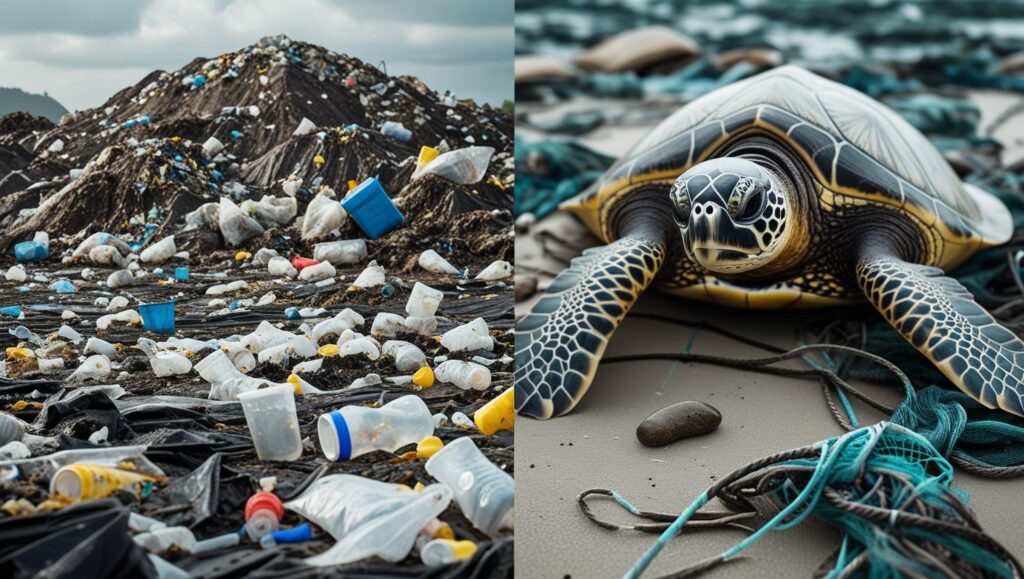
Growing Plastic Pollution Crisis Created by CANVA AI

Plastic pollution has become a global environmental crisis, with over 400 million tons of plastic produced annually, much of it ending up in oceans, landfills, and ecosystems. This section introduces the scale of the problem, highlighting its impact on marine life, human health, and climate change. It sets the stage for actionable solutions by emphasizing the urgency of addressing plastic waste through collective efforts across industries, governments, and individuals.

Understanding the Sources of Plastic Pollution

This section explores the primary sources of plastic pollution, including single-use plastics, packaging (which accounts for ~40% of plastic production), and microplastics from textiles and cosmetics. It discusses industry trends, such as the overuse of plastics in food and beverage packaging and the challenges of improper waste management in developing regions. Data from reports like the OECD’s 2022 Global Plastics Outlook can be referenced to highlight that only 9% of plastic waste is recycled globally.

Industry Innovations: Reducing Plastic Production

Innovative industry trends are reshaping plastic use. This section covers:

  • Bioplastics and Alternatives: Development of plant-based plastics (e.g., PLA, PHA) and biodegradable materials.
  • Circular Economy Models: Companies adopting closed-loop recycling systems to minimize waste.
  • Packaging Redesign: Trends like lightweighting, reusable packaging, and plastic-free alternatives in retail (e.g., zero-waste stores). Highlight examples like Unilever’s commitment to reducing virgin plastic use by 50% by 2030 or startups developing mushroom-based packaging.

Policy and Regulation: Driving Systemic Change

Government policies are critical in curbing plastic pollution. This section discusses:

  • Bans and Restrictions: Global trends in banning single-use plastics (e.g., EU’s 2021 single-use plastic ban).
  • Extended Producer Responsibility (EPR): Policies holding manufacturers accountable for plastic waste.
  • International Agreements: The 2022 UN Environment Assembly’s resolution to end plastic pollution by 2024, with legally binding measures. Include examples like Canada’s 2030 single-use plastic ban and deposit schemes for bottles.

Consumer Actions: Empowering Change at the Grassroots

Individuals play a vital role in reducing plastic pollution. This section outlines actionable steps:

  • Reducing Single-Use Plastics: Encouraging reusable bags, bottles, and straws.
  • Supporting Sustainable Brands: Choosing products with minimal or recyclable packaging.
  • Proper Waste Sorting: Educating consumers on recycling guidelines to improve recovery rates. Trends show growing consumer demand for eco-friendly products, with 66% of global consumers willing to pay more for sustainable goods (Nielsen, 2023).

Technology and Waste Management: Closing the Loop

This section explores technological advancements in waste management:

  • Advanced Recycling: Chemical recycling and pyrolysis to break down plastics into reusable components.
  • Waste-to-Energy: Converting non-recyclable plastics into energy.
  • Microplastic Filters: Innovations in filtration systems for wastewater treatment. Highlight companies like Plastic Bank, which incentivizes plastic collection in developing nations, and AI-driven sorting technologies improving recycling efficiency.

Plastic Recycling Equipment: Powering Efficient Waste Management

Advanced recycling equipment is pivotal in transforming plastic waste into reusable resources, addressing the low global recycling rate of 9%. This section explores key technologies:

Continue reading

Plastic Recycling Process and Plastic Recycling Machinery

Thermal depolymerization, polymer plastic. The use of the plastic is increasing now a day like water is coming in the plastic bottle and the colas are also coming in the plastic bottles. Both of the different types of drink use in a huge amount by the people and it is not only using in some countries but the usage of the plastic bottle is in huge amount in each and every country. After drinking the material from the bottle most the people throw it in the bin as they consider the empty plastic bottle as the waste.


The recycling of every type of the plastic is necessary because the plastic which is empty and which has no use in the world and pollute the environment in one and the other way. If the empty plastic bottle will not recycled and it if burn then by the plastic the carbon will evolved in the air which pollute the environment and is also dangerous for the human being living near the area in which this type of activity is going on. The plastic recycling can save the environment and it also effect on the consumption and making the new plastics.


It is also not necessarily important that if the bottle of the plastic is recycled then after the process the recycled plastic will not use in making the same type of the commodity again. Once the plastic is recycled the is melted it can be used in making the different commodities like the plastic of the pet bottle is recycled then the chair of the plastic can be made through that re cycled plastic. Recycling is important because it also affect the cleanliness of the city. Especially the recycling of the pet plastic bottle is more important as the pet bottles after consumed is throw in the waste and is seen in the third world countries that the bottle made of the plastic can be found on the ground.


One of the challenge faced in recycling of the plastic is that as compare to the glass the recycling of the plastic need long process and so it require the time and the plastic recycling machinery rather that it is the fact that after the recycling of the plastic it is more useful than the glass or any other thing with which the same things can made. The structure of the plastic bottles are very intense type of the structure as it is made up of the polymer plastic so that the heating is not enough to melt the plastic it need more process than simple heating the bottle in the machine like one again the example of the glass is consider.


As there are many type of the plastic so that before the plastic goes in the recycling it should be categories. The plastic is categories on the level of the polymer used in making the plastic. The process in recycling is monomer recycling then thermal depolymerization and last step is heat compression.


Song Ming Machinery Industries Co., Ltd. is the pre-eminent plastic recycling machinery manufacturer and also provides waste plastic recycling plant, granulator, shredder, high speed mixer, vertical cooling blender, PVC compounding line, EVA, TPR, PVC, rubber & masterbatch pelletizing plant, PET bottles washing, crushing, & separating system and others.


In order to supply the best recycling machinery to the valuable customers, Song Ming strains every nerve to constantly upgrade the designs, products and knowledge of plastic recycling machine. They are proud of their superior standard of recycling machinery that keeps them being one of the leading companies in the recycling machine industry. Please feel free to ask them any further information or send your requirements to them.


Article Source: http://EzineArticles.com/5715408