
What Can We Do to Stop Plastic Pollution

Introduction: The Growing Plastic Pollution Crisis
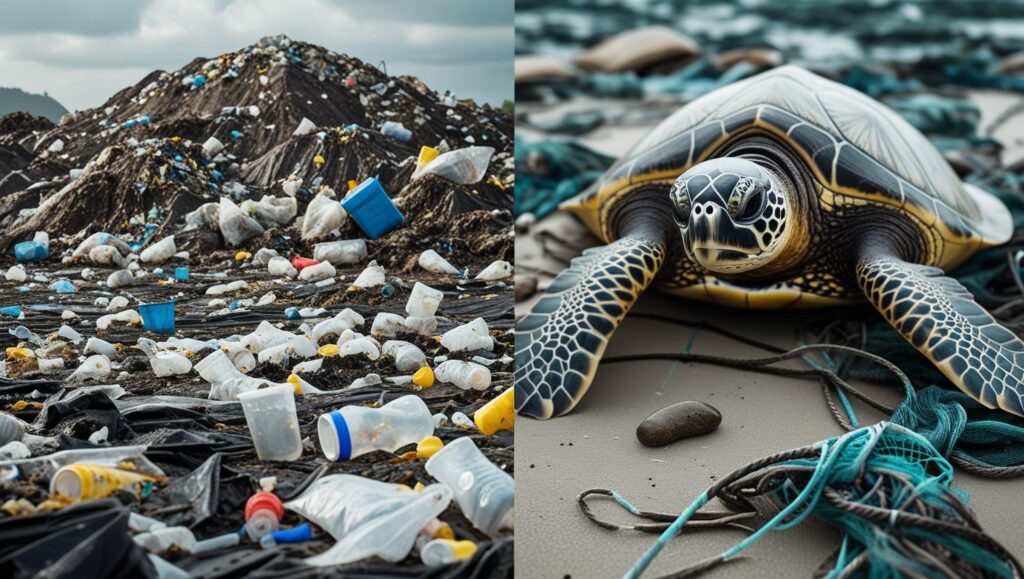
Growing Plastic Pollution Crisis Created by CANVA AI

Plastic pollution has become a global environmental crisis, with over 400 million tons of plastic produced annually, much of it ending up in oceans, landfills, and ecosystems. This section introduces the scale of the problem, highlighting its impact on marine life, human health, and climate change. It sets the stage for actionable solutions by emphasizing the urgency of addressing plastic waste through collective efforts across industries, governments, and individuals.

Understanding the Sources of Plastic Pollution

This section explores the primary sources of plastic pollution, including single-use plastics, packaging (which accounts for ~40% of plastic production), and microplastics from textiles and cosmetics. It discusses industry trends, such as the overuse of plastics in food and beverage packaging and the challenges of improper waste management in developing regions. Data from reports like the OECD’s 2022 Global Plastics Outlook can be referenced to highlight that only 9% of plastic waste is recycled globally.

Industry Innovations: Reducing Plastic Production

Innovative industry trends are reshaping plastic use. This section covers:

  • Bioplastics and Alternatives: Development of plant-based plastics (e.g., PLA, PHA) and biodegradable materials.
  • Circular Economy Models: Companies adopting closed-loop recycling systems to minimize waste.
  • Packaging Redesign: Trends like lightweighting, reusable packaging, and plastic-free alternatives in retail (e.g., zero-waste stores). Highlight examples like Unilever’s commitment to reducing virgin plastic use by 50% by 2030 or startups developing mushroom-based packaging.

Policy and Regulation: Driving Systemic Change

Government policies are critical in curbing plastic pollution. This section discusses:

  • Bans and Restrictions: Global trends in banning single-use plastics (e.g., EU’s 2021 single-use plastic ban).
  • Extended Producer Responsibility (EPR): Policies holding manufacturers accountable for plastic waste.
  • International Agreements: The 2022 UN Environment Assembly’s resolution to end plastic pollution by 2024, with legally binding measures. Include examples like Canada’s 2030 single-use plastic ban and deposit schemes for bottles.

Consumer Actions: Empowering Change at the Grassroots

Individuals play a vital role in reducing plastic pollution. This section outlines actionable steps:

  • Reducing Single-Use Plastics: Encouraging reusable bags, bottles, and straws.
  • Supporting Sustainable Brands: Choosing products with minimal or recyclable packaging.
  • Proper Waste Sorting: Educating consumers on recycling guidelines to improve recovery rates. Trends show growing consumer demand for eco-friendly products, with 66% of global consumers willing to pay more for sustainable goods (Nielsen, 2023).

Technology and Waste Management: Closing the Loop

This section explores technological advancements in waste management:

  • Advanced Recycling: Chemical recycling and pyrolysis to break down plastics into reusable components.
  • Waste-to-Energy: Converting non-recyclable plastics into energy.
  • Microplastic Filters: Innovations in filtration systems for wastewater treatment. Highlight companies like Plastic Bank, which incentivizes plastic collection in developing nations, and AI-driven sorting technologies improving recycling efficiency.

Plastic Recycling Equipment: Powering Efficient Waste Management

Advanced recycling equipment is pivotal in transforming plastic waste into reusable resources, addressing the low global recycling rate of 9%. This section explores key technologies:

Continue reading

Freight and Logistics News and Market Update 2025

Introduction

The freight and logistics industry in 2025 is navigating a complex landscape characterized by technological advancements, regulatory changes, and evolving market dynamics. This report provides a comprehensive overview of the current state of the global freight market, highlighting key trends, challenges, and opportunities. It draws on insights from multiple reliable sources to offer a detailed analysis of the industry’s trajectory.

Market Overview

Global Freight Market Dynamics

In 2025, the global freight market is experiencing significant shifts due to a combination of economic, geopolitical, and technological factors. The Drewry Global Container Freight Index (WCI) indicates a slight increase of 0.45% to $3,543/FEU in Week 24 of 2025, reflecting a stabilization in freight rates after a period of volatility (Phaata, 2025). This stabilization is attributed to the temporary suspension of reciprocal tariffs on China by the U.S., which has led to a resumption of strong freight traffic.

Regional Market Trends

The market has diverged into two distinct scenarios across major trade routes. The Asia-North America route has entered a rebalancing phase, with carriers effectively adding capacity to cool the market, particularly at West Coast ports. The withdrawal of the General Rate Increase (GRI) on June 15, 2025, is a testament to this change (Phaata, 2025).

Conversely, the Asia-Europe trade route is facing a severe operational crisis, with freight rates continuing to climb due to supply-side issues like port congestion, schedule delays, and reduced capacity. This scenario is exacerbated by geopolitical uncertainties, which pose significant risks to market stability (Phaata, 2025).

Key Trends and Developments

Technological Advancements

The logistics industry is witnessing substantial progress in supply chain technology. Innovations in autonomous vehicles (AVs), electric vehicles (EVs), and alternative fuels are gaining traction. The adoption of AI in transportation management and fraud detection is also on the rise, enhancing operational efficiency and security (Uber Freight, 2025).

Regulatory Changes

Regulatory shifts are central to the challenges facing the freight and logistics industry. Governments are implementing stricter policies on international freight services, directly influencing ocean and air freight costs. These changes necessitate compliance and adaptation by industry players to maintain competitiveness (ExFreight, 2025).

Nearshoring and Geopolitical Shifts

Nearshoring to Mexico has emerged as a key trend, with cross-border trade between Mexico and the U.S. reaching an all-time high. This shift is driven by geopolitical factors and the need for supply chain resilience. The impact of nearshoring on the supply chain and freight demand is expected to be significant, potentially leading to increased domestic manufacturing activity (Uber Freight, 2025).

Challenges and Opportunities

Supply Chain Disruptions

The supply chain industry is navigating an era of rapid transformation, with businesses adapting to shifting consumer demands, volatile markets, and technological disruptions. Evolving regulations and tariffs pose challenges, requiring companies to optimize their logistics networks to remain competitive (ExFreight, 2025).

Freight Market Volatility

The freight market continues to evolve against a backdrop of mixed signals. While projections for steep inflation in spot rates by the end of 2025 have softened, the market is likely to lean inflationary in the coming months due to regulatory changes. Shippers are advised to be prepared and proactive, as policy changes and macroeconomic shifts can quickly alter capacity and pricing (Fetch Freight, 2025).

Environmental and Sustainability Initiatives

Environmental regulations are expected to become more stringent in 2025, with a focus on sustainability and efficiency. The logistics industry is increasingly adopting smart technology and alternative fuels to meet these demands, presenting opportunities for innovation and growth (FreightRate, 2025).

Conclusion

The freight and logistics industry in 2025 is characterized by a dynamic interplay of technological advancements, regulatory changes, and market shifts. While challenges such as supply chain disruptions and regulatory compliance persist, opportunities for innovation and growth abound. Industry players must remain agile, leveraging technology and strategic partnerships to navigate the evolving landscape and capitalize on emerging trends..

As the global freight and logistics landscape continues to evolve, partnering with a trusted logistics provider becomes increasingly crucial. HLS Honour Lane Shipping, a leading transport and logistics company, offers comprehensive and reliable freight solutions tailored to meet diverse supply chain needs. Whether you require efficient sea freight services across major global trade lanes, time-sensitive air freight services, cost-effective railway freight services for intercontinental transport, or customized value-added logistics services such as cargo consolidation and documentation support, HLS delivers with excellence and expertise. In a year shaped by complexity and opportunity, HLS Honour Lane Shipping stands ready to support businesses in navigating the challenges of 2025 with resilience and strategic insight.

Machan International Partners with Taiwan’s CPC to Drive Dual Transformation in Low-Carbon and Smart Manufacturing

Facing EU Carbon Tariffs, Taiwan’s Toolbox Leader Pioneers Supply Chain Sustainability

In response to the European Union’s Carbon Border Adjustment Mechanism (CBAM), Machan International—a key supplier of metal tool trolleys to global brands like Stanley Black & Decker and Home Depot—has launched a strategic collaboration with the China Productivity Center (CPC). Through a landmark Memorandum of Understanding (MOU) signed on April 28, 2025, the two entities will co-lead a dual-axis transformation integrating low-carbon practices and smart manufacturing technologies across Machan’s supply chain.

Core Strategy: The “Large-Small Leadership” Model

Subsidized by Taiwan’s Industrial Development Agency, this initiative empowers Machan to guide 10 suppliers in establishing a “Sheet Metal Black Hand Value Chain Low-Carbon System”, featuring:

  • Carbon Hotspot Identification: Full emissions audits across production processes.
  • Energy Efficiency Upgrades: Optimizing compressed air systems and pipeline networks to reduce waste by 15–20%.
  • Zero-Loss Production: Implementing Total Productive Maintenance (TPM) to achieve “zero disasters, defects, and failures”.
  • Green Logistics: Cutting redundant handling and fuel consumption through route digitization.

CPC deploys proven decarbonization methodologies from prior manufacturing projects to accelerate emission reductions.

ESG Integration: Four-Pillar Framework

Machan’s ESG Development Committee (established in 2022) drives progress through specialized task forces:

Task ForceKey Initiatives
Environmental & EnergyISO 50001 & ISO 14064 certification; solar-powered “green factory” construction.
Green ProductsEco-design with recycled materials; pursuing ISO 14067 product carbon footprint certification.
Social Responsibility“Resilient Love – Happiness Net” program (supporting 8 NGOs); digital platform “Heart Library” for community empowerment.
Corporate GovernanceESG-aligned supplier audits; AI-enhanced operational risk controls.

Culture-Driven Transformation

CEO Ting-Wei Chang emphasizes that success hinges on cultural alignment:

Hardware is easy; people are the real challenge. We embed ESG thinking into daily operations—from cross-departmental ‘zero-carbon workshops’ to employee-led initiatives like cycling commutes and shared transport.”

The company’s core values—Accountability, Courage, Co-learning, Pragmatism—underpin its biannual innovation forums and sustainability training.

Future-Focused Investments

Continue reading

Everything about Tracheostomy Tubes: Types, Uses, and How to Choose the Right One

Tracheostomy tubes, also known as trach tubes, play a vital role in airway management for patients who require long-term ventilation support or have obstructed upper airways. Despite their widespread use in intensive care units and rehabilitation settings, many healthcare professionals and caregivers still have questions about the different types of tracheostomy tubes and how to choose the right one for each patient. This article provides a clear overview of tracheostomy tube types, their uses, and the key factors to consider when selecting the appropriate design.

What Is a Tracheostomy Tube?

A tracheostomy tube is a medical device inserted through a surgical opening in the neck into the trachea (windpipe) to maintain an open airway. It allows air to bypass the nose and mouth, making it easier for patients to breathe, receive mechanical ventilation, or remove secretions more effectively. Tracheostomy tubes can be temporary or permanent, depending on the patient’s condition.

What Are Tracheostomy Tubes Used For?

Tracheostomy tubes are used to provide a secure and stable airway in patients who cannot breathe effectively through their nose or mouth. They serve multiple purposes across different clinical situations, including:

●Long-term mechanical ventilation: Patients in intensive care who require prolonged breathing support often benefit from tracheostomy tubes, which offer more comfort and lower airway resistance compared to endotracheal tubes.

●Airway obstruction: Conditions such as tumors, trauma, or congenital abnormalities that block the upper airway can necessitate a tracheostomy to bypass the obstruction.

●Neurological conditions: Patients with neuromuscular disorders (e.g., ALS, spinal cord injury) who have difficulty controlling breathing or clearing secretions may require a tracheostomy to reduce aspiration risk and improve secretion management.

●Surgical access and recovery: In head and neck surgeries, a temporary tracheostomy may be performed to maintain the airway during recovery.

●Secretion management: Tracheostomy tubes facilitate the suctioning of respiratory secretions, especially in patients who cannot effectively cough.

By maintaining a clear and direct airway, tracheostomy tubes play a crucial role in improving oxygenation, reducing the risk of complications, and supporting patient recovery.

Common Tracheostomy Tube Types

What are the different types of tracheostomy tubes? Tracheostomy tubes come in various designs, each tailored to specific clinical needs and patient conditions. Understanding these types is essential for selecting the most appropriate tube for effective airway management. The most commonly used types include:

1. Disposable Tracheostomy Tubes

Disposable tubes are designed for single-use or short-term care. They help reduce the risk of cross-contamination and are ideal in high-turnover settings such as intensive care units (ICUs). These tubes often require less maintenance and offer convenience for healthcare staff.

Rota-Trach Disposable Tracheostomy Tube
Venti-Trach Disposable Tracheostomy Tube

2. Tracheostomy Tubes with Inner Cannula

An inner cannula is a removable insert that fits inside the main tube. It allows for easier cleaning and maintenance without having to remove the entire outer tube. This design enhances infection control and is especially useful for patients requiring longer-term tracheostomy care.

Rota-Trach Inner Cannula Tracheostomy Tube
Venti-Trach Tracheostomy Tube with Disposable Inner Cannula

3. Subglottic Suction Tracheostomy Tubes

These tubes are equipped with an additional suction port above the cuff to remove secretions that accumulate above the vocal cords. Subglottic suction helps prevent ventilator-associated pneumonia (VAP) and is recommended for ventilated patients at high risk of respiratory infections.

Venti-Trach Tracheostomy Tube with Subglottic Suction

Each type may come in cuffed or uncuffed versions, fenestrated designs for speech, and different sizes or angles to accommodate individual anatomies.

How to Choose the Right Tracheostomy Tube

Selecting the appropriate tracheostomy tube involves assessing several factors:

●Patient condition – Acute vs. chronic, ventilated vs. non-ventilated

●Airway anatomy – Pediatric vs. adult, neck shape, tracheal depth

●Infection control needs – Whether regular cleaning or single-use is preferred

●Speech and swallowing goals – If fenestrated or speaking valves are required

●Secretion management – Consider subglottic suction for high-risk patients

Clinicians must balance ease of care with patient comfort and long-term outcomes. A well-fitted and properly selected tracheostomy tube can significantly reduce complications and improve quality of life.

Tracheostomy Solutions from Vitaltec Corporation

To meet the diverse needs of respiratory care, Vitaltec Corporation offers two high-quality tracheostomy tube product lines:

🔹 Rota-Trach

Designed for enhanced flexibility and comfort, the Rota-Trach line includes models with rotation-friendly features, minimizing trauma during patient movement. It is available in disposable and inner cannula variants to suit different clinical scenarios.

🔹 Venti-Trach

Engineered for ventilated patients, Venti-Trach provides secure airway access with optimized airflow performance. Like Rota-Trach, this series also comes in multiple configurations, including disposable, inner cannula, and subglottic suction to support ICU protocols and long-term care plans.

Both product lines are developed with safety, patient comfort, and caregiver convenience in mind, offering healthcare providers reliable solutions for effective tracheostomy management.

Get Expert Support for Your Tracheostomy Tube Needs

Choosing the right tracheostomy tube is essential for ensuring safe airway management and improving patient outcomes. From disposable options to advanced subglottic suction designs, there are many choices available based on clinical requirements. With innovative products like Rota-Trach and Venti-Trach, Vitaltec Corporation delivers versatile and trusted solutions that support modern respiratory care.

Interested in high-performance tracheostomy solutions? Contact Vitaltec to request detailed product specifications or clinical samples.

What is the Best Material to Protect Floors During Construction

Floor protection during construction is crucial for maintaining the quality and longevity of flooring surfaces. With the variety of materials available, selecting the right one can be challenging. The ideal material depends on factors such as the type of flooring, anticipated foot traffic, budget, and specific project requirements. This report aims to provide a detailed analysis of the best materials for floor protection during construction, drawing on recent and reliable sources.

Key Considerations for Floor Protection

Durability

Durability is a primary consideration when selecting floor protection materials. The chosen material must withstand heavy foot traffic, equipment, and potential spills. Durable materials ensure that floors remain intact and unscathed throughout the construction project.

Cost-Effectiveness

While durability is essential, cost-effectiveness is also a critical factor. It’s important to find a balance between quality and affordability. Comparing prices of different floor protection sheets can help achieve this balance.

Specific Requirements

The ideal material varies based on specific requirements, including the type of flooring and the anticipated foot traffic. Common choices include foam sheets for cushioning, floor guards for heavy-duty protection, and POP floor protection for long-term durability.

Popular Floor Protection Materials

Foam Sheets

Foam sheets provide cushioning and are ideal for protecting delicate flooring. However, they absorb moisture, odors, and stains, and low-density foam can indent under heavy equipment over time. Foam mats require taping for stability.

Rubber Mats

Rubber floor protection mats are extremely durable, reusable for years, and resistant to moisture. They withstand heavy machinery while returning to form when compressed. However, high-quality rubber mats are heavy, difficult to cut, and expensive initially.

Cardboard and Paper

Cardboard sheets or rolls are excellent for guarding against scratches, scuffs, and light foot traffic. They are lightweight, affordable, and easy to install. However, cardboard is not water-resistant and provides limited protection against heavy equipment or chemical spills.

Plastic Film

Plastic films, such as polyethylene or self-adhesive protective films, are popular for carpets and hard floors. They provide a waterproof barrier, are resistant to tears, and are easy to peel and stick. However, plastic films can become slippery, creating a potential hazard in work zones.

PP Corrugated Sheets

For projects requiring durable, waterproof, and lightweight solutions, PP floor protection sheets are highly recommended. These materials offer excellent impact resistance, are reusable, and can be customized to fit any construction environment. Unlike cardboard or plastic film, corrugated plastic floor protection sheets provide superior strength without adding excessive weight, making them ideal for both residential and commercial construction sites.

Plywood Boards

Plywood boards are extremely durable and able to withstand the impact of dropped tools or machinery. This wood material can be reused many times. However, plywood requires labor to install and remove and only protects limited areas, not entire floors.

Benefits of Floor Protection

Time Savings

Protecting flooring during renovations saves time by preventing the need for cleaning or repairing damage after the project is complete. This allows focus on other aspects of the renovation process.

Improved Air Quality

Using floor protection during renovations can improve air quality by preventing dust, debris, and other particles from settling onto the flooring. This is especially important for individuals with allergies or respiratory issues.

Safety and Accessibility

Protected surfaces provide solid, level footing, preventing slips and falls. High-traffic routes can stay protected and accessible, ensuring that residents aren’t cut off from parts of their homes during renovations.

Conclusion

Selecting the best material for floor protection during construction involves considering factors such as durability, cost-effectiveness, and specific project requirements. In particular, plastic floor protection boards offer an excellent balance of strength, reusability, and affordability, making them a smart choice for comprehensive surface protection. Ultimately, the choice of material should align with the specific needs of the project to ensure optimal protection and efficiency.

Looking for Reliable Plastic Floor Protection Sheets?

If you are in need of high-quality plastic floor protection sheets for your construction projects, Polariod is a trusted manufacturer you can rely on. They offer durable, customizable, and cost-effective solutions to meet various site requirements. Contact Polariod to get expert recommendations and the best floor protection products for your project.

References: Polariod, Anbre, Forward Motion, SpriteShield, V-PRO Cover